
FAA Ground Stop Exposes Years of Warnings Over Rushed Air Traffic Modernization
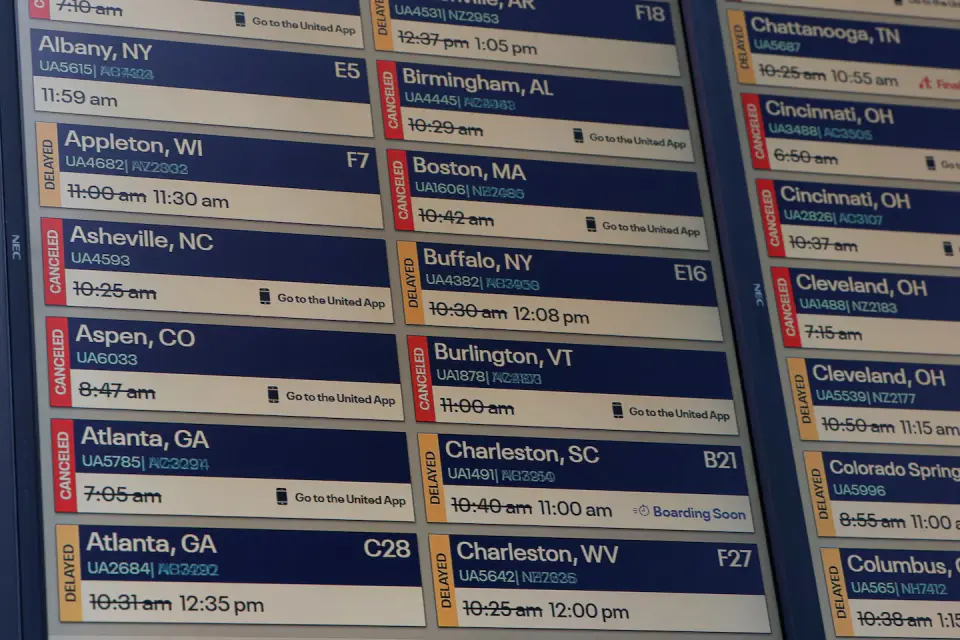
A nationwide ground stop lasting nearly five hours on November 13, 2026, was triggered by a telecommunications failure during a rushed modernization of air traffic control systems. While officials blamed a faulty router, government reports had warned for years that prioritizing speed over safety in these upgrades risked such disruptions. The incident caused over 12,000 flight cancellations and exposed deep vulnerabilities in the aging infrastructure, prompting renewed debate over the safety of the current modernization strategy.
Key points
- The ground stop on November 13, 2026, halted all U.S. flights for approximately 4.5 to 5 hours, resulting in over 12,000 cancellations and stranding millions of passengers.
- Transportation Secretary Sean Duffy attributed the outage to an overloaded router installed by contractor L3Harris Technologies during a copper-to-fiber cable upgrade, describing it as an isolated equipment error.
- The Government Accountability Office (GAO) issued a report in September 2026 warning that the FAA’s approach to the 'Brand New Air Traffic Control System' prioritized speed over cost certainty and risked disruptions.
- A 2023 FAA-commissioned safety review also warned that replacing legacy systems without preserving them during the transition could cause air traffic disruptions.
- The incident occurred despite a 2023 expert report identifying the aging telecommunications infrastructure as a high-level risk to airspace safety, noting that the copper-wired backbone was no longer supported by telephone companies.
- The FAA’s modernization effort involves over 11,000 individual projects, which the GAO found were not coordinated with an overarching schedule, leading to potential conflicts and unoptimized schedules.
Background
The FAA has long struggled with aging air traffic control infrastructure, relying on copper wires and outdated technology that is no longer supported by telephone companies. Previous nationwide ground stops occurred in January 2023 and after the September 11, 2001, attacks. The current modernization effort, known as the 'Brand New Air Traffic Control System,' was accelerated under Transportation Secretary Sean Duffy, who took office in January 2025. The FAA had previously commissioned a group of aviation experts to assess safety issues, but this group was disbanded shortly after the change in administration, raising concerns about the thoroughness of the current modernization process.
How outlets are covering it
The Washington Post emphasizes that the ground stop was the predictable result of years of warnings from government reports, highlighting the FAA’s prioritization of speed over safety. CNN focuses on the immediate impact of the ground stop, including the lack of a clear timeframe for resolution and the confusion among passengers. NPR highlights the ripple effects on college football schedules, noting that several games were delayed by hours. The sources agree on the cause of the ground stop but differ in their emphasis: The Post focuses on the systemic failures and warnings, CNN on the immediate crisis management, and NPR on the broader societal impact.
Why it matters
The ground stop underscores the risks of rushing critical infrastructure upgrades without adequate safety assessments. It highlights the vulnerabilities in the nation’s air traffic control systems and the potential for future disruptions if the current modernization strategy is not reevaluated. The incident also raises questions about the FAA’s accountability and the need for increased funding to ensure the safety and reliability of the nation’s airspace.
What to watch
The FAA is expected to continue its modernization efforts, but the ground stop may prompt a reevaluation of the timeline and safety protocols. The administration is likely to press Congress for the requested $50 billion in emergency funding. The incident may also lead to renewed scrutiny of the FAA’s oversight of contractors and the safety of the current modernization process.
- FAA was warned for years about repair risks leading to nationwide ground stop The Washington Post
- What to Know About Continued Flight Disruptions The New York Times
- November 13, 2026 — Some US flights resume after hours-long ground stop CNN
- FAA ground stop throws sports world into travel chaos ahead of weekend games ESPN
- FAA ground stop disrupts college football NPR
Want the full story? Read the original reporting
Read on The Washington Post