Delta Air Lines Flight 1076, arriving at Chicago Midway on the Fourth of July, was reportedly struck by a firework; pilots told air traffic control they felt a big bang, and ATC advised landing and inspecting for damage, with CNN noting similar reports in the area.
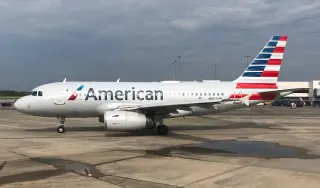
An American Airlines flight bound for Bermuda aborted its takeoff in Miami after a business jet entered the same runway, coming as close as about a third of a mile. The flight crew observed the other aircraft after clearance, prompting a tense exchange with air traffic control. The NetJets jet was reportedly under third‑party control, and the American Airlines flight later departed for Bermuda. FAA officials were contacted for comment as authorities review the incident amid a string of aviation events heading into the July Fourth weekend.
Flight-tracking data show a Boeing 777 performing a dangerously low pass at Horseshoe Bay Resort Jet Center in Central Texas during a pre-delivery test flight leased by Jetran and painted in Qatar Airways livery; the jet was reportedly as close as 25 feet to the ground, and the FAA is investigating. Qatar Airways Cargo says the aircraft was leased and not operated by their staff, while former NTSB Chair Sumwalt called the maneuver “stupid pilot tricks” and warned pilots’ credentials could be suspended.
Air traffic controllers at Boston Logan had to manage a near-miss when a Delta flight performing a go-around narrowly avoided colliding with an American Airlines jet on final approach, about 300 feet apart; both aircraft landed safely, with officials noting onboard warnings and routine safety procedures.
The FAA is investigating a close-call incident at Boston’s Logan International Airport that occurred on December 9, 2025, with the probe continuing as of June 21, 2026.
The FAA is investigating a midair scare near Fort Lauderdale International Airport after a JetBlue Flight 1256 detected a nearby aircraft not in contact with air traffic control; the JetBlue crew safely navigated away and landed with required separation maintained, while ATC audio noted the other pilot’s behavior. JetBlue has not commented, and the incident adds to safety concerns amid air-traffic-controller shortages and follows a high-profile past collision.
A JetBlue flight reported a second plane flying erratically near Fort Lauderdale–Hollywood International Airport; an air traffic controller called the other pilot 'insane' before the JetBlue aircraft landed, with the FAA saying safe separation was maintained and the incident is under investigation.
A United Airlines flight from Newark to Palma de Mallorca diverted about an hour after takeoff due to a security scare linked to a discoverable Bluetooth speaker with a provocative name. An air-traffic-control recording indicates the crew ordered a full security sweep of the aircraft, including the cargo area, and passengers were evacuated. While some Reddit posts speculated the device name was a four-letter word, the recording does not confirm the exact name. The incident highlights how even a naming choice for a consumer device can trigger heightened security responses.
FAA Administrator Bryan Bedford says the U.S. air traffic control system is safe but inefficient because 313 facilities run on 1970s/80s tech, including Compaq computers and floppy disks. The FAA plans about $12.5 billion in modernization through 2028 plus roughly $10 billion more to overhaul data architecture, move to cloud, and enable AI-driven real-time situational awareness to boost efficiency and capacity as the summer travel season approaches.
The FAA cut its target for certified air-traffic controllers to 12,563 from 14,633 and says modern scheduling and workforce tools will cut overtime costs, which topped $200 million last year after 2.2 million overtime hours; about 11,000 controllers are deployed with 4,000 in training, while staffing shortfalls and a lagging scheduling software have hampered efficiency, contributing to six-day weeks and training losses during the shutdown.
The FAA is piloting an AI initiative called SMART with Thales, Air Space Intelligence, and Palantir to forecast airspace demand and adjust departure timing, aiming to reduce delays without replacing safety-critical controller duties. The effort focuses on upstream planning using schedules and weather data to smooth flows, with an operational demonstration targeted for September 2026 and no finalized budget line item yet. NATCA has backed the broader modernization push as the project progresses.
A Ukrainian drone strike hit Rostov-on-Don’s air navigation center, forcing the suspension of flights at 13 southern Russian airports and prompting Aeroflot to delay or reroute departures as authorities assess restoration efforts; international routes from other airports largely continue, with the broader conflict and ongoing strikes shaping the situation.
Transportation Secretary Sean Duffy is asking Congress for $10 billion to fund the next phase of modernizing the aging U.S. air traffic control system, with software upgrades aimed at reducing flight delays; last year's $12.5 billion package plus ongoing infrastructure upgrades—like replacing copper wires and expanding network connections—set the stage for broader improvements through 2028, including more fiber, radios, and radars.
Congress approved a $12.5 billion down payment to modernize the aging U.S. air traffic control system. Since the approval, the FAA has replaced roughly half of its copper wiring, converted about 270 radio sites, and begun using electronic flight strips at 17 towers; more than 4,500 FAA sites are getting new radars, digital voice switches, and training simulators. The upgrade, led by Peraton, targets four areas—wires, communications, radars, and flight strips—and will incorporate artificial intelligence to boost safety and efficiency, though human controllers will remain in charge. The DOT says additional funding is needed for software and AI deployment, with a completion goal of 2028, and is urging Congress to provide the rest of the money.
Two Southwest Airlines planes aborted landings near Nashville after gusty winds and a parallel runway takeoff put them on a near-collision path; TCAS alerts prompted evasive maneuvers and both aircraft landed safely, with the FAA investigating and reviewing radar-based separation rules.