
AI Billing Errors Inflate Hospital Bills by $20,000, Highlighting Operational Context Gaps
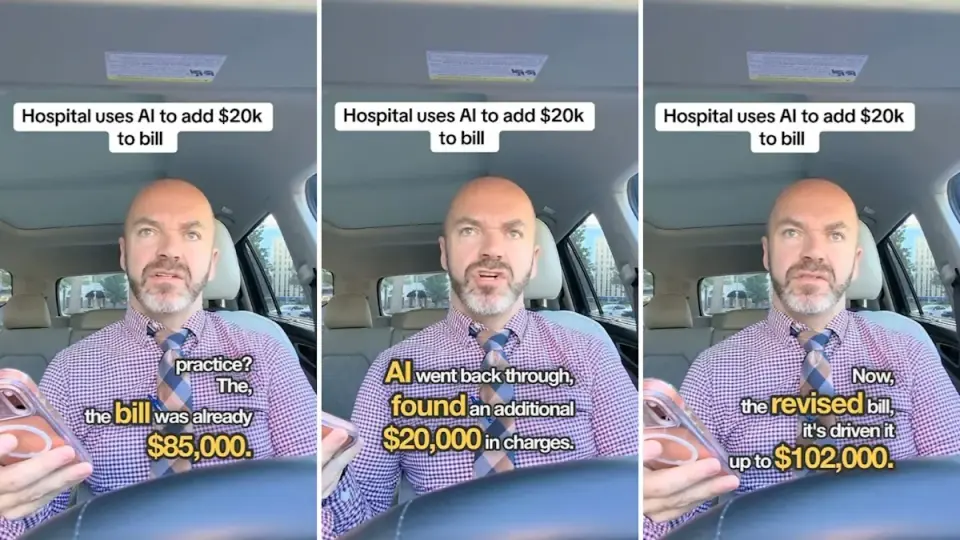
A patient disputed an $85,000 hospital bill, only to see it increase by nearly $20,000 after an AI system added charges. This incident illustrates the 'operational context gap' in healthcare AI, where systems fail to reconcile current operational states with historical data. While AI offers significant economic and clinical benefits, its deployment faces challenges including high failure rates, environmental costs, and the need for robust governance to prevent such billing errors.
Key points
- A patient's $85,000 hospital bill increased by nearly $20,000 after an AI system added charges, highlighting billing errors.
- The 'operational context gap' occurs when AI systems fail to reconcile historical data with current operational states, leading to incorrect actions.
- Healthcare AI market is projected to grow from $26.6 billion in 2024 to $187.7 billion by 2030, with 81% of US physicians using AI tools.
- Up to 85% of early revenue cycle AI deployments fail to show measurable profit, often due to high total cost of ownership and interoperability issues.
- AI data centers consume significant energy and water, raising concerns about the environmental impact of healthcare AI adoption.
Background
Recent labor market data shows healthcare as a leading sector for job growth, with August payrolls adding 162,000 jobs. This expansion coincides with increasing AI adoption in healthcare, where 81% of US physicians now use AI-enabled tools, up from 38% three years prior. The sector is also grappling with systemic failures, as seen in the Letby inquiry, which highlighted the need for robust safeguards and reforms in hospital operations. These developments underscore the complex environment in which healthcare AI is being deployed, balancing economic growth, operational efficiency, and patient safety.
How outlets are covering it
Outlets emphasize different aspects of healthcare AI. Yahoo News highlights a specific billing error where an AI system added $20,000 to an $85,000 bill, illustrating the 'operational context gap' where AI fails to reconcile current states with historical data. Healthcare IT Today focuses on the technical challenge of this gap, arguing that AI needs current operational context, not just more data, to avoid errors in workflows like prior authorization. Healthcare.Digital presents a macroeconomic view, noting that while AI offers high returns at the provider level, up to 85% of revenue cycle AI deployments fail due to high total costs and interoperability issues. Healthcare-in-Europe raises environmental concerns, arguing that AI data centers consume significant energy and water, and that 'Green AI' must consider the full lifecycle impact of technology. These perspectives show a tension between AI's potential benefits and its operational, economic, and environmental risks.
Why it matters
The incident underscores the critical need for robust governance and operational context in healthcare AI to prevent billing errors that can significantly impact patients. As AI adoption accelerates, addressing these challenges is essential to ensure that the technology delivers net economic value and improves patient outcomes without introducing new risks or costs. The broader debate on AI's environmental impact also adds urgency to developing sustainable solutions in healthcare technology.
What to watch
Healthcare providers and policymakers are expected to focus on improving AI governance and operational context to reduce billing errors and other failures. There may be increased scrutiny on the environmental impact of AI data centers, with calls for 'Green AI' practices. The high failure rate of early AI deployments suggests that future investments will prioritize interoperability, data curation, and clinical change management to ensure sustainable returns. Regulatory bodies may also develop stricter guidelines for AI use in healthcare to balance innovation with patient safety and environmental responsibility.
- Patient disputed an $85,000 hospital bill, then an AI sweep added nearly $20,000 more Yahoo
- I’m a doctor. Here’s what I want the public to know about AI tools and health care costs STAT
- Healthcare AI Needs Current Operational Context, Not Just More Data Healthcare IT Today
- Nelson Advisors: The Health Economics of Artificial Intelligence - Capital Driver, Value Engine or Cost Shifter? https://www.healthcare.digital/
- How healthcare and the environment can benefit from 'Green' AI healthcare-in-europe.com
Want the full story? Read the original reporting
Read on Yahoo