
Chicago scraps $13.5M grocery plan after Save A Lot exits
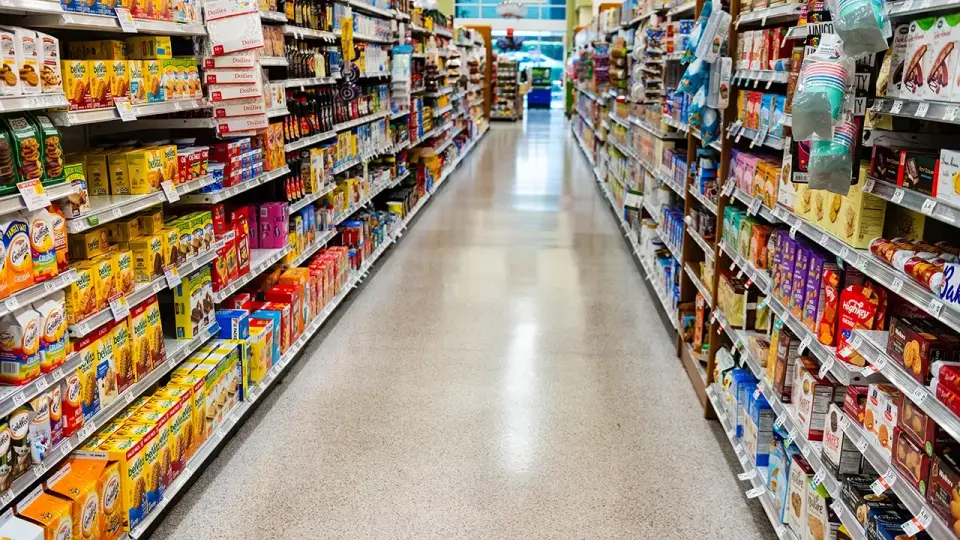
Chicago’s municipal grocery initiative has collapsed after Save A Lot terminated its licensing agreement with operator Yellow Banana, closing seven stores on the city’s South and West sides. The city had invested $13.5 million in taxpayer financing to renovate these locations, aiming to address food insecurity in underserved neighborhoods. Critics argue the failure highlights the inefficiency of government-backed retail, while proponents argue the market’s repeated failures justify public ownership. The closure follows a similar collapse of a subsidized Whole Foods location in Englewood in 2022, reigniting debate over whether subsidies or structural reforms better serve urban food access.
Key points
- Seven Save A Lot stores operated by Yellow Banana closed after the chain ended its agreement, citing financial issues and a drop in SNAP usage.
- Chicago invested $13.5 million in taxpayer financing to renovate six of the seven locations, part of a broader $26 million incentive package approved in 2023.
- Critics, including Illinois Policy and the Heritage Foundation, argue government subsidies ignore market realities and fail to address root causes like high property taxes and regulations.
- Proponents, including the Chicago Sun-Times and Economic Security Project, argue that private investment repeatedly fails in these areas, necessitating public ownership similar to libraries or schools.
- The closure follows the 2022 shutdown of a Whole Foods store in Englewood, which had received an $11 million subsidy, highlighting a pattern of failed private-public partnerships.
Background
This development follows earlier national debates on public grocery models. In 2026, New York City announced plans for five city-owned stores with 30% discounts, drawing criticism from Vox and others over cost-effectiveness and potential market distortion. Chicago’s failure contrasts with Atlanta’s Azalea Fresh Market, which reportedly served 150,000 customers at lower prices, suggesting that public models may succeed in some contexts but not others.
How outlets are covering it
Fox News and The Center Square emphasize the failure of government intervention, citing high property taxes and lack of efficiency incentives. Rob Carr of the Illinois Retail Merchants Association argues cities should fix permitting and labor costs rather than subsidize stores. Conversely, the Chicago Sun-Times argues that private investors leave when profits decline, leaving communities without food access, and advocates for public ownership as a permanent solution. The Chicago Tribune focuses on local political accountability, questioning the due diligence of aldermen who championed the Yellow Banana venture. While Fox and Center Square view the closure as proof of market superiority, the Sun-Times views it as proof of market failure, requiring public intervention.
Why it matters
The collapse of Chicago’s grocery initiative serves as a case study in the limits of taxpayer-funded retail solutions. It highlights the tension between immediate subsidy packages and long-term structural reforms, such as tax adjustments or public ownership. For policymakers, the outcome underscores the risk of relying on private operators for essential services in underserved areas, where market incentives may not align with public health goals.
What to watch
Chicago officials are seeking new operators for the vacant locations, as redevelopment agreements require most sites to reopen as grocery stores within a year. The city may pivot toward public ownership models or further regulatory reforms to attract private investment. National debates on public grocery stores, particularly in New York City, will likely continue to reference Chicago’s failure as a cautionary tale or a justification for alternative approaches.
- Government-run grocery stores face renewed scrutiny after Chicago's experiment fizzles Fox News
- Time for Chicago to buy into public-owned grocery store concept Chicago Sun-Times
- Letters: Grocery store closure raises questions about aldermen’s judgement Chicago Tribune
- Grocery store closures reignite debate over taxpayer-funded food access The Center Square
- Opinion: Grocery closure another disappointment for Auburn-Gresham Crain's Chicago Business
Want the full story? Read the original reporting
Read on Fox News