
Seattle Business Leaders Demand 100-Day Safety Plan Amid Budget and Tax Concerns
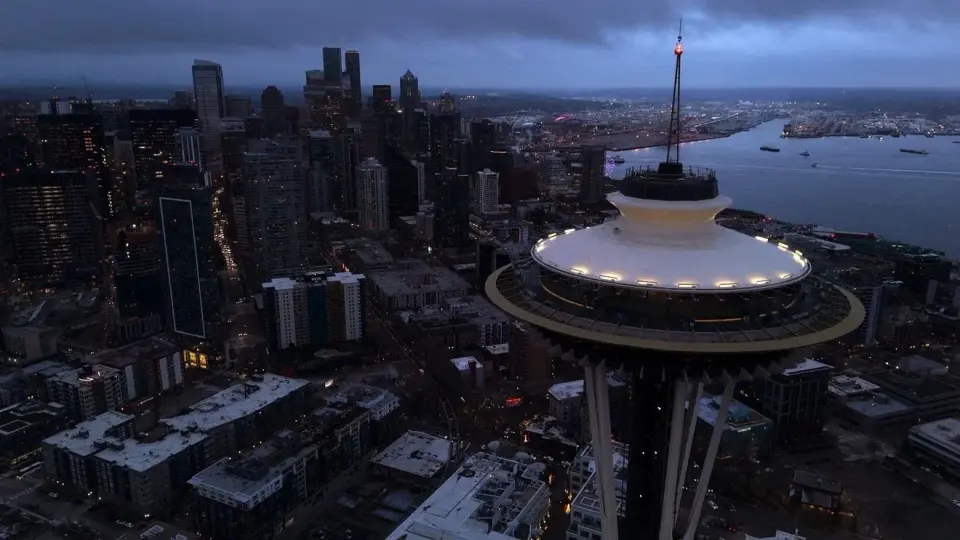
A coalition of 38 major Seattle-area business leaders, including executives from Microsoft, Starbucks, and Costco, has issued a formal demand for a 100-day public safety action plan. The letter, sent to Mayor Katie Wilson and the City Council, cites an August poll showing only 34% of voters trust the city’s current safety strategy. Key demands include reactivating CCTV cameras in high-crime areas, enforcing a seven-minute 911 response time, and banning camping near parks. This pressure coincides with the release of an independent economic report warning that Seattle’s tax structure, particularly the JumpStart payroll tax, risks driving high-wage tech jobs to Bellevue, while the city faces a projected $175 million budget deficit.
Key points
- 38 business leaders, led by the Seattle Metropolitan Chamber of Commerce, Challenge Seattle, and the Washington Roundtable, signed a letter demanding urgent public safety measures.
- The letter calls for a 100-day action plan with monthly progress reports, citing an August poll where 86% of respondents supported such a plan.
- Specific demands include reactivating CCTV cameras in Pioneer Square and the Stadium District, regular foot and bicycle patrols in areas like Little Saigon, and a ban on camping within 250 feet of parks and schools.
- The coalition highlights that Nordstrom’s downtown store received police response to only 29% of its 911 calls, compared to 100% for its suburban locations.
- Seattle’s police staffing is cited as 40% below Denver, 43% below San Francisco, and 58% below Boston, with only 1.31 sworn officers per 1,000 residents.
- An independent economic report, 'Seawall: Building a Resilient Seattle Economy,' warns that the JumpStart tax penalizes hiring high-wage workers, with costs $17,000 higher in Seattle than Bellevue for a $650,000 compensation package.
Background
This escalation follows a summer marked by high-profile shootings and sustained scrutiny of Seattle’s police response. Earlier in 2026, Mayor Wilson faced criticism for dismissing a council-sponsored gun violence reduction plan as 'grandstanding and politicking.' The current business coalition’s demands align with broader voter dissatisfaction, as an August poll found only 34% of residents confident in the city’s safety plan. The economic concerns highlighted in the new report build on previous debates about Seattle’s tax burden and its impact on the tech sector, with the city projecting a $175 million deficit for the coming year.
How outlets are covering it
KOMO News emphasizes the specific operational failures, such as the low 911 response rate at Nordstrom’s downtown store and the stark comparison of police staffing levels against peer cities. MyNorthwest.com focuses on the breadth of the business coalition, listing numerous signatories beyond the major tech and retail giants, and frames the letter as a direct demand for measurable results from City Hall. GeekWire provides a contrasting perspective by highlighting the economic risks associated with Seattle’s tax structure, arguing that while the city is not in decline, it is in danger due to its reliance on a small number of high-tax-paying tech firms. GeekWire notes that the JumpStart tax may be driving companies to consider relocation to Bellevue, where costs are lower, whereas KOMO and MyNorthwest focus primarily on the immediate public safety demands without delving into the tax implications.
Why it matters
The convergence of public safety demands and economic warnings presents Mayor Wilson with a dual challenge: addressing immediate security concerns while managing a fragile fiscal environment. The business community’s insistence on measurable benchmarks and budget protection signals a shift from general support to specific, actionable demands. Simultaneously, the economic report’s findings suggest that Seattle’s current tax policies may be undermining the very revenue base needed to fund safety initiatives, creating a potential conflict between short-term safety needs and long-term economic stability.
What to watch
The City Council is expected to vote on a gun violence reduction plan in the coming week, a move Wilson has criticized. The mayor’s administration is set to announce its own public safety strategy, potentially in response to the 100-day plan demand. Additionally, the newly formed economic task force will begin convening industry roundtables to address the concerns raised in the 'Seawall' report, including potential changes to permitting and the creation of a Strategic Initiatives Fund. The city must also navigate its projected $175 million budget deficit while deciding whether to adjust the JumpStart tax or pursue other revenue sources.
- Microsoft, Starbucks, Costco, Alaska Airlines call for Seattle public safety improvements KOMO
- City of Seattle unveils economic plan as office vacancies hit hard KING5.com
- Seattle's sluggish economy and Mayor Wilson's plan to goose it KUOW
- More than 30 major Seattle companies sign letter demanding Wilson, City Council take action on public safety MyNorthwest.com
- Seattle economic study finds strong tech assets, a risky concentration, and a tax that 'penalizes' hiring GeekWire
Want the full story? Read the original reporting
Read on KOMO