
New Jersey's 'Skip the Stuff' Law Forces Diners to Request Utensils and Condiments
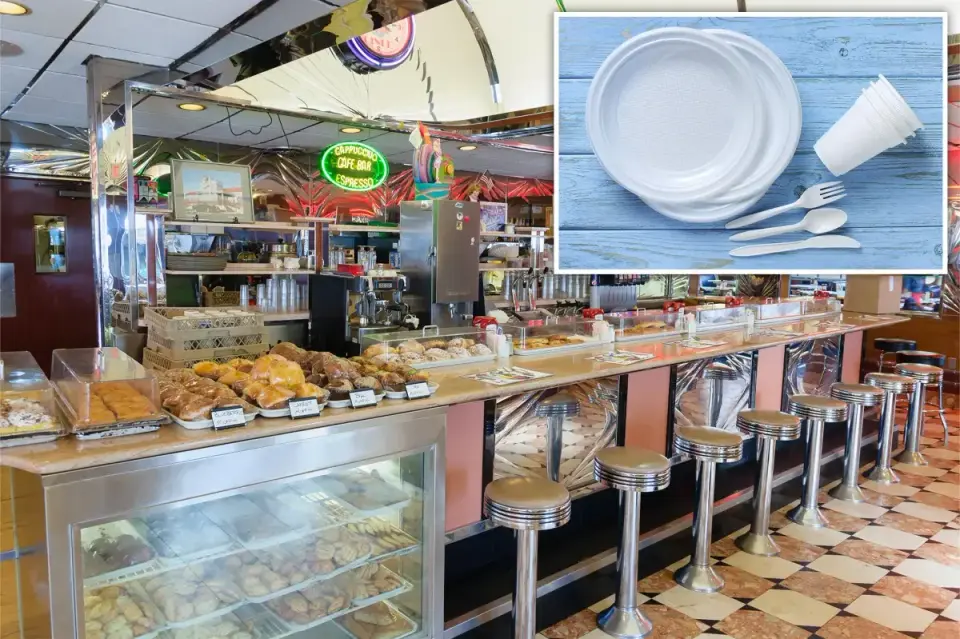
New Jersey’s 'Skip the Stuff' law took effect on August 1, 2026, prohibiting restaurants from automatically including single-use plastic utensils, straws, napkins, and condiment packets in takeout orders. Customers must now explicitly request these items, a change that applies to both physical orders and digital platforms like DoorDash. While the New Jersey Department of Environmental Protection (NJDEP) aims to reduce waste, the policy has sparked significant public backlash, with critics labeling it an intrusive overreach. Enforcement begins with warnings, escalating to fines of up to $250 per day for repeat violations.
Key points
- The law, signed by former Governor Phil Murphy in January 2026, took effect on August 1, 2026.
- Restaurants with 10 or more seats must provide reusable silverware for dine-in customers.
- Online ordering platforms must default to not including plastic items unless the customer opts in.
- K-12 schools, correctional facilities, and healthcare facilities are exempt from the law.
- Food courts are exempt until August 1, 2028.
Background
This regulation builds on New Jersey’s previous environmental efforts, including the 2022 ban on single-use plastic carryout bags and polystyrene foam containers, and the 2021 restriction on plastic straws. The current law represents the latest step in the state’s strategy to minimize the environmental footprint of food purveyors.
How outlets are covering it
Public reaction to the law is sharply divided. The New York Post highlights widespread social media opposition, with many users characterizing the rule as 'virtue signaling' and a slippery slope toward broader government control. In contrast, CBS News and local12.com report that some residents support the measure, citing the waste of unused utensils. The New Jersey Restaurant and Hospitality Association, represented by Amanda Stone, argues the law benefits businesses by saving money and aligning with existing sustainability trends. Meanwhile, the Asbury Park Press focuses on the practical implications for diners, noting that default settings on apps have been changed to exclude these items.
Why it matters
The law signals a shift in how consumer convenience is balanced against environmental policy in the United States. By mandating that customers actively request basic dining items, New Jersey is testing the limits of regulatory intervention in everyday consumer habits. The potential for fines and the involvement of major delivery platforms indicate that this is a significant operational change for the state’s food industry.
What to watch
The NJDEP will monitor compliance, issuing warnings for first-time violations. Subsequent violations may result in fines of up to $100 per day, with penalties reaching $250 per day for repeated offenses. As the law settles, it will be observed whether the public adapts to the new ordering process or if the friction leads to further political debate.
- NJ diners fume over new ‘Skip the Stuff’ law affecting take-out orders: ‘Next will be toilet paper in public bathrooms’ New York Post
- State outlaws restaurants, food businesses from automatically offering plastic utensils local12.com
- New Jersey restaurants limiting single-use plastic utensils in takeout orders under "Skip the Stuff" law CBS News
- NJ 'Skip the Stuff' law is now in effect: What diners need to know Asbury Park Press
- Here's what's in New Jersey's “Skip the Stuff” law that just took effect NBC New York
Want the full story? Read the original reporting
Read on New York Post