
AI Skepticism Triggers $1T Nasdaq Wipeout as Intel and Amazon Earnings Miss
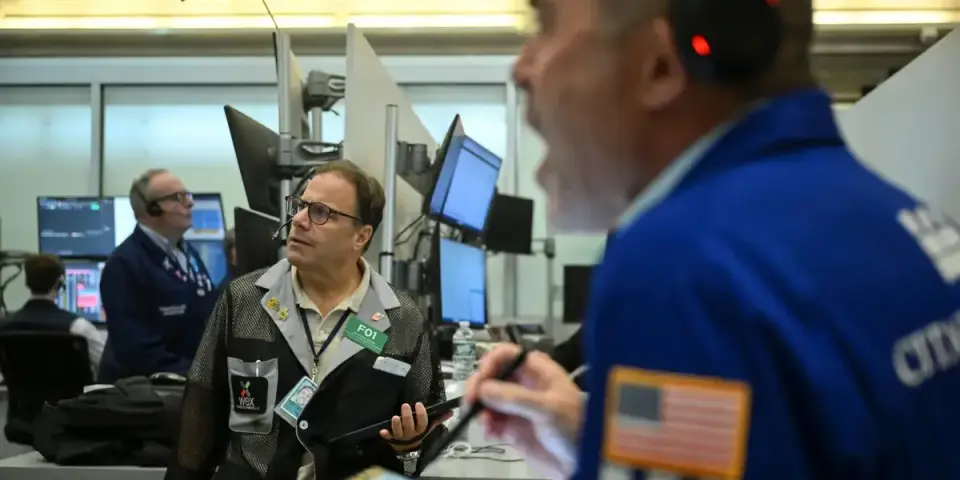
US tech stocks suffered a severe sell-off on October 30, 2026, with the Nasdaq 100 losing over 3% and shedding more than $1 trillion in value. The decline was triggered by disappointing third-quarter earnings from Amazon and Intel, which reignited investor fears that massive artificial intelligence capital expenditures are not generating sufficient returns. Intel shares plunged 29% despite beating earnings estimates, while Amazon fell 1.75% after reporting negative cash flow. The broader market rotation away from AI names accelerated a monthly decline for the tech index, marking its worst monthly performance since March 2025.
Key points
- The Nasdaq 100 closed down 3.9% at 28,255.72, ending October with a 6.7% weekly loss and its worst monthly performance since March 2025.
- Intel shares dropped 29% after issuing weak fourth-quarter guidance, forecasting a PC market slowdown that will persist into the first half of 2027.
- Amazon fell 1.75% after reporting third-quarter earnings per share of $1.89 and revenue of $201.94 billion, both below analyst expectations.
- Amazon reported a negative cash flow of $7.6 billion for the second consecutive quarter, attributed to growing AI spending, with CEO Andy Jassy stating the company expects to 'spend meaningfully more' in 2026.
- Intel's client computing and physical AI business revenue dropped 5% year-over-year to $8.1 billion, missing estimates despite the company beating on overall revenue and earnings.
- The iShares Semiconductor ETF fell 8%, extending its decline to 27% from its peak, while the Roundhill Neocloud ETF dropped 8% to fall 42% from its all-time high.
Background
This sell-off follows a series of earlier reports on October 30, 2026, which detailed a broader tech sector panic triggered by Alphabet's previous day crash and subsequent weak guidance from Intel and Amazon. Earlier coverage noted that the Nasdaq Composite had fallen to its lowest level in nearly three months, with investors questioning the return on massive AI infrastructure investments. The current market action confirms the deepening of these fears, with the Nasdaq 100 losing over $1 trillion in value as the AI trade faces its most significant challenge since the start of the year.
How outlets are covering it
Business Insider emphasizes the 'bruising losses' for the tech trade, highlighting the specific earnings misses from Amazon and Intel as the primary catalysts for the Nasdaq 100's 3.9% drop. The outlet notes that the AI trade has 'run into a wall of trouble,' with investors drawing a line between rational and irrational AI spending. Seeking Alpha, in contrast, frames the October selloff as a sector rotation, noting that while tech and AI stocks sold off, energy, defensives, and value stocks outperformed. The outlet suggests that despite headline index weakness, S&P 500 earnings estimates are rising and valuations have compressed to near 18x P/E, pointing to a bullish November-December seasonality. Moomoo, via MarketWatch, highlights the divergence in Wall Street's October winners, noting that while Amazon and Intel plunged, other tech names like Disney, Tesla, and Adobe posted positive 20-day changes, suggesting a broader market rotation rather than a uniform tech collapse. The outlets disagree on the severity and nature of the selloff, with Business Insider focusing on the AI trade's 'wall of trouble' and Seeking Alpha emphasizing the bullish trends in other sectors and the potential for a recovery in late 2026.
Why it matters
The October 30, 2026, sell-off marks a pivotal moment for the AI trade, as investors question the sustainability of massive capital expenditures in the absence of clear profit returns. The 29% plunge in Intel shares and the 1.75% drop in Amazon, despite the latter's strong revenue, signal a shift in market sentiment from growth at all costs to a focus on rational spending and cash flow. The broader market rotation away from AI names, with the iShares Semiconductor ETF falling 27% from its peak, suggests that the AI trade may be entering a correction phase. The flight to safe havens, with the 10-year Treasury yield dropping to 4.92%, indicates that investors are seeking stability amid the tech sector's volatility. The selloff also highlights the interconnectedness of the AI supply chain, with Neoclouds and chipmakers suffering heavy losses as investors fear a slowdown in industry-wide capex. The event underscores the importance of AI monetization and the potential for downstream consequences if AI investment slows, with the market now scrutinizing the finances of major tech players to determine which firms are spending rationally on AI and which are not.
What to watch
The market is likely to continue its rotation away from AI names, with JPMorgan market intelligence strategists expecting 'renewed fears over AI monetization' to drive further losses in the sector. The Nasdaq 100 is on track to end October in the red, shedding more than 6%, and the iShares Semiconductor ETF remains in a bear market, having fallen 27% from its earlier peak. The Roundhill Neocloud ETF, which plunged 8% on Friday, is down 42% from its all-time high, suggesting that the selloff may continue in the near term. The 10-year Treasury yield, which dropped 6 basis points to 4.92%, may continue to fall as investors seek safe havens amid the tech sector's volatility. The market will likely focus on the fourth-quarter earnings reports from other major tech players, with investors scrutinizing the return on AI capital expenditures and the potential for a slowdown in industry-wide capex. The event may also trigger a broader market rotation, with energy, defensives, and value stocks outperforming tech and AI names, as noted by Seeking Alpha. The market will also watch for any signs of a recovery in the AI trade, with Paul Stanley of Arca noting that 'the AI trade is down, but not out,' and that pullbacks are 'par for the course' in the early stages of AI development.
- Nasdaq plunges after dismal earnings from Amazon and Intel Business Insider
- Jim Cramer reveals 3 stocks to buy — plus, why he is not selling the Intel plunge CNBC
- In a wild October for markets, these stocks were the biggest winners and losers MarketWatch
- S&P 500 And AI Stocks Spooked Ahead Of Halloween - Why Bullish Trends Lie Ahead Seeking Alpha
- Amazon's and Intel's Stocks Are Set to Plunge. But Wall Street's October Winners May Surprise You. Moomoo
Want the full story? Read the original reporting
Read on Business Insider