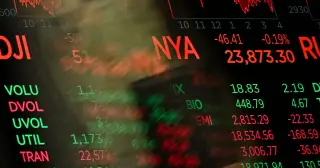
Gold and silver futures dropped significantly, with gold falling 3.03% and silver declining 4.75%, while the Nasdaq 100 futures index slipped 1.03%. These moves occur amid broader market stress, as the S&P 500 remains near record highs despite narrow participation and rising bond yields.
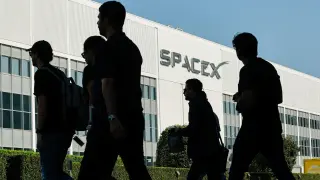
SpaceX’s record $2 trillion debut has not triggered the market-wide disruption many feared. Limited public float kept its index weighting minimal, though upcoming share unlocks and new AI competitors may change that dynamic.
Four monthly dividend ETFs (JEPQ, QQQI, RYLD, KBWD) target 11%–14% yields to start 2027, but they generate income with different engines: JEPQ and QQQI use Nasdaq-100 covered-call strategies (with QQQI’s 60/40 Section 1256 tax treatment and ROC deferral, and JEPQ’s higher liquidity anchor); RYLD writes at-the-money Russell 2000 calls, adding NAV erosion risk; KBWD pays actual dividends from financials, making it the pure-yield option. With the 10-year yield hovering around 4.8% and policy rates near 3.75%, chasing double-digit monthly income involves equity/credit risk and NAV considerations. The best pick depends on tax location and desired exposure (core Nasdaq income vs. small-cap income vs. pure dividend), not just the headline yield.
Apple stock rose 2.6% amid a tech rout as the company again acts as the Nasdaq’s hedge, with its 30‑day correlation to the Nasdaq‑100 sliding to about -0.82—the most inverted in two decades—while Apple outperformed the index: up ~7% in the last month and ~20% year-to-date versus a ~1% monthly and ~15% YTD gain for the Nasdaq. Heavy options activity, with roughly 1.5 million calls traded against 700k puts and bullish net delta positioning, signals traders expect the strength to persist even as AI concerns keep weighing on tech names.
NYU professor Scott Galloway argues SpaceX's post-IPO valuation (~$1.8 trillion) is vastly overstated, estimating a fair value of roughly $10–$30 per share. He points to a tiny initial float and its Nasdaq-100 inclusion as factors driving the rally, notes a recent $25 billion bond sale as evidence investors are betting on AI-infrastructure rather than rockets, and sees potential downside despite some bears; he wouldn’t short the stock because Musk’s ability to spark enthusiasm could push the price higher.
CoreWeave reported Q2 2026 revenue of $2.575B with a net loss of $626M but adjusted EBITDA of $1.51B and adjusted operating income of $128M, as demand for its AI-focused cloud accelerates. Revenue backlog stood at about $104B as of June 30, 2026, with major enterprise and AI-lab wins and rapid infrastructure expansion (roughly 1.5 GW active power and ~3.7 GW contracted). The company also announced financing and partnerships (a $3.1B term loan, a $1B investment from Jane Street) and was selected for the Nasdaq-100, with forward guidance to be provided on the earnings call.
More than 911.5 million SpaceX Class A shares will unlock Thursday, doubling the publicly tradable float since the IPO and potentially weighing on the stock after earnings showed larger AI-related capex; the stock closed around $108.27 amid a recent decline. The larger float could raise SpaceX’s weighting in the Nasdaq-100 to above 3.5% after the September rebalance, depending on performance. Musk’s Class B shares remain locked for a year, delaying potential sales.
More than 900 million SpaceX shares (about 911.5 million) are set to unlock today, more than doubling the publicly tradable float and allowing some employees and early investors to sell. The move comes after SpaceX’s volatile post-IPO period, including a slide after earnings and AI-related capital expenditure concerns, with SPCX trading around $108 and down from its peak and IPO target of $135. The unlock could weigh on the stock in the near term, and it coincides with a potential increase in SpaceX’s weighting in the Nasdaq 100 after the September rebalance; Musk’s Class B shares remain locked for a year after the IPO. This is the first in a slate of lockups expected over the next year, reshaping liquidity and investor dynamics for SpaceX.
Stocks rallied on Tuesday with the S&P 500 up nearly 6% and the Nasdaq-100 rising about 3%; bullish bets surged as one-standard-deviation out-of-the-money QQQ calls jumped 42%, the strongest single-day move in five years and ninth-largest in a decade. The rally came amid rising VIX alongside stocks, supported by robust earnings expectations (S&P Q2 earnings seen up about 47%) and improving market momentum, signaling one of the Nasdaq-100’s most bullish days in ten years.
The Federal Reserve left rates at 3.50–3.75% and the market sold off, with the Nasdaq 100 about 2.1% lower (roughly 11% below its June high) as investors weighed heavy AI-related spending ahead of quarterly results from Microsoft and Meta; the S&P 500 slipped to a month‑low while AI exposure and earnings expectations remain a focal point for investors.
Chip and memory stocks led a broad sell-off that pushed the Nasdaq-100 briefly into correction territory (about a 10% drop from its high) as Sandisk, Western Digital, Seagate, Micron and AMD fell roughly 10% and Dell slid ~13%; Samsung Electronics and SK Hynix retreated more than 15% in Asia, with equipment makers like ASML down after a report—unverified—that a Chinese state-backed firm began mass-producing domestic chip tools. The move occurs ahead of key earnings reports from Meta, Amazon and Microsoft and amid ongoing AI-related capex, with JPMorgan forecasting AI spending near $870 billion by 2026. Apple rose, helping buoy large indices as the broader market remained resilient.
AI demand is linking Wall Street’s tech winners with Korea’s memory-chip giants (Samsung Electronics and SK Hynix), pushing the Kospi–Nasdaq 100 60-day correlation near 0.5 and making Korea an early read on AI trends. Yet the closer tie reduces diversification benefits and raises risk if hyperscaler capex slows, even as factors like product mix, U.S. onshoring, and China’s memory-chip push could eventually drive divergence.
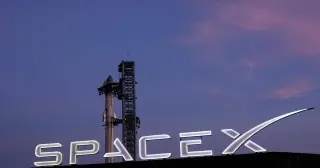
SpaceX’s SPCX fell about 14.7% after the Starship abort, as investors weigh execution risk against a lofty valuation amid Nasdaq-100 inclusion, rising short interest, and looming insider lockups, with concerns over funding needs and potential dilution as the company pursues Starlink and AI initiatives.
SpaceX's stock has fallen nearly 23% since being added to the Nasdaq-100, pressured by a failed Starship test flight and an aborted launch, even after SpaceX's record IPO last June.
SpaceX briefly traded below its $135 IPO price intraday before finishing at $135.27, marking the first dip below the IPO price since listing and underscoring post-IPO volatility. The IPO valued SpaceX at about $2.2 trillion, and investors are watching upcoming lock-up expirations and the company’s heavy AI push (Cursor acquisition and the xAI merger) as spending and debt concerns persist.