
Asian chipmakers fall as governments deploy stabilization funds to halt AI-driven rout
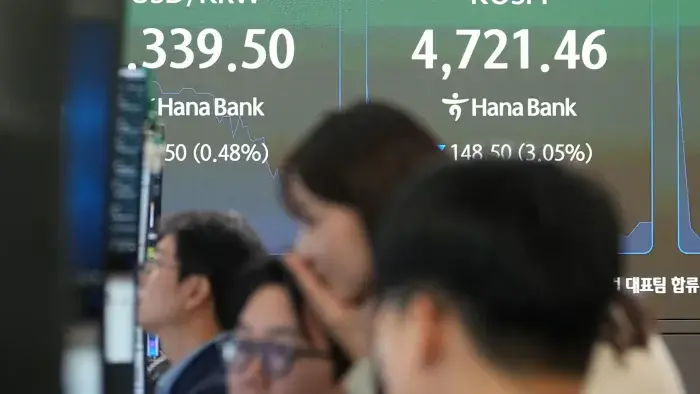
Global tech equities continued to slide on Monday, with South Korean chipmakers SK Hynix and Samsung Electronics dropping over 3% as Asian markets reacted to a severe US sell-off. Beijing, Seoul, and Taipei are implementing emergency measures, including lowering margin requirements and activating stabilization funds, to counter panic selling driven by fears over AI profitability and recent corporate scandals.
Key points
- SK Hynix and Samsung Electronics fell more than 3% on Monday, mirroring a broader decline in the Kospi index and extending losses from the previous week.
- The sell-off follows a record-breaking IPO by Anthropic, which failed to halt a broader tech rout; the Nasdaq 100 entered a bear market after its worst week since 2020.
- South Korean officials, including Finance Minister Lee Hyoung-il and Bank of Korea Governor Shin Hyun-song, announced plans to activate a stabilization fund and relax daily limits on share buybacks for three months.
- China’s stock exchanges lowered the minimum margin requirement for leveraged investors from 100% to 80%, effective November 30, reversing a January move intended to curb leverage risks.
- Taiwan Semiconductor Manufacturing Company fell 4.8% on Friday, contributing to a nearly 15% loss for the week, while Japan’s SoftBank experienced its worst day in over two years.
Background
This volatility follows a sharp correction in late November 2026, where Asian markets crashed on Friday amid fears that the AI boom was turning into a bust. The Nikkei 225 fell 5.06% and SoftBank shares dropped 14.48% that day. The turmoil was exacerbated by revelations regarding Jensen Huang’s extramarital affairs, including one with an alleged Chinese spy, which triggered a leadership crisis at Nvidia and raised concerns about the cash flows of hyperscalers.
How outlets are covering it
While the Financial Times highlights the severity of the decline in South Korea and the government’s direct intervention, Bloomberg emphasizes the coordinated regulatory response across Asia, specifically noting China’s easing of margin requirements. Semafor contrasts the market panic with analyst sentiment, citing Barclays’ view that the correction is overdone and that fears about the AI trade are 'greatly exaggerated.' The Financial Times notes that analysts remain concerned about hyperscaler cash flows despite government assurances that long-term growth expectations remain intact.
Why it matters
The coordinated intervention by major Asian economies signals a shift from passive observation to active market management to prevent a broader financial collapse. If the stabilization funds and regulatory tweaks fail to halt the sell-off, the continued decline in chipmakers could signal a structural shift in the AI investment cycle, potentially impacting global supply chains and technological development timelines.
What to watch
Investors will watch for the effectiveness of South Korea’s three-month relaxation of buyback limits and the activation of its stabilization fund. In China, the impact of the lower margin requirement will be assessed as it takes effect on November 30. US futures indicate a rebound, with the S&P 500 set to open 2% higher, but sustained recovery depends on whether corporate cash flows can withstand the current sentiment.
Want the full story? Read the original reporting
Read on Financial Times