Oil surge drags Asian stocks lower as prices top $111 a barrel
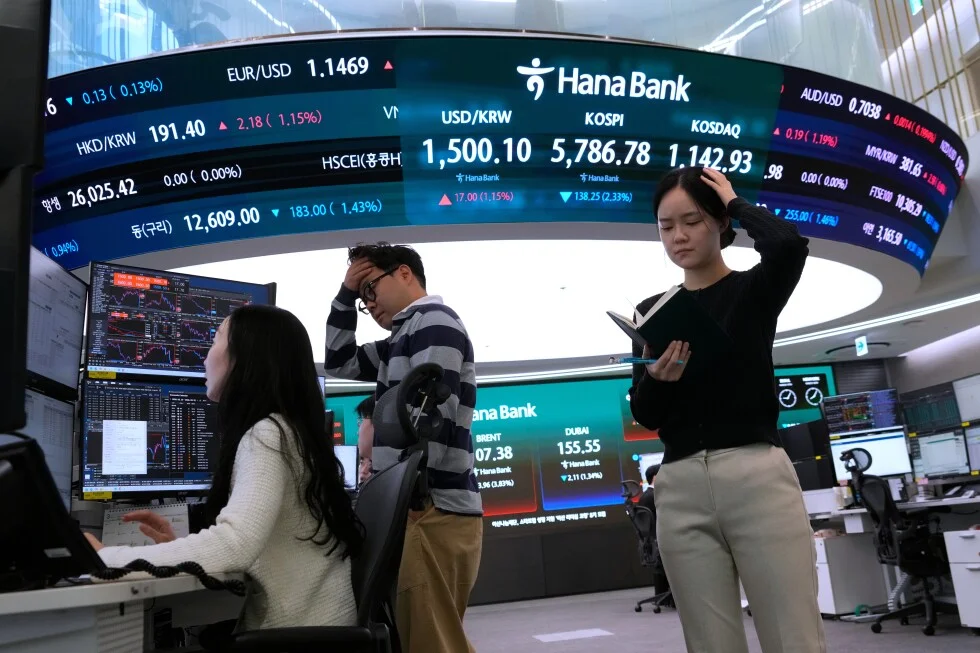
Asian stock markets fell as oil climbed above $111 a barrel, triggering a regional sell-off after U.S. markets slipped.
All articles tagged with #asian markets

Asian stock markets fell as oil climbed above $111 a barrel, triggering a regional sell-off after U.S. markets slipped.

Asian shares fell, on track for a second weekly decline as the Iran-Israel conflict keeps oil near $100, prompting investors to pare Fed-rate-cut expectations to around 20 basis points and lifting the dollar. Equities and yields moved with oil and inflation worries in focus ahead of next week’s central-bank meetings, with the MSCI Asia-Pacific index down about 0.5% for the week and major markets like Japan, Korea and Taiwan lingering in the red.

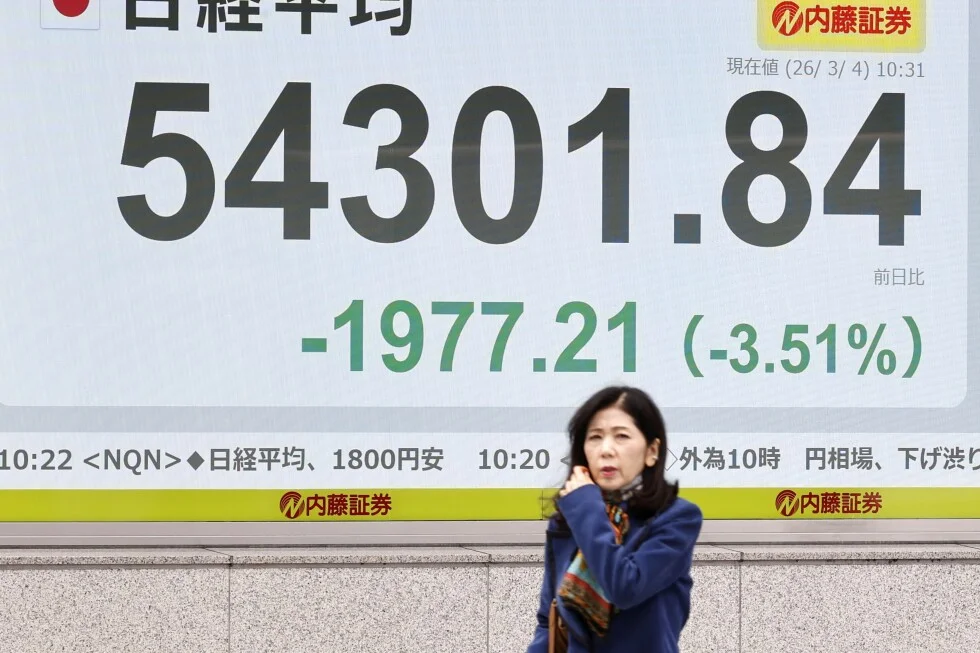
Asia’s stock markets tumbled as surging oil prices raise inflation fears and threaten delayed rate cuts. The Kospi in Seoul dropped a record 12% in one day, with Japan’s Nikkei and TOPIX also down around 4%. Brent crude neared $84 and WTI traded above $76 as the Strait of Hormuz disruption tightens energy supply, signaling a potential weeks-long energy shock and higher-for-longer inflation that could slow growth and push policymakers to maintain tighter monetary conditions.

European stocks rise while Asian shares fall as Iran’s widening conflict drives oil prices higher, signaling divergent regional market moves amid escalating geopolitical tensions.

Asian shares rose after a rebound in U.S. stocks as investors wrestle with AI hype, with Nvidia’s upcoming results set to steer sentiment. Korea, Taiwan and Japan led gains while traders weighed Trump-era energy talk, a modest dip in the dollar, and nearby central-bank commentary.

Asian stocks declined sharply due to fears of overstretched valuations following a tech-led selloff on Wall Street, with Japan and South Korea experiencing significant drops, while concerns about the sustainability of the recent rally grow among investors and CEOs.

Asian markets' heavy reliance on the AI boom has raised concerns about a potential bubble, highlighting the risks of overinvestment in emerging technology sectors.

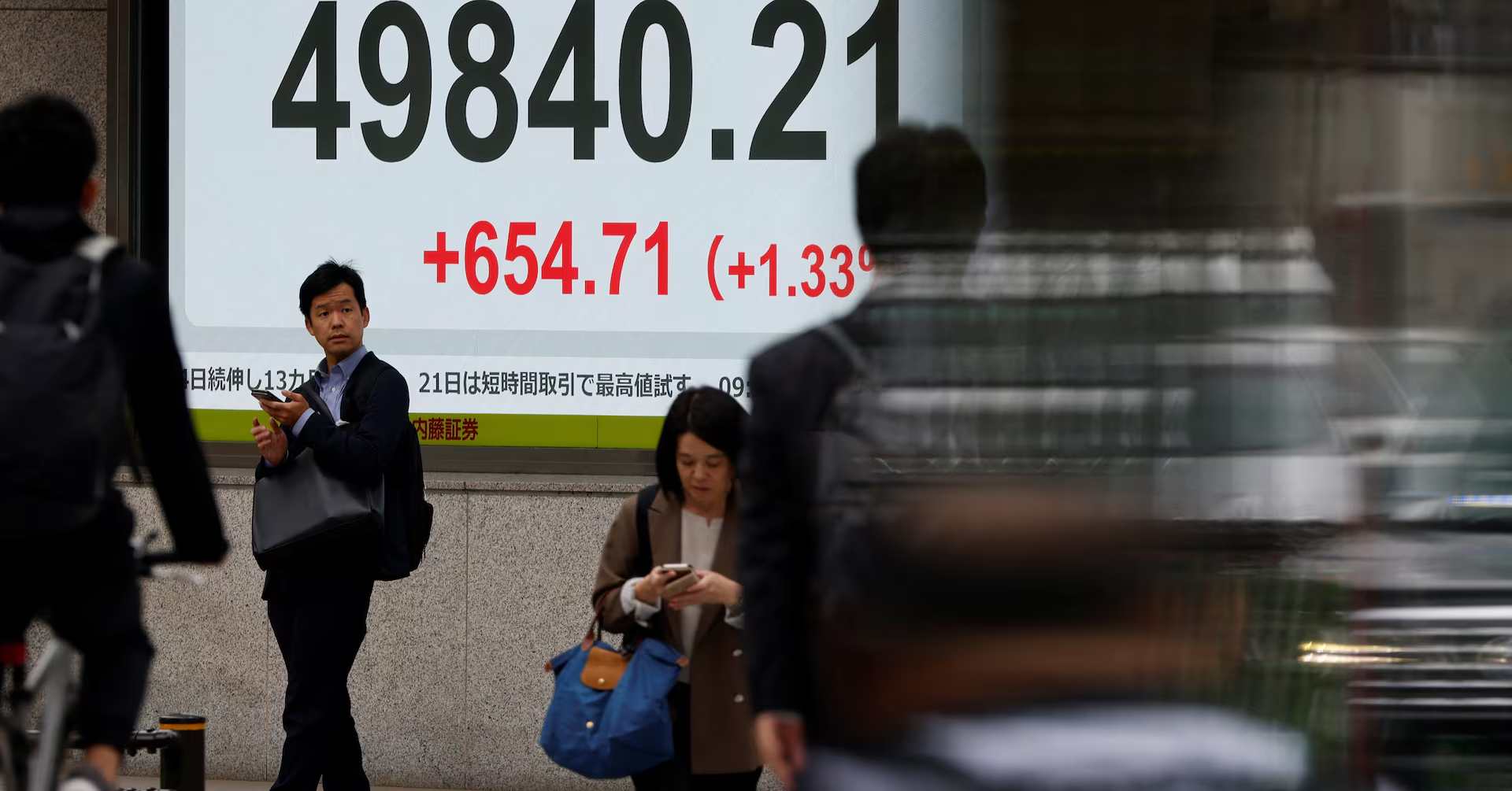
Asian stock markets reached record highs following expectations of U.S. Federal Reserve rate cuts, with Japan, South Korea, and Taiwan leading gains, amid a stable U.S. CPI report and easing bond yields, while currency and commodity markets showed mixed signals.

Japan's stock indices hit record highs driven by strong earnings and expectations of U.S. tariff adjustments, while other Asian markets showed uneven recovery amid cautious investor sentiment following Wall Street's retreat and U.S. Federal Reserve policy signals, including the appointment of Stephen Miran which suggests a dovish rate cut outlook.

The article reports on the recent implementation of new US tariffs on 92 countries, including a significant reduction in Cambodia's tariff from 49% to 19%, which helps protect its garment industry. Asian stocks declined amid concerns over the tariffs, and Canada faces a 35% levy. The tariffs are part of a broader US trade policy affecting global markets and negotiations.

Global stocks lost momentum amid uncertainty over the Federal Reserve's rate-cut plans, with strong US jobs data and political signals suggesting a hawkish stance. Asian markets declined after a rally, the US dollar rose, and investors are hedging against potential market downturns amid mixed economic signals and geopolitical tensions.

Asian stocks remained steady ahead of key tech earnings from TSMC and Netflix, amid market uncertainty over Federal Reserve Chair Powell's future and geopolitical tensions, with mixed responses in currency and bond markets and oil prices rising.

Financial markets opened the week cautiously due to geopolitical tensions affecting investment outlooks, with Asian equities declining, particularly in Korea amid a political crisis. Chinese stocks also fell following weak demand recovery data, while European and US futures saw slight decreases.

Asian chip stocks, including Taiwan Semiconductor Manufacturing Company and several Japanese firms, rose despite new U.S. semiconductor export curbs targeting China. The Biden administration's restrictions aim to limit China's access to advanced chip technology, impacting companies like Naura Technology and ACM Research. However, South Korean chipmakers Samsung and SK Hynix saw their shares increase, as the impact of high-bandwidth memory controls is expected to be minimal, with potential demand shifts to other markets.

U.S. stock markets closed higher on Monday amid hopes for a second Trump presidency, with the Dow Jones achieving a record closing high. Asian markets were mixed, with Japan's Nikkei 225 rising and Hong Kong's Hang Seng falling. European markets declined, and oil prices dipped due to concerns over Chinese demand. Gold approached an all-time high, while the U.S. dollar strengthened.