
Global Stocks Rebound as AI Fears Ease After Volatile US Session
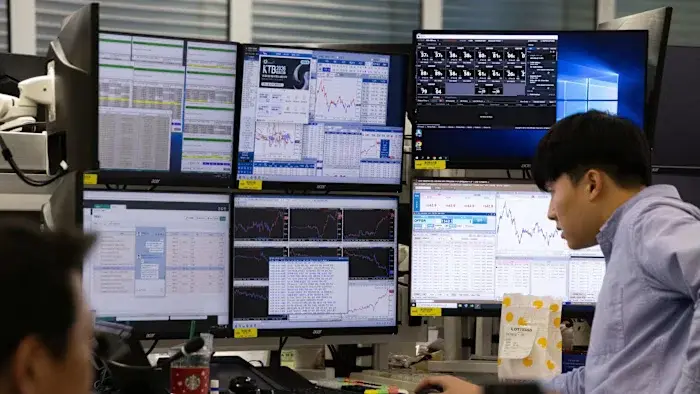
Global equity markets rose on Thursday, November 26, 2026, recovering from a sharp sell-off in US tech stocks the previous day. Asian and European indices gained, led by technology and chipmakers, as investors digested concerns over AI sustainability, new US tariffs, and rising inflation. US markets remained closed for the Thanksgiving holiday, but futures pointed to a modest rebound.
Key points
- The Stoxx Europe 600 rose 1.6%, with technology stocks leading gains; ASML climbed 3.1%.
- South Korea’s Kospi index closed 0.3% higher after a 6.2% drop on Wednesday; Samsung Electronics and SK Hynix gained 0.4% and 2.2%, respectively.
- Japan’s Nikkei 225 rose 0.9%, with SoftBank Group up 7.3% and Kioxia Holdings surging 12.6%.
- The Nasdaq 100 fell 0.6% on Wednesday, recovering from an intraday drop of 4.7%, and is on track for an 8.2% decline in November.
- US inflation data showed the PCE price index rose 3.8% year-on-year in October, while core inflation hit 3.3%.
- The Bank of Korea raised benchmark lending rates by 25 basis points to 3.25%, its highest in two years.
Background
The current volatility follows a series of AI-driven market swings in 2026. In early November, a $2.5 trillion sell-off in tech stocks occurred amid fears that Democratic midterm victories would tighten AI regulation. A subsequent rebound followed the reinstatement of Nvidia CEO Jensen Huang, but analysts warned of persistent risks. Anthropic’s record-breaking IPO in mid-November, which raised $81.3 billion, highlighted both the scale of AI investment and concerns over the company’s unprofitability and massive spending commitments.
How outlets are covering it
The Financial Times and Bloomberg emphasized the rebound in Asian tech stocks as a sign of stabilizing sentiment, with Bloomberg noting that eight of 11 subsectors in the MSCI Asia Pacific gauge advanced. CNBC highlighted the impact of new US tariffs and rising inflation, noting that investors appeared to look past the tariff news. AP News pointed out that some profit-taking pared gains toward the end of the day, suggesting caution. All sources agreed that AI sustainability and macroeconomic factors were key drivers of the volatility.
Why it matters
The rebound signals that investors are reassessing AI risks, but the underlying concerns about high interest rates, political backlash, and inflation remain. The Bank of Korea’s rate hike and US inflation data suggest that monetary tightening may continue, which could impact tech valuations. The market’s reaction to new US tariffs and AI spending will influence global economic policy and investment flows in the coming months.
What to watch
US markets will reopen on Friday, November 27, 2026, for a shortened trading session. Investors will watch for further reactions to the new US tariffs and inflation data. The Bank of Korea’s rate hike may influence other central banks’ policies. The sustainability of the AI trade will remain a key focus, with analysts divided on whether the recent sell-off was a buying opportunity or a sign of deeper structural issues.
- Global stocks climb after volatile US trading over AI risks Financial Times
- Global stocks rally as investors shrug off U.S. tariffs and AI jitters to 'fish for bargains' CNBC
- Stocks, Nasdaq Futures Climb as AI Trade Rebounds: Markets Wrap Bloomberg.com
- Global stocks rise and tech shares rebound as US closes for Thanksgiving AP News
- Stocks climb as traders shrug off latest US tariff salvo Reuters
Want the full story? Read the original reporting
Read on Financial Times