US stock futures opened flat Monday after a winning week, with investors focusing on Q3 earnings and inflation data. Major banks report this week amid rising oil prices and bond yields, while Trump considers joining Saudi strikes against Houthis in Yemen.
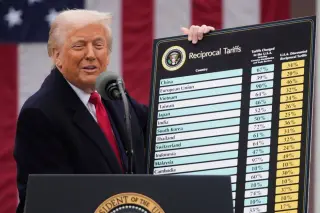
President Trump is maintaining his tariff policies despite a sharp decline in public support. Recent data indicates that voters are increasingly blaming his administration for rising costs, yet the White House remains committed to its trade strategy ahead of the 2026 midterms.
U.S. mortgage rates have surged to a three-year high, reaching approximately 7.5%, driven by rising bond yields, geopolitical tensions, and strong economic growth. This spike is suppressing home sales and refinancing activity, with experts warning that rates could climb to 8% if inflation remains elevated.
Halloween candy prices have risen by 8.1% year-over-year, driven largely by a 15.5% increase in chocolate costs due to global cocoa supply shocks. Despite broader economic pressures, including a 3.4% rise in consumer prices and stagnant wages, Americans remain committed to purchasing treats. The National Retail Federation projects total Halloween spending will reach $13.5 billion, with 96% of shoppers planning to buy sweets. While some consumers are cutting back or buying post-holiday, others view candy as a necessary small luxury amidst financial strain.
Q3 earnings season begins Tuesday with major banks reporting, amid concerns over soaring yields and a potential Federal Reserve rate hike. The September CPI report on Wednesday is critical for determining October monetary policy, while telecom stocks fell after SpaceX acquired spectrum licenses.
With three weeks left until the 2026 midterms, Republicans face a deepening affordability crisis that polls suggest is unlikely to be reversed by last-minute policy shifts. A new POLITICO Poll indicates that even significant economic improvements, such as an end to the Iran war or a drop in gas prices, would fail to sway undecided voters. This skepticism stems from a series of failed attempts to lower fuel costs, including a recent, largely symbolic deal to import Russian diesel. Simultaneously, cuts to social safety nets like SNAP and Medicaid, enacted via the One Big Beautiful Bill Act, are intensifying voter frustration. While Democrats are leveraging these cuts to attack the GOP, Republicans are struggling to counter the narrative of economic pain, which has expanded competitive races into previously safe Republican territory.
With three weeks left until the November midterms, the Republican Party faces a severe crisis driven by high inflation, a war with Iran, and President Trump’s low approval ratings. Polls show that even major policy shifts, such as ending the war or lowering gas prices, are unlikely to sway undecided voters. Republicans are scrambling to adjust ad spending and messaging in key states, but many strategists believe the party has run out of options to reverse its downward trajectory.
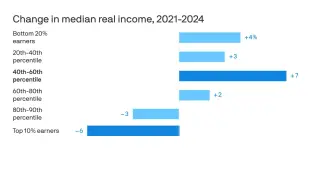
The Federal Reserve's 2025 Survey of Consumer Finances shows a sharp drop in income inequality as top earners' real incomes fell 14% while median family income rose 7% from 2021 to 2024. However, wealth inequality widened significantly, with the top 10% seeing net worth jump 31% while the bottom 40% saw slight declines. Simultaneously, debt distress hit a 15-year high, with nearly 20% of families behind on payments, a level not seen since the Great Recession.
US consumer sentiment fell to 46.3 in October, nearing a record low, as the Middle East conflict raised energy costs and inflation expectations. While lower-income households face severe strain, spending remains driven by the wealthy, creating a 'K-shaped' economy. The Federal Reserve raised rates in September, with further hikes expected in December.
Global bond markets are experiencing a historic sell-off, driving the U.S. 10-year Treasury yield to a 24-year high of 5.36%. This surge has pushed the average 30-year fixed mortgage rate to 7.4%, significantly reducing homebuyer affordability. The volatility is driven by rising inflation from oil shocks, massive government deficits, and heavy capital demand from AI infrastructure, with European nations like France facing the most acute fiscal stress.
The average 30-year fixed mortgage rate has climbed to 7.4%, marking the highest level in nearly three years. This surge is freezing the housing market, with existing home sales slowing to their lowest pace in over a year and mortgage applications dropping for the fifth consecutive week. The rise in rates is attributed to persistent inflation and geopolitical tensions, including the war in Iran, which have pushed Treasury yields higher. Consequently, refinance applications have fallen to their lowest levels since January 2025, while potential buyers are delaying purchases due to unaffordable costs.
US diesel prices remain near record highs at $6.28 per gallon, up 70% since the US-Israeli war on Iran began. Despite Trump's efforts to boost supplies, including a G7 reserve release and a red-dyed diesel waiver, prices have not dropped significantly. Analysts say the only real solution is ending the conflicts in the Middle East and Ukraine, which is unlikely before the November 3 midterms.
A CBS News analysis finds that most of President Trump's 2024 campaign promises to lower consumer costs have not materialized. While gas, groceries, and energy bills have risen significantly, mortgage rates remain high, and credit card caps were not enacted. The White House defends the record by citing job growth and tax cuts, but economists attribute rising costs to tariffs and the Iran conflict.
U.S. stock markets closed a record-setting week with broad gains, driven by resilient corporate earnings despite rising fuel costs and inflation concerns. The S&P 500 reached a new high, while Delta Air Lines reported weaker-than-expected summer profits. Investors now await major bank earnings, as consumer sentiment declines amid rising inflation expectations.
The Federal Reserve’s latest Survey of Consumer Finances shows that while income inequality narrowed, the ability of U.S. families to service debt has deteriorated to levels not seen since the Great Recession. The share of households behind on loan payments jumped to nearly 20%, up from 12% in 2022, while the top 10% of earners saw median net worth rise by 31%.