
Yen Rebounds to 159 After Failed Intervention, Igniting Carry Trade Risks
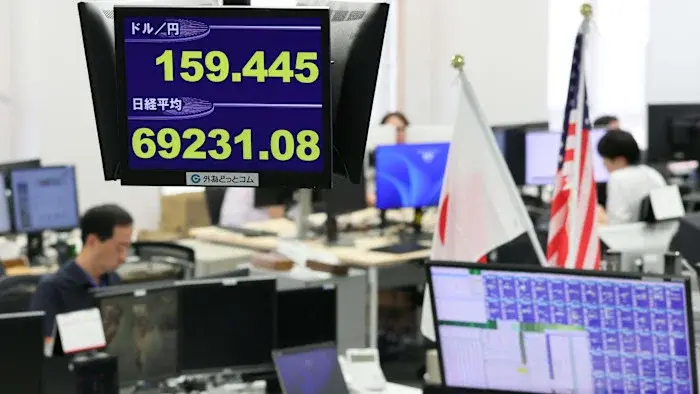
The Japanese yen has reversed its post-intervention gains, returning to approximately 159 per dollar. This resurgence of weakness follows a historic joint US-Japanese intervention in late July that briefly stabilized the currency. Market participants are increasingly betting against the yen, driven by significant interest rate differentials and speculative activity, raising concerns about potential market volatility.
Key points
- The yen weakened back to 159 per dollar, erasing gains from the late July intervention that had pushed the rate down to 156.
- The intervention, led by US Treasury Secretary Scott Bessent, was the first bilateral US-Japanese currency action since 1998.
- Investors are actively selling the yen daily, with data from the Bank of New York showing consistent negative bets.
- The 'carry trade' is driving pressure, as investors borrow in low-yield yen to invest in higher-yield US assets.
- US 30-year bond yields reached their highest borrowing cost since 2001, widening the gap with Japanese yields.
Background
The yen had reached near four-decade lows before the intervention. The Bank of Japan has maintained a cautious approach to interest rate hikes, while the US Federal Reserve and Treasury have intervened to curb disorderly movements. Previous interventions in 1998 and the current 2026 action highlight the recurring nature of this currency tension.
How outlets are covering it
The Financial Times emphasizes the speculative nature of the current yen selling, noting that large-scale carry trades and retail traders are rebuilding negative positions. It highlights that while the risk of a disorderly unwind is currently low, the sheer size of the trade limits policymakers' ability to intervene aggressively. The New York Times focuses on the structural limitations of one-off interventions, citing concerns over Japan's debt burden, Prime Minister Sanae Takaichi’s spending plans, and the perception that the Bank of Japan is raising rates too slowly. Both outlets agree that the yen’s weakness is driven by fundamental interest rate differentials rather than just speculative moves.
Why it matters
A sustained weakness in the yen could trigger a disorderly unwind of carry trades, potentially impacting global asset classes including US technology equities and emerging market financial assets. The failure of the intervention to provide lasting stability suggests that without a shift in underlying monetary policy or economic fundamentals, currency volatility may persist, affecting global financial stability.
What to watch
Watch for further yen weakness approaching the 160 level, which may trigger another intervention. Monitor US bond yields and Bank of Japan rate decisions, as these are the primary drivers of the yen’s value. Any significant shift in US monetary policy or Japanese fiscal policy could alter the carry trade dynamics.
- Traders are spoiling for a fight over the yen Financial Times
- Why Japan Is Struggling to Stop the Yen’s Decline The New York Times
- Japanese Drama Is No Sideshow for U.S. Markets WSJ
- Rate hike bets leave yen's post-intervention gains at BOJ's mercy Reuters
- When Japan buys yen, it unwinds a dangerous trade The Economist
Want the full story? Read the original reporting
Read on Financial Times