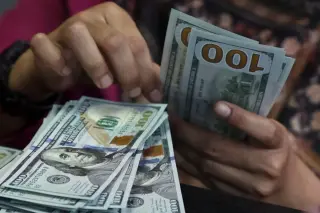
The euro has declined toward its lowest level against the US dollar in 17 months, while the dollar maintained its recent gains following the release of Federal Reserve meeting minutes. This currency movement reflects continued pressure on the euro and sustained strength for the US dollar in global markets.
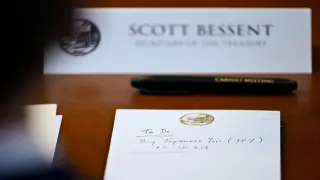
US Treasury Secretary Scott Bessent warned currency traders not to bet against the yen, saying he has “pretty good insight” into BOJ actions after a rare US–Japan intervention and declaring that “I am the house now.” His comments come as the yen rebounded toward ¥153 per dollar and as Washington expands long‑term bond buybacks to at least $4 billion, underscoring increased policy coordination and continued volatility in currency markets.
The yen jumped over 1% to around 156 per dollar as traders priced in a possible Bank of Japan rate hike and ongoing intervention talk, supported by record yen-buying outlays and hawkish comments from policymakers ahead of the Sept. 18 decision.
Alphaville analyzes the size of the US Treasury’s yen intervention, noting early public clues pointed to $5–$10 billion, but after reviewing July ESF notes and weekly Treasury releases, the best-guess size is roughly $500 million—tiny relative to the $26.3 billion maximum. The note timing and reporting gaps (spot vs forwards) complicate exact sizing, and Brad Setser arrived at a similar figure.
Treasury Secretary Scott Bessent responded to Sen. Elizabeth Warren’s questions about the US-Japan yen intervention by mocking her FX knowledge and offering a 'Foreign Exchange for Dummies' tutorial. He argued the Exchange Stabilization Fund swap involved no new borrowing or debt for Japan and rejected Warren’s taxpayer-risk concerns, defending the move as necessary to prevent disorderly markets in coordination with Japan, while noting the exact size of the Treasury’s yen purchase has not been disclosed.
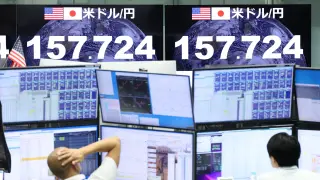
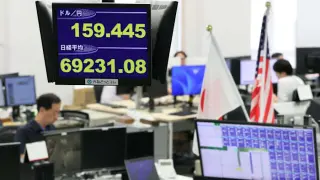
Two weeks after a joint US-Japan intervention aimed at stabilizing the yen, traders are increasingly betting on further moves as the dollar hovers around ¥159; the carry-trade dynamic—funding high-yield bets with cheap yen—keeps yen under pressure, aided by high US yields and cautious BOJ policy. While intervention may have slowed the slide for now, a disorderly unwind remains a market risk that could ripple through US tech and EM assets, so policymakers face a delicate balance.
In an Unhedged interview, Karthik Sankaran says the US–Japan yen intervention met criteria for multilateral action and could become more regular, though its effectiveness hinges on the Bank of Japan’s policy. He argues that dollar centrality, not just strength, drives policy and advocates broader, less selective FX tools. He also weighs the renminbi as an alternative, noting that a stronger yen could encourage renminbi appreciation and benefit global south economies.
FT Alphaville explains the latest US-Japan yen intervention, arguing it echoes but may not replicate the 1998 episode: the 1998 move produced a brief intraday yen rally before renewed weakness as Russia’s default and the LTCM crisis unleashed a global unwind; today’s intervention sent the yen to about 155.5 intraday, but the outlook remains uncertain and likely hinges on exogenous shocks and potential Fed easing rather than a lasting reversal in the yen’s trend.
The U.S. and Japan carried out a rare, coordinated intervention to buy yen and arrest its slide to a 40-year low, aiming to curb volatility and reduce risks to Asian markets; the move signals strategic concerns about regional currency weakness and could reflect U.S. Treasury interests in supporting Asia-linked assets, but sustained yen stability will hinge on BoJ rate hikes and credible policy from Tokyo.
Barry Eichengreen argues that the joint yen intervention by the US Treasury and Japan’s Finance Ministry sends a message beyond market noise: the dollar’s status as a reserve currency is weakening, and the modest ¥14 trillion effort will be short-lived unless it is backed by stronger fundamentals, such as faster BoJ rate hikes. The use of euros to fund part of the operation and Washington’s cautious approach via facilities like FIMA suggest the US wants currency stability without triggering heavy dollar sales, implying central banks may diversify reserves more in the future.
Friday’s joint US–Japan yen intervention briefly steadied dollar-yen around 156 after a move toward 164, but the FT’s Unhedged argues the motive is self‑preservation: shielding US Treasuries from higher yields by signaling Fed‑backed dollar liquidity via the FIMA facility, with Japan’s yields, US payrolls and Fed messaging likely to determine whether the effect lasts.
South Korea’s won jumped nearly 8% in July, the second-best global performer after Colombia, as repatriation of overseas earnings by chipmakers, a tech stock sell-off, and a tighter policy stance supported the currency. Repatriation flows—estimates of about $1 billion per day mid-July to mid-August—along with Samsung and SK Hynix’s announced investments and a blockbuster US listing for SK Hynix, helped domestic demand for won. The Bank of Korea raised rates to 2.75%, with Q2 GDP at 3.7% and inflation at 3.2%, suggesting policy could continue to support the won even as the Kospi fell sharply on AI stock weakness. Foreign outflows moderated but remained net selling, underscoring a shift in flow dynamics that aided the won’s rebound.
The U.S. Treasury reportedly bought yen to shore up the battered Japanese currency, marking the first yen-buying intervention with Tokyo in more than a decade, with the New York Fed selling euros for yen on the Treasury’s behalf though amounts weren’t disclosed. Japan signaled potential policy action next week to deter speculative bets and stabilize markets, and indicated it can use tools like the Fed’s FIMA repo facility to access dollar liquidity as it presses to stem yen weakness.
The Japanese yen fell to about 162 per dollar, its weakest since 1986, prompting officials to warn they will act against excessive moves; authorities signaled readiness to intervene as the BOJ raised rates to 1% and Japan spent over 11.7 trillion yen in FX reserves to support the currency, reflecting persistent weakness driven by yield differentials and carry trades.
The yen firmed modestly after a senior Japanese finance official warned decisive government action may be required, a message traders interpreted as a prelude to intervention. The currency traded around ¥159.8 per dollar after briefly approaching ¥160, with BoJ Governor Ueda saying currency moves are being monitored for their impact on forecasts. The episode comes amid ongoing speculation about potential government action, including talks of intervention in crude-oil markets to shield households from higher energy costs.