
Wall Street Executives Warn Bipartisan Extremism Threatens AI and Business Stability After Democratic Sweep
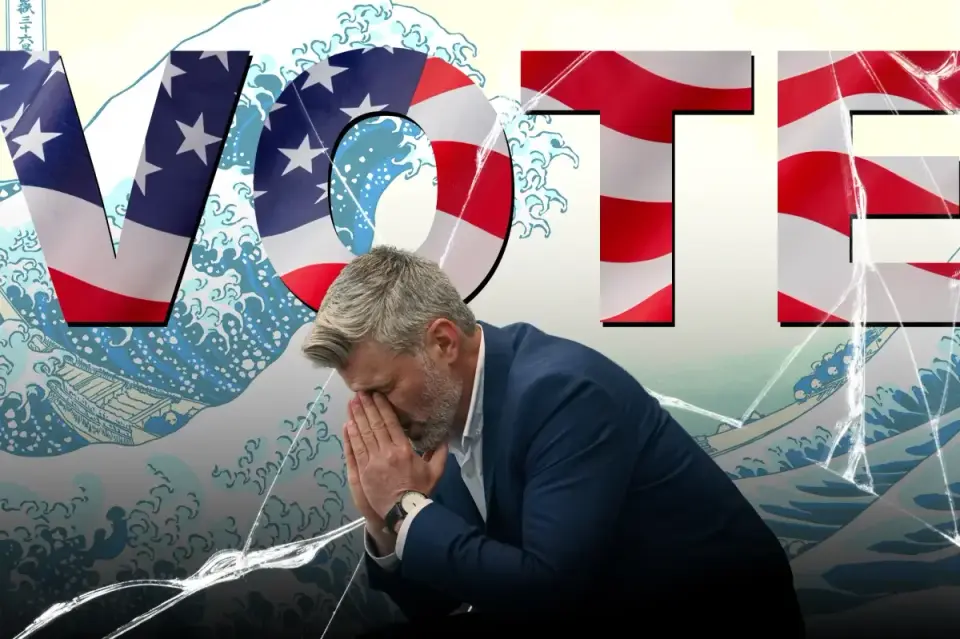
Following a decisive Democratic victory in the 2026 midterms, top corporate executives express deep concern not just about policy shifts, but about the rise of extremism within both major US political parties. While Democrats now control both chambers of Congress, business leaders fear that populist factions on the right (MAGA) and left (Democratic Socialists of America) will drive unstable, anti-business policies. Key risks include potential crackdowns on AI infrastructure, increased scrutiny of cryptocurrency, and continued tariff policies that harm consumer wallets. Executives view the current political landscape as an 'era of overreach' where neither party is willing to moderate its base, creating long-term uncertainty for corporate strategy and market stability.
Key points
- Democrats achieved a 'blue tsunami' in the 2026 midterms, securing control of both the House and Senate, including key seats in traditionally Republican states like Texas and South Carolina.
- Top C-suite executives identify the primary threat as the dominance of extremist factions within both parties, with MAGA comprising 40% of Republican primary voters and DSA-aligned members making up 35% of the Democratic base.
- Business leaders fear new congressional investigations into AI companies regarding job displacement, data center environmental impacts, and cryptocurrency, particularly given the Trump family's financial ties to the latter.
- Despite Democratic control, President Trump retains veto power and control over regulatory agencies, which limits the immediate ability to pass major tax hikes or regulations, but does not stop legislative inquiries.
- Voters rejected data center projects in 37 of 38 local ballot contests, signaling strong public opposition to AI infrastructure expansion, a trend that may slow adoption and investment.
- Corporate responses include increased focus on employee welfare, such as Whole Foods CEO Jason Buechel pledging $230 million for wages and benefits, to counter public distrust and economic anxiety.
Background
This development follows a period of heightened market volatility in late 2026, where investors braced for a potential Democratic 'blue wave' that could trigger sell-offs in AI and defense stocks. Earlier concerns included the impact of the Iran conflict on energy prices and the potential for credit card rate caps to threaten financial sectors. The recent Democratic sweep has intensified fears that AI infrastructure spending, previously a major driver of market growth, will face significant regulatory and public backlash, potentially puncturing what some analysts view as a bubble in AI-related stocks.
How outlets are covering it
The New York Post emphasizes the structural problem of bipartisan extremism, arguing that neither party is likely to purge its populist base, leading to a volatile 'era of overreach' for business. It highlights the specific risks to AI and crypto sectors from Democratic-led investigations. In contrast, the Baton Rouge Business Report focuses on the practical business response, noting that companies are reassessing political strategies and prioritizing neutrality and employee welfare to maintain public trust. It highlights the tangible voter backlash against data centers as a key indicator of shifting public sentiment. Yahoo Finance corroborates the NY Post's concerns about tax and regulatory changes but stresses the mitigating factor of Trump's veto power and control over regulatory agencies, suggesting that while investigations are likely, major legislative changes may be blocked. All sources agree on the significance of the Democratic sweep but differ in their emphasis: NY Post on ideological polarization, Business Report on corporate adaptation, and Yahoo Finance on the balance of power between the White House and Congress.
Why it matters
The 2026 midterms have created a uniquely unstable political environment for US businesses, where the traditional corporate-friendly consensus has eroded. The rise of populist factions in both parties means that policy will be driven by ideological extremes rather than pragmatic compromise, leading to unpredictable regulations, investigations, and public backlash against key industries like AI and finance. This uncertainty forces companies to adopt defensive strategies, focus on employee relations to build public trust, and prepare for potential legislative scrutiny that could disrupt growth sectors. The outcome signals a shift away from traditional corporateist politics, making long-term strategic planning more difficult and increasing the risk of market volatility driven by political rather than economic factors.
What to watch
Expect increased congressional investigations into AI companies, cryptocurrency, and the business activities of the Trump family, as Democrats use their new majority to probe these areas. Companies may continue to pivot toward employee welfare and public trust initiatives to counter negative public sentiment. The White House will likely use veto power to block major tax or regulatory changes, but the lack of a unified political front may lead to prolonged legislative gridlock and uncertainty. The impact on AI infrastructure expansion will depend on how local and state-level opposition to data centers translates into federal policy, potentially slowing investment in this sector. The ongoing Iran conflict and tariff policies will continue to affect consumer prices and business costs, adding to the economic pressure on both households and corporations.
- What truly worries top Wall Street executives following the Democrats’ midterm sweep New York Post
- The post-midterms playbook for America Inc Financial Times
- What CEOs should actually take away from the Democrats’ midterm sweep Fortune
- Election results put businesses on notice about AI, affordability and public trust Baton Rouge Business Report
- Wall Street Executives Fear Higher Taxes and AI Crackdown After Democrats’ Midterm Sweep Yahoo Finance
Want the full story? Read the original reporting
Read on New York Post