
Polls Show 63% of Americans Want AI Pause as Wealth Tax Support Hits 61%
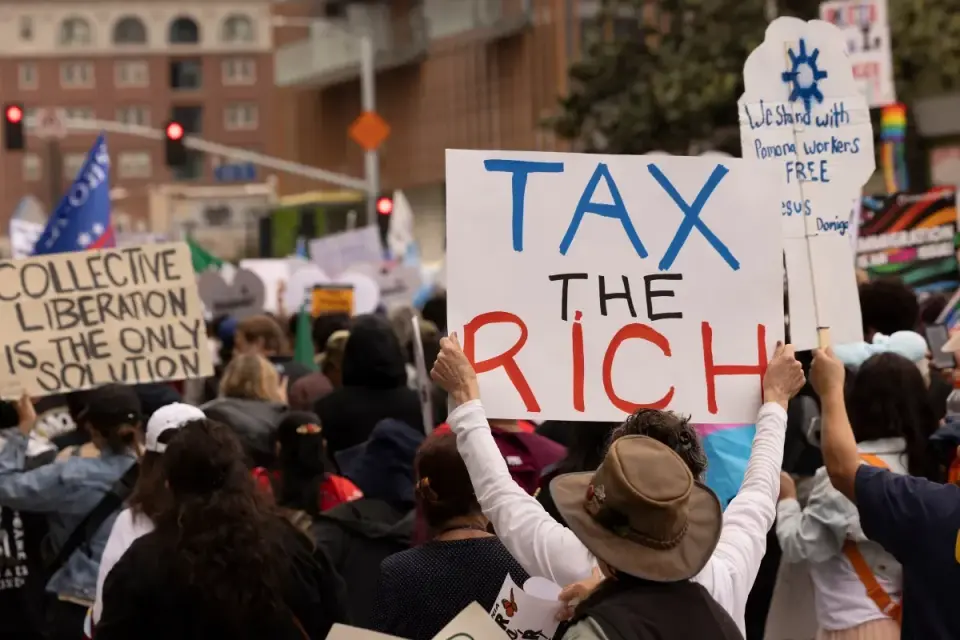
A Wall Street Journal poll indicates 63% of US adults support pausing AI development, while 57% demand immediate government regulation. This sentiment coincides with broad bipartisan support for a wealth tax on billionaires and other populist economic policies, reflecting growing frustration with tech-driven wealth concentration.
Key points
- 63% of US adults support a pause on AI development, and 57% want immediate government regulation, according to a Wall Street Journal poll of 1,500 registered voters.
- Only 12% of respondents trust AI companies to self-regulate, indicating a significant lack of confidence in industry-led oversight.
- 61% of voters support a federal wealth tax on individuals with a net worth exceeding $1 billion, a policy that garners support across Democratic, Republican, and Independent voters.
- 71% of the population opposes data center construction in their local areas, highlighting a tangible backlash against the physical infrastructure of AI.
- The Pro-Human Assembly in Washington, D.C., featured figures like Bernie Sanders and Steve Bannon, signaling a bipartisan, cross-ideological movement against AI.
Background
This surge in anti-AI sentiment follows earlier developments, including President Trump’s 2026 announcement of an 'AI Force' to accelerate development and Bill Gates’s 2026 memo calling for an AI tax and human-only job categories. Additionally, corporate tax receipts have dropped due to AI-driven capital spending under 2025 incentives, creating a fiscal tension between tech growth and public revenue.
How outlets are covering it
Futurism and The New York Times emphasize the link between AI and extreme wealth concentration, with the latter noting a bipartisan backlash against data centers. The New Yorker highlights a 'humanist' dimension, where critics like artists and religious leaders fear AI erodes human consciousness and creativity, rather than just focusing on jobs. Derek Thompson argues that AI is failing its promise of 'cheap abundance,' instead contributing to inflation and rising costs, which fuels public anger. While Futurism frames the issue as populist economic redistribution, The New Yorker suggests the opposition is rooted in a philosophical defense of human agency and spiritual value.
Why it matters
The overwhelming public support for AI regulation and wealth taxes signals a potential shift in the 2026 midterm election landscape. As AI infrastructure drives up costs and concentrates wealth, the political consensus is moving away from industry self-regulation toward government intervention, challenging the tech sector's traditional stance on minimal oversight.
What to watch
Lawmakers like Greg Casar and Bernie Sanders are introducing legislation to ban artificial superintelligence. The coming months will likely see intensified debates over data center construction permits and potential federal wealth tax proposals, as the November midterm elections approach.
- An Overwhelming Percent of Americans Now Want to Pause AI and Tax Billionaires Futurism
- Opinion | Behold the Paragons of Rank Incompetence The New York Times
- We Used AI to Find Out Just How Much Americans Hate AI WSJ
- The Humanism Driving the Anti-A.I. Movement The New Yorker
- We’re Missing a Key Reason Why Americans Hate AI derekthompson.org
Want the full story? Read the original reporting
Read on Futurism