
Eurozone Leaders Endorse De Cos for ECB Presidency
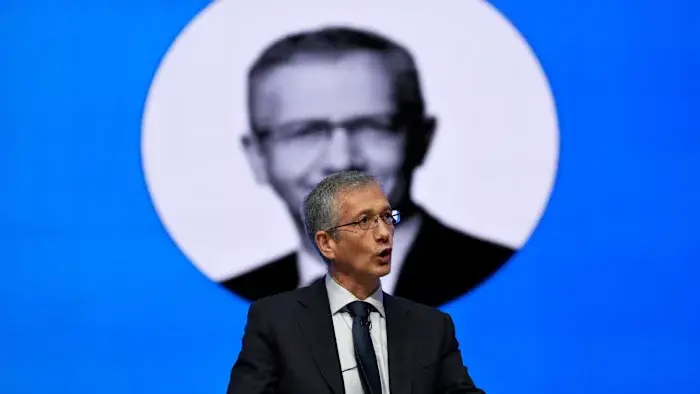
Pablo Hernández de Cos is set to become the next president of the European Central Bank after eurozone leaders unanimously endorsed him on Thursday. The 55-year-old Spanish economist, currently general manager of the Bank for International Settlements, will succeed Christine Lagarde in February 2027. The appointment, which also includes new board members from France and Germany, aims to stabilize the institution amid rising inflation and concerns over high government debt in member states like France.
Key points
- Eurozone leaders unanimously endorsed Pablo Hernández de Cos as the next ECB president, ending support for Dutch candidate Klaas Knot.
- De Cos will succeed Christine Lagarde, who plans to step down on February 7, 2027, nine months early to focus on other roles.
- The appointment package includes Laurence Boone (France) and Markus Brunnermeier (Germany) for key executive board roles.
- Formal approval is expected at a December summit, with nonbinding consultations with the European Parliament to follow.
- De Cos faces challenges including 4% inflation and high borrowing costs in France, where 10-year yields hit 5% in October.
Background
The ECB has had four presidents since its 1998 founding; De Cos would be the first Spaniard to hold the post. Lagarde’s early departure was announced last month, citing a desire for 'greater freedom' to speak on non-monetary issues, particularly ahead of France’s April presidential election. The ECB has raised rates twice this year (June and September) to combat inflation, which reached 4% in October, double its 2% target. Market expectations suggest further rate hikes in December and 2027.
How outlets are covering it
The Financial Times and CNN emphasize the political consensus and the 'package deal' negotiated by France and Germany to balance northern and southern European representation on the ECB board. The New York Times highlights the critical timing of the transition amid high inflation and potential debt crises in France. All sources agree on the unanimous endorsement but note that formal appointment is still pending. The Dutch government initially resisted, favoring Klaas Knot, but relented after it became clear De Cos had sufficient backing.
Why it matters
The ECB is the world’s second most powerful central bank, and its leadership decisions impact monetary policy across 21 eurozone countries. De Cos’s appointment signals a shift in leadership amid persistent inflation and fiscal challenges, particularly in France, where high debt levels threaten financial stability. The new leadership must navigate a 'complex backdrop' of geopolitical shifts, technological changes, and consequential elections across Europe in 2027.
What to watch
Formal approval of De Cos and the new board members is expected at a December summit of EU leaders. Nonbinding consultations with the European Parliament and the ECB’s Governing Council will follow. Lagarde is set to depart on February 7, 2027. The ECB is expected to raise its benchmark rate to 2.75% at its December 17 meeting, with further hikes anticipated in 2027.
- Pablo Hernández de Cos wins race for ECB presidency Financial Times
- European Central Bank Chooses Pablo Hernández de Cos as Next President The New York Times
- Spain's De Cos to take over as ECB president from Lagarde Reuters
- World in Brief: the ECB picks its next president; S&P puts Nvidia on downgrade watchlist The Economist
- European Central Bank set to appoint its first Spanish leader | CNN Business CNN
Want the full story? Read the original reporting
Read on Financial Times