
Seoul rejects Trump’s $54B Alaska LNG claim, citing unresolved commercial viability
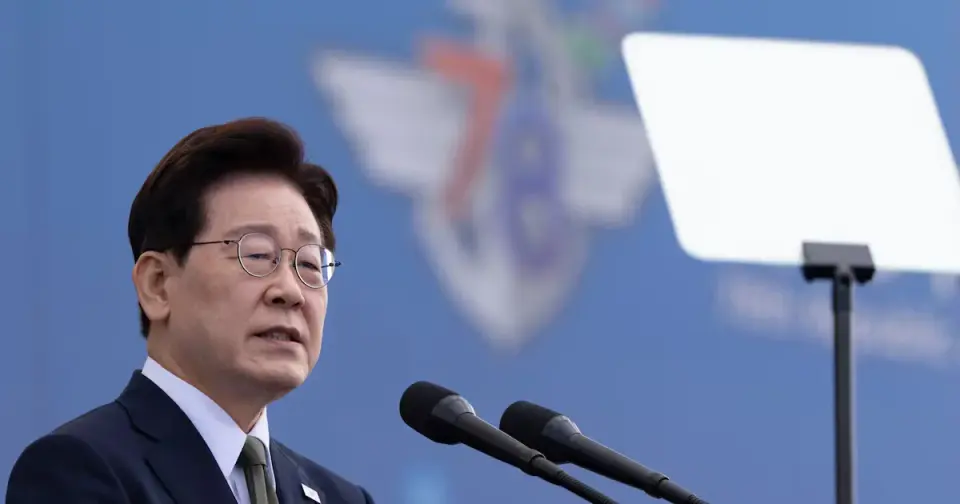
South Korean officials formally disputed President Donald Trump’s announcement of a $54 billion investment in Alaska’s liquefied natural gas project, stating no commitment has been made. While Washington framed the deal as finalized to support Republican candidates, Seoul emphasized that the project remains subject to legal reviews and commercial viability assessments. Industry experts and critics argue the announcement was a political stunt ahead of midterms, noting that the project’s economics remain unproven and no Korean representatives attended the White House event.
Key points
- Trump announced a $54 billion South Korean investment in Alaska LNG on Sept. 30, 2026, alongside Sen. Dan Sullivan and Rep. Nick Begich.
- South Korean President Lee Jae Myung and Industry Minister Kim Jung-kwan stated the project has not met preconditions for commercial viability or legal compliance.
- The U.S. Commerce Department fact sheet confirms the parties agreed to 'commence working' on the project but lists no specific investment amount.
- Trump threatened to double tariffs on South Korea if they do not sign the deal shortly, referencing his current 15% tariff rate.
- Former gas line coordinator Larry Persily described the event as a 'political stunt' to help Sullivan, noting no Korean company representatives were present.
Background
The Alaska LNG project, estimated to cost up to $54.5 billion, has faced financing hurdles for over a decade. It involves an 800-mile pipeline, a North Slope treatment plant, and a liquefaction terminal in Southcentral Alaska. Previous attempts to secure foreign investment have failed due to unresolved commercial viability issues. The current dispute occurs amid broader U.S.-South Korea trade negotiations, where Seoul has agreed to a $350 billion investment package, including $120 billion for nuclear plants and $200 billion for strategic projects, in exchange for tariff reductions.
How outlets are covering it
The Anchorage Daily News and CNN highlight the sharp contradiction between the White House’s definitive language and Seoul’s cautious stance, noting that no Korean officials attended the announcement. Politico emphasizes the timing, linking the dispute to the upcoming midterm elections and Sullivan’s re-election bid. NucNet provides context on the broader $350 billion trade deal, framing the LNG project as one of three major energy initiatives. Industry observers like Larry Persily and Brad Keithley argue the announcement changes nothing about the project’s fundamental economic challenges, while Alaska politicians like Gov. Mike Dunleavy and Sen. Sullivan maintain confidence that the deal will proceed despite Seoul’s current objections.
Why it matters
The dispute highlights the fragility of U.S.-South Korea trade relations and the risks of politicizing energy infrastructure deals. If South Korea does not commit, the project may face another decade of delays, impacting energy security and job creation in Alaska. Additionally, Trump’s threat to double tariffs could escalate trade tensions, affecting global LNG markets and Asian energy importers who rely on U.S. supplies.
What to watch
South Korea will conduct a review process under the U.S.-Korea memorandum of understanding to determine if the project meets commercial and legal standards. Glenfarne, the project’s lead developer, plans to meet with Korean representatives to finalize investment structures. The outcome will depend on whether Seoul views the project as commercially viable and whether Washington maintains its tariff threats.
- South Korean official says Trump announcement on Alaska LNG went ‘far beyond what was agreed’ Anchorage Daily News
- Trump announced a $54 billion energy investment from South Korea. South Korea said he jumped the gun CNN
- Korea to Trump: We aren’t funding your Alaska pipeline, yet Politico
- South Korea Announces $120 Billion Plan For Eight Large-Scale Nuclear Power Plants In US NucNet
- Trump says he did not 'jump the gun' on South Korea Alaska LNG investment announcement Reuters
Want the full story? Read the original reporting
Read on Anchorage Daily News