Tariff refunds have begun to be issued to eligible importers, with a heavy-truck manufacturer and a toy company among the first recipients as payments start flowing out.
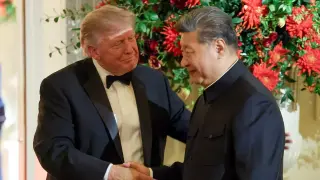
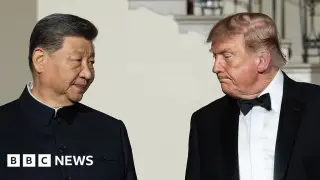
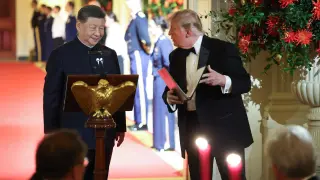
President Trump arrives in Beijing with tempered expectations, pursuing deals with Xi Jinping as China presses on Taiwan and Washington weighs its Taiwan posture amid broader security concerns including Iran.
After a Supreme Court ruling struck down many Trump tariffs and ordered refunds, more than 26,000 companies signed up for a CBP refund portal, including Apple and Costco, choosing to pursue refunds quietly to avoid provoking Trump. Some firms are still suing to preserve their rights, while others delay or avoid litigation to dodge potential backlash, as the portal handles straightforward claims and disputes emerge over filings.
President Trump travels to Beijing for high-stakes talks with Xi Jinping to stabilize and recalibrate U.S.-China trade, seeking to ease tensions, discuss tariffs and market access, and set a framework for calmer economic relations.
A U.S. Court of International Trade ruled the Trump administration’s 10% Section 122 tariff unlawful for a narrow group of plaintiffs but did not repeal the tariffs for most imports; this comes after a Supreme Court decision invalidated IEEPA tariffs and could unlock about $175 billion in refunds for importers, though duties remain in place for now with an average rate around 7.2%. The administration is expected to appeal, and policymakers may lean on Section 301 for future tariffs, while importers should monitor duties and preserve records for potential refunds.
U.S. Trade Representative Jamieson Greer, Trump’s top tariff strategist, is trying to turn the administration’s tariff agenda into a legally durable regime by shifting from IEEPA powers to Section 301 and related tools, including a short-term 10% tariff under Section 122 and a longer-term framework. He’s spearheaded 96 investigations and secured nine reciprocal deals, but Supreme Court limits and voter anxiety over prices complicate a path to lasting tariffs. Greer’s rising influence suggests the White House seeks tariffs that endure beyond this term, even as Republicans and the public debate their cost.
A federal court ruled against the global tariffs imposed by President Trump, delivering a legal setback to his trade agenda and blocking or overturning the new tariffs.
The USTR’s 2026 Special 301 Report designates Vietnam as a Priority Foreign Country for IP protection and enforcement, moves Argentina and Mexico to the Watch List, adds the European Union to the Watch List, and removes Bulgaria from the Watch List. Six countries remain on the Priority Watch List and 19 are on the Watch List. USTR will decide within 30 days whether to launch a Section 301 investigation against Vietnam, following public submissions and a hearing with government, industry, and NGO representatives.
The Trump administration is pursuing new import taxes to replace tariffs that the Supreme Court rejected, signaling another push to shape trade policy through unilateral tax measures.
Ambassador Jamieson Greer announced that the United States and the European Union have agreed on an Action Plan to coordinate trade policies for critical minerals, with the goal of negotiating a binding plurilateral agreement and exploring measures such as border-adjusted price floors to bolster domestic industries and downstream sectors.
The Trump administration launched CAPE, a tariff-refund portal to return more than $166 billion in tariffs after many were struck down by the Supreme Court; refunds are limited to entities that paid tariffs directly to the U.S. government, meaning most consumers who faced higher prices won’t qualify. The move follows a court ruling to advance the refund process, and Trump continues to pursue tariffs under other authorities despite the limited refunds.
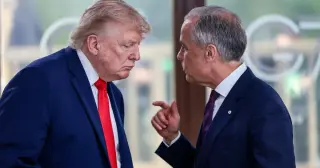
Canadian Prime Minister Mark Carney says decades of close economic ties with the United States have become a weakness and vows to diversify Canada's trade partners amid higher tariffs and a shifting global economy; a review of the US-Canada-Mexico trade pact is planned for July.
The Trump administration is urging countries to sign a joint declaration that prioritizes trade over aid and rejects the U.S. role as a leading humanitarian aid provider. Secretary of State Marco Rubio’s cable provides diplomats with talking points to present the idea at the U.N., framing it as part of a broader push to project an optimistic
A three-judge panel at the U.S. Court of International Trade is weighing whether President Trump properly invoked the 1974 Trade Act to reimpose a 10% global tariff, a measure limited to 150 days and intended as a bridge after the Supreme Court struck down broader tariffs. The hearing highlighted uncertainties about applying a 1970s-era provision to today’s economy, with DOJ defending the authority and opponents arguing the statute is obsolete and may require clearer congressional authorization. A ruling could shape Trump’s tariff strategy and the broader trajectory of U.S. trade policy.
White House advisers clash over how to implement a threatened 50% tariff on countries that supply weapons to Iran, with Kevin Hassett arguing IEEPA emergency powers could justify action in a state of conflict while Jamieson Greer cautions IEEPA cannot authorize peacetime tariffs and other tools would be needed; the Supreme Court previously limited IEEPA’s tariff authority, leaving the plan legally uncertain and likely to face court challenges as the administration pursues other tariff powers.