
CME Group Launches AI Compute Futures to Hedge Volatile GPU Rental Rates
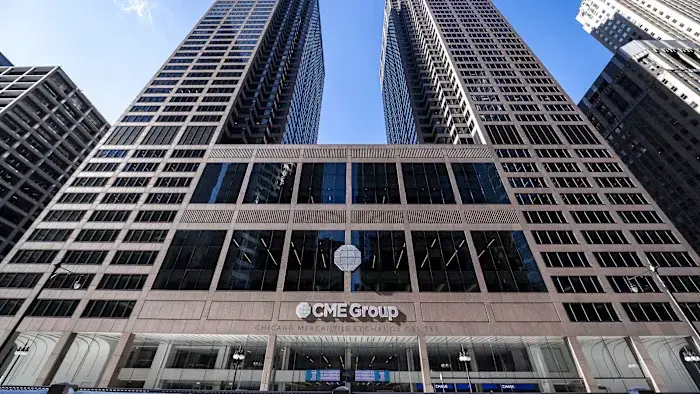
CME Group is introducing futures contracts for AI compute, aiming to standardize the trading of GPU rental rates. The move targets a market projected to reach $2.3tn by 2030, allowing firms to hedge against volatile pricing for Nvidia H100 and B200 chips.
Key points
- CME Group announced futures contracts tied to Nvidia H100 and B200 rental rates, targeting a listing date of October 5, 2026, subject to regulatory approval.
- The contracts use Silicon Data benchmarks, with B200 capacity priced at $5.86 per hour and H100 at $2.77 per hour, extending up to 36 months into the future.
- H100 rental rates spiked to $8 per hour in early 2024 before falling below $2 by late 2025, creating significant volatility that necessitates hedging tools.
- Boston Consulting Group estimates the AI compute market will grow from $360bn in 2025 to $2.3tn by 2030, representing a massive potential revenue stream for exchanges.
- Luxor is also developing cash-settled derivatives for AI compute, though it notes that a liquid market has not yet formed and current trading volumes are minimal.
Background
The push for compute derivatives follows a period of intense AI-driven market volatility. In late September 2026, US stock futures rose on AI optimism, with Meta Platforms surging 11% after its Muse AI app launch, adding $192bn to its market cap. Earlier in August, Nvidia’s earnings were scrutinized for AI return on investment, highlighting the critical role of compute economics in broader market sentiment. This new derivatives market attempts to formalize the pricing of these essential AI resources, similar to how oil futures standardized energy trading in the 20th century.
How outlets are covering it
Financial Times and Traders Union emphasize the structural challenges of standardizing compute contracts, noting that GPU performance varies by cluster configuration and software, and that rival index providers like Ornn and Silicon Data do not always align. KKR frames the issue through a credit lens, warning that the AI buildout requires specific financing structures and that capital concentration among a few hyperscalers creates systemic risks. CryptoSlate highlights the practical difficulties for operators, noting that basis risk and counterparty credit issues may limit the effectiveness of these hedges, as Luxor’s derivatives business remains in early stages with no established liquid market.
Why it matters
The introduction of compute futures could transform AI infrastructure from a spot market into a standardized commodity, providing a benchmark for valuing AI assets and hedging against price swings. However, the success of these contracts depends on achieving market consensus on benchmarks and ensuring sufficient liquidity, which remains uncertain given the concentrated nature of the AI supply chain.
What to watch
CME Group aims to list its compute futures on October 5, 2026, pending regulatory review. Market participants will watch for initial trading volumes and whether the Silicon Data benchmark gains acceptance over competing indices. Luxor is also expected to expand its cash-settled derivatives offerings, though it has not yet disclosed specific collateral terms or trading volumes.
- The coming futures market in AI compute Financial Times
- Let There Be Compute! KKR: A Leading Global Investment Firm
- Plunging GPU prices threaten AI hosts, and new hedges step in CryptoSlate
- CME puts AI compute on Wall Street, miners eye new market Cryptopolitan
- CME Group plans compute futures push for AI infrastructure market Traders Union
Want the full story? Read the original reporting
Read on Financial Times