
Trump Announces $200B Korean Energy Investment, but Seoul Cites Unresolved Legal and Commercial Hurdles
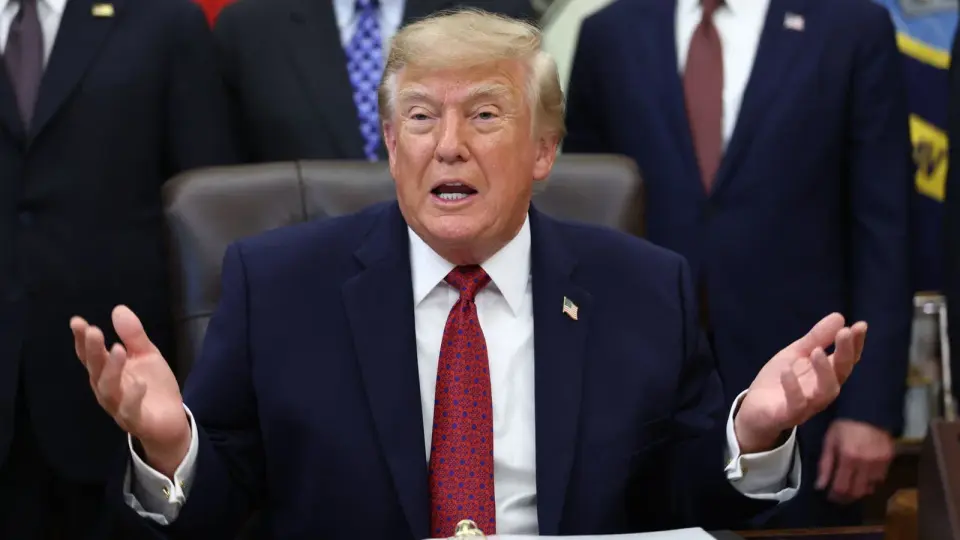
President Trump announced a $200 billion South Korean investment package for U.S. energy projects, but Seoul officials clarified that key components, including the Alaska LNG project, remain subject to commercial viability reviews and legal compliance.
Key points
- Trump announced a $200 billion South Korean investment package for U.S. energy infrastructure, including $120 billion for eight nuclear reactors, $22.3 billion for a Texas gas plant, and $50 billion for the Alaska LNG project.
- South Korean President Lee Jae Myung and Trade Minister Kim Jung-kwan stated that participation in the Alaska LNG project and nuclear plants is contingent on commercial viability and legal reviews, not finalized commitments.
- The Texas gas plant, led by Related Cos. and NextEra Energy, is expected to begin operations in 2029, with full completion by 2032, and will supply power to co-located data centers.
- Trump linked the investments to a trade deal that reduced U.S. tariffs on Korean exports to 15%, while Korean officials protested the U.S. characterization of the deal as a finalized commitment.
- The announcement occurred ahead of U.S. midterm elections, with Trump crediting Senator Dan Sullivan for the Alaska project, while both Sullivan and Democratic rival Mary Peltola praised the investment.
Background
In August 2026, tensions arose over South Korea’s delayed delivery of a $350 billion investment pledge tied to a trade deal, with only $150 billion earmarked for projects like shipbuilding. Trump had also ordered reductions in U.S.-South Korea military exercises, shifting the alliance toward economic integration. Seoul had been weighing new pledges in late summer or early fall, but no concrete projects were announced until this week.
How outlets are covering it
CNBC reported the full $200 billion package as a finalized agreement, emphasizing job creation and energy dominance. Alaska Public Media highlighted that Korean officials had not finalized the Alaska LNG investment, with Trade Minister Kim Jung-kwan stating the U.S. announcement 'went beyond what had been agreed.' The Washington Post framed the announcement as a political move to appeal to voters ahead of midterms, noting Trump’s focus on job creation and energy projects to counter economic dissatisfaction. All sources agreed on the total investment figure but differed on the status of the Alaska LNG project, with CNBC presenting it as agreed and Alaska Public Media and the Washington Post noting it remained subject to commercial and legal reviews.
Why it matters
The announcement signals a shift in U.S.-South Korea relations toward economic integration, with potential implications for energy infrastructure, job creation, and geopolitical alliances. The unresolved status of the Alaska LNG project highlights tensions between political rhetoric and commercial reality, while the timing ahead of midterms underscores the political motivations behind the announcement.
What to watch
South Korea will conduct commercial viability and legal reviews for the Alaska LNG project and nuclear plants, with potential minority investments in Westinghouse Electric subject to commercial negotiations. The Texas gas plant is expected to begin operations in 2029, with full completion by 2032. The U.S. and South Korea will continue negotiations on the investment structure, with potential implications for the 2026 midterm elections and U.S.-South Korea security alliances.
- South Korean President Lee pushes back on Alaska LNG project after Trump touts Seoul's participation CNBC
- Trump announces $54 billion Alaska LNG investment from South Korea NBC News
- Trump unveils $200 billion South Korean investment in US; Seoul hedges on Alaska pipeline Reuters
- Trump claims South Korea will invest $50B in Alaska gas pipeline. Not so fast, Korean officials say Alaska Public Media
- White House touts big-ticket projects in hope of swaying key races The Washington Post
Want the full story? Read the original reporting
Read on CNBC