
Tesla's 2028 Roadster Reveal Highlights a Strategic Exit from Traditional Automaking
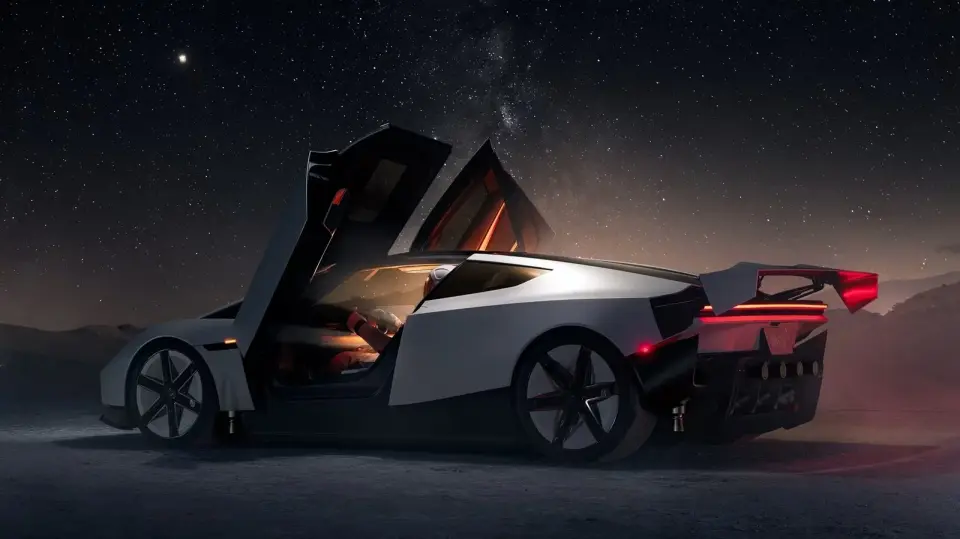
Tesla unveiled its second-generation Roadster on October 15, 2026, at a SpaceX facility in Texas, targeting production in 2028. The vehicle features cold-gas thrusters and suction fans, allowing it to drive vertically, hover, and perform aerial flips. While the car boasts a 0.8-second 0-60 mph acceleration, analysts view the launch as a symbolic farewell to Tesla's core automotive business rather than a major revenue driver.
Key points
- Production is officially targeted for 2028, with reservation deposits ranging from $50,000 for the Performance trim to $250,000 for the Thrust trim.
- The vehicle utilizes SpaceX-derived technology, including altitude controls and rear thrusters, to achieve flight capabilities and vertical wall driving.
- Musk described the Roadster as the last manually driven car Tesla will produce, signaling a pivot toward AI, robotics, and autonomous transportation.
- Speculation regarding a potential Tesla-SpaceX merger has intensified, with prediction markets assigning over 50% odds to a combination by early 2027.
Background
The original Roadster, launched in 2008, was a milestone for Tesla, proving electric vehicles could be high-performance. The second-generation model was first unveiled in 2017 with a 2020 target, but faced repeated delays through 2024. During this period, Tesla's mainstream lineup aged, and Musk shifted focus to government roles and other ventures, causing the Roadster to become a cultural symbol of missed promises. Recent archive coverage notes that the 2026 unveiling coincides with broader strategic shifts away from traditional car manufacturing.
How outlets are covering it
Engadget emphasizes the history of delays and the skepticism surrounding the 2028 target, noting that previous announcements lacked firm dates. Business Insider provides a technical comparison, highlighting that the 2028 model has a shorter range (310-320 miles) and lower top speed (214 mph) than the 2017 prototype, despite faster acceleration. Axios frames the event as a 'farewell' to the car business, arguing that the Roadster is an extravagant exit from automaking as Tesla pivots to AI and robotics. The Guardian focuses on the spectacle, noting Musk's admission that the car is not safety-optimized and may not be legal in all jurisdictions.
Why it matters
The Roadster launch underscores Tesla's transition from an automaker to an AI and robotics company. While the vehicle generates significant hype, its high price and limited production volume suggest it will have minimal financial impact. Instead, it serves as a technological showcase for SpaceX integration and a signal that Tesla's future lies in autonomous and robotic systems rather than traditional consumer vehicles.
What to watch
Tesla must now convince consumers that reserving the Roadster is a viable investment, especially given the history of delays. The company faces immediate challenges in defending its automotive market share while proving its bets on autonomy and robotics. Additionally, speculation about a Tesla-SpaceX merger may accelerate, with potential announcements expected before Tesla's annual general meeting in December 2026.
- The Tesla Roadster Should Go Into Production In 2028, But Don't Get Your Hopes Up Engadget
- Tesla’s new Roadster makes a flying debut, hitting 60 MPH in under a second Fox Business
- Here's how Tesla's new Roadster is a completely different car from the 2017 version Business Insider
- With flying Roadster, Tesla waves goodbye to the car business Axios
- Elon Musk reveals ‘world’s first flying car’ at Tesla event The Guardian
Want the full story? Read the original reporting
Read on Engadget