American Airlines will outfit about 500 single-aisle jets with Starlink satellite Wi‑Fi starting in 2027, prioritizing new Airbus A321XLR and A321neo aircraft while older 737s keep the existing Viasat service; the rollout follows recent moves to offer free Wi‑Fi for many passengers and mirrors similar Starlink deployments across other U.S. carriers.
The Space Force awarded SpaceX a $2.29B OTA contract to develop the Space Data Network Backbone, a network of optically interconnected low Earth orbit satellites (Starshield) that will transport military data in space and serve as the backhaul for the SDN architecture, integrating with the Space Development Agency’s Transport Layer; the system aims for near-real-time sensor-to-shooter data across global networks and a fully operational prototype by the end of 2027, with an SDN consortium coordinating interoperability, though concerns have been raised about concentrating future satellite procurement with SpaceX.
SpaceX‑related IPO optimism sparked a broad rally in space‑tech equities, with rocket and satellite companies posting sizable gains (Momentus, Braiin, Firefly, Redwire, AST SpaceMobile among the notable movers) while a few names such as Intuitive Machines pulled back; the mood also spilled into space‑tech oriented ETFs and broader tech shares, underscoring a volatile but upbeat market for space exposure.
American Airlines will install Starlink-powered inflight Wi‑Fi on more than 500 narrowbody aircraft starting in Q1 2027, delivering multi‑gigabit, low‑latency connectivity (up to 1 Gbps per antenna) via the Aero Terminal to enable streaming, gaming and real‑time collaboration across domestic and short‑haul routes, including the A321XLR and A321neo fleets, in partnership with Starlink/SpaceX.
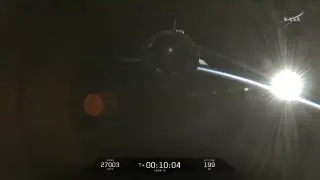
Starship V3's Flight 12 was largely successful and its heat shield performed exceptionally well, with reentry temperatures around 1,450 C and video/images showing a uniform, largely intact shield thanks to new tile geometry and stronger attachment clips. SpaceX will study post-flight data since the vehicle was destroyed on splashdown to validate heat-shield durability for rapid reuse ahead of crewed Moon/Mars missions; meanwhile a separate multi-engine failure during the booster boostback caused a hard splashdown, a problem SpaceX must address before Flight 13.
An investigative piece exposes a murky private-share market where investors trade pre-IPO stakes in SpaceX and OpenAI via brokers and online platforms. Deals often come with opaque valuations, limited liquidity, and regulatory gray areas, raising risks of illiquidity, misrepresentation and scams; buyers should beware that these shares may never become publicly tradable.
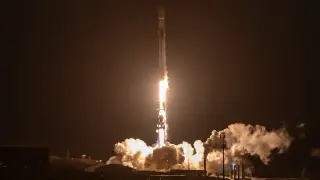
SpaceX plans a Falcon 9 liftoff from Vandenberg Space Force Base between 7 and 11 a.m. Tuesday (backup window Wednesday) to deploy 24 Starlink satellites; the first stage will land on the droneship Of Course I Still Love You in the Pacific. A live webcast will begin about five minutes before liftoff at spacex.com/launches, with prime viewing spots in the Lompoc Valley (e.g., Harris Grade Road, Moonglow/Stardust near Vandenberg Village). Additional Starlink launches are tentatively planned for May 30 and June 2. Launches can be delayed due to technical issues, weather, or scheduling.,
American Airlines will equip about 500 narrow-body Airbus aircraft (including the A321neo) with SpaceX’s Starlink in-flight Wi‑Fi starting next year, expanding Starlink’s reach among major carriers; the Boeing fleet isn’t slated to switch yet, and other airlines are pursuing comparable high-speed Wi‑Fi options such as Amazon Leo.
Firmware in a May Starlink update hints at an integrated battery for the Starlink Mini, enabling untethered use with three power states (USB-C, internal battery, or both) and a likely airline-friendly ~99Wh capacity. If real, the battery would simplify app support, warranty coverage, and portable operation for vanlife users and emergency responders, potentially delivering around five hours of runtime.
The SpaceX IPO, potentially up to $80 billion, signals a shift from software dominance to space-based infrastructure—with a booming space economy, off-Earth manufacturing, and orbital data centers—reinforcing U.S. tech leadership as global competitors grow.
Elon Musk and Sam Altman’s high-stakes AI rivalry spills into a mega-IPO season as SpaceX unveils plans for a $1.75 trillion flotation tied to its xAI unit and OpenAI eyes a public listing this year, while Google debuts Gemini Spark and moves Search toward an AI-first interface. A court ruled in OpenAI’s favor in Musk’s lawsuit, clearing the path for these mega-IPOs and prompting questions about how much control a tiny group of tech leaders should wield over transformative AI and its impact on workers and society.
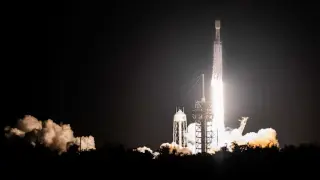
SpaceX’s Starship V3 Flight 12 from Pad 2 survived an engine-out ascent and reentry, deploying 22 payloads to test orbit-based heat-shield inspection that could speed up future flights, as NASA maintains Artemis IV targets and SpaceX moves toward a June 2026 IPO.
Once a vocal advocate for a 100-by-100 mile solar solution to power the U.S., Elon Musk now runs xAI's Grok on 62 unpermitted methane gas turbines at two data centers, and has begun selling compute to Anthropic while positioning a space-based solar pitch to justify SpaceX’s planned $1.75–$2 trillion IPO. Grok’s popularity has fallen, the economics of orbital data centers remain dubious, and Musk’s pivot appears driven more by financial engineering for an IPO than by a practical solar energy revolution.
SpaceX’s IPO filing touts a total addressable market of $28.5 trillion, with about $26.5 trillion coming from artificial intelligence and related new markets, plus opportunities in space and Starlink connectivity. The TAM excludes Russia and China and even Mars colonization; SpaceX operates in 164 countries and argues the market could capture roughly a quarter of global economic activity (global GDP around $111 trillion). Analysts mostly view the figure as ambitiously optimistic, calling such estimates inherently speculative, though some see them as typical in IPO rhetoric. The piece notes that SEC scrutiny could occur, but such exaggerated market-potential claims are not unusual in history. SpaceX frames the growth around three avenues—space, AI, and connectivity—claiming these areas could generate multi-trillion-dollar opportunities.