
Study: US AI Data Centers Match Small Nation's Emissions, Sparking New Grid Fees
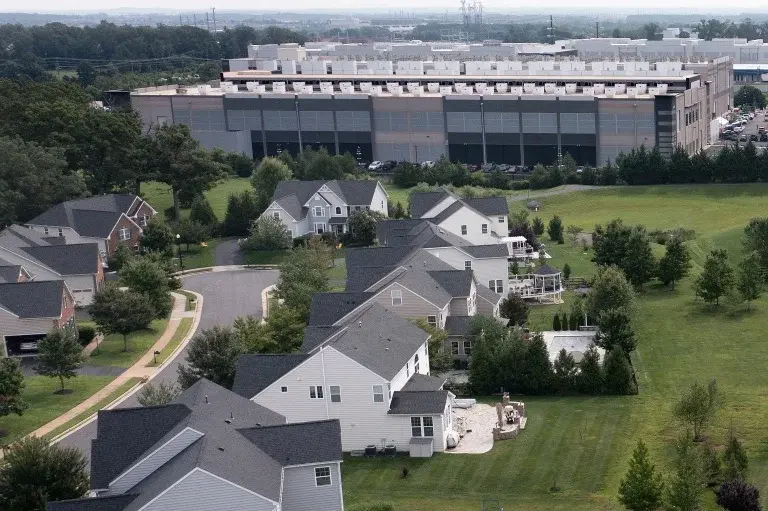
A new Harvard-led study reveals that US hyperscale data centers consumed 1.8% of national electricity in 2024-2025, generating emissions equivalent to a small European country. As the industry expands, Congress is debating a bill to speed up permitting while imposing new grid fees on data centers to offset costs for other ratepayers.
Key points
- Researchers analyzed 403 hyperscale data centers, finding they consumed approximately 82 terawatt-hours of electricity, or 1.8% of total US usage.
- The study estimates these facilities produced 25.7 million metric tons of CO2, comparable to the annual output of Denmark or five to six million gasoline cars.
- Over 54% of the electricity powering these centers came from fossil fuels, despite some reliance on renewables and nuclear power.
- The figure is considered a floor estimate, as 1,200 such facilities now operate in the US with hundreds more planned, suggesting actual consumption is likely higher.
- A proposed federal bill aims to expedite environmental reviews for energy projects but includes a provision requiring data centers to pay significantly more for grid access.
Background
The surge in data center construction has been a major topic since 2022, driven by the rise of large language models. Previous concerns included transient economic booms for local towns and security vulnerabilities, as seen in recent European conflicts where AI infrastructure was targeted. This latest study provides the first peer-reviewed assessment of the sector's carbon footprint since 2018, highlighting the gap between rapid expansion and environmental impact.
How outlets are covering it
Barron's and The Washington Post emphasize the environmental scale, noting the carbon footprint rivals that of a small European country and that fossil fuels still dominate the energy mix. The New York Times focuses on the legislative response, highlighting a novel provision in a permitting bill that would force data centers to pay billions in new grid fees, potentially saving money for other households. While all sources agree on the high energy demand, they differ on the solution: some call for stricter reporting and a moratorium, while others focus on regulatory mechanisms to balance expansion with cost recovery.
Why it matters
The findings underscore the significant environmental cost of AI infrastructure, which is growing rapidly. The potential for new federal fees and stricter regulations could impact the profitability and expansion speed of tech companies, while also influencing how communities and policymakers manage local power grids and environmental health.
What to watch
Congress is expected to debate the sweeping energy permitting bill, which includes the new grid fee provision. Researchers are calling for stricter reporting requirements to get more precise data, as current figures are likely underestimates. The political landscape may shift further after the US midterm elections, where Democrats gained control of Congress and voters in several cities approved restrictions on data centers.
- US Data Centers' Carbon Footprint Rivals Small European Countries Barron's
- Assessing the carbon emissions and energy consumption of US hyperscale data centres Nature
- Permitting Bill Would Charge Data Centers Billions for Power The New York Times
- Largest data centers take up about 2 percent of U.S. electricity use, study says The Washington Post
- US hyperscale data centers emit as much as Denmark, report says Reuters
Want the full story? Read the original reporting
Read on Barron's