
AI Claims in Math and Code Face Skepticism as U.S. Jobs Remain Stable
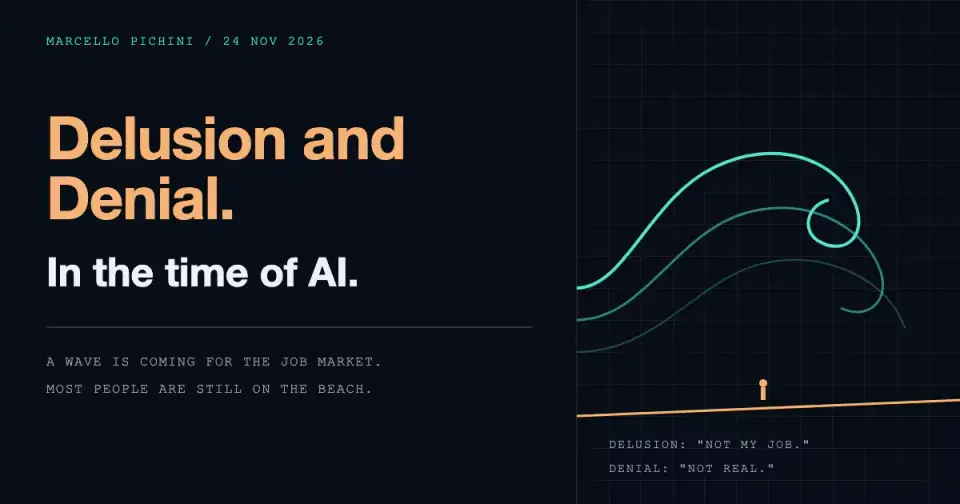
AI systems are generating unverified proofs for major mathematical problems and finding software vulnerabilities at scale, but these advancements have not yet triggered the predicted mass unemployment. While AI capabilities in coding and analysis are expanding, the U.S. labor market remains stable, with unemployment at 4.1 percent. Experts argue that most jobs involve complex, human-centric tasks that AI cannot fully automate, suggesting a gradual shift rather than an immediate collapse.
Key points
- Anthropic’s Levent Alpöge claimed on November 20, 2026, to have proven the Riemann Hypothesis using Claude, but the proof is not yet settled consensus and is undergoing expert review.
- OpenAI announced a solution to the Navier-Stokes equations in September 2026, and AI agents are currently working on the P versus NP problem, but these remain unverified claims.
- AI systems have identified over 1,700 software vulnerabilities, yet the U.S. unemployment rate stands at 4.1 percent, lower than in many previous decades.
- The number of customer service representatives in the U.S. fell by 130,000 in the 12 months leading up to May 2025, but employment across the 18 occupations most exposed to AI risk decreased by only 0.2 percent in the same year.
- Computer programmer jobs decreased by about 30 percent between May 2022 and May 2025, while software developer jobs, which require understanding user needs, increased by 10 percent in the same period.
Background
The debate over AI’s impact on jobs has intensified since the release of ChatGPT in late 2022. Predictions of a 'job apocalypse' by executives like Sam Altman and Dario Amodei have not materialized in the current labor market. Recent AI advancements in mathematics, such as claims regarding the Riemann Hypothesis and Navier-Stokes equations, highlight the technology’s growing capability in complex problem-solving, but these remain unverified. The labor market has shown resilience, with unemployment rates remaining low despite AI’s progress in specific tasks like coding and customer support.
How outlets are covering it
HackerNoon emphasizes the rapid advancement of AI capabilities, noting that agents are now working on unsolved mathematical problems and finding software vulnerabilities at a pace that outstrips human teams. It argues that the debate has shifted from whether AI can perform basic tasks to what machine-checked proofs mean for knowledge work. The New York Times, through an opinion piece by Luis Garicano, counters this by highlighting the stability of the U.S. labor market. It argues that most jobs are 'messy' and involve complex, human-centric tasks that AI cannot fully automate, such as negotiation, accountability, and understanding user needs. The two sources agree on AI’s growing capabilities but disagree on the immediate impact on employment, with HackerNoon focusing on the potential for disruption and the New York Times emphasizing the resilience of complex jobs.
Why it matters
The tension between AI’s rapid capability growth and the stability of the labor market highlights the complexity of job automation. While AI is excelling in specific tasks like coding and analysis, most jobs involve interconnected tasks that require human judgment and accountability. This suggests that the impact of AI on employment will be gradual and uneven, affecting roles that are primarily task-based rather than those requiring holistic problem-solving and human interaction.
What to watch
Experts and AI companies are likely to continue refining AI systems to handle more complex tasks, but the labor market is expected to remain stable in the near term. The focus will shift to how AI can be integrated into existing workflows rather than replacing entire jobs. Companies like Anthropic are training engineers to work with customers to identify practical applications for AI, suggesting a collaborative approach to adoption. The unverified mathematical claims will undergo further review, and the debate over AI’s impact on jobs will continue as capabilities evolve.
- The AI Job Market Tsunami Is Coming, and Most People Aren’t Ready HackerNoon
- Opinion | Jobs Are Too Messy for A.I. to Take Them All The New York Times
- As AI reshapes hiring, Bay Area college grads feel stuck in job search purgatory SFGATE
- How fear of AI displacement is fueling a hiring recession Yahoo Finance
- Gen-Z, young people struggling to find jobs as older workers thrive: WaPo | RISING The Hill
Want the full story? Read the original reporting
Read on HackerNoon