
US AI Regulation Deadlines Collide as Tech Leaders Clash Over Chinese Models and 'Woke' Standards
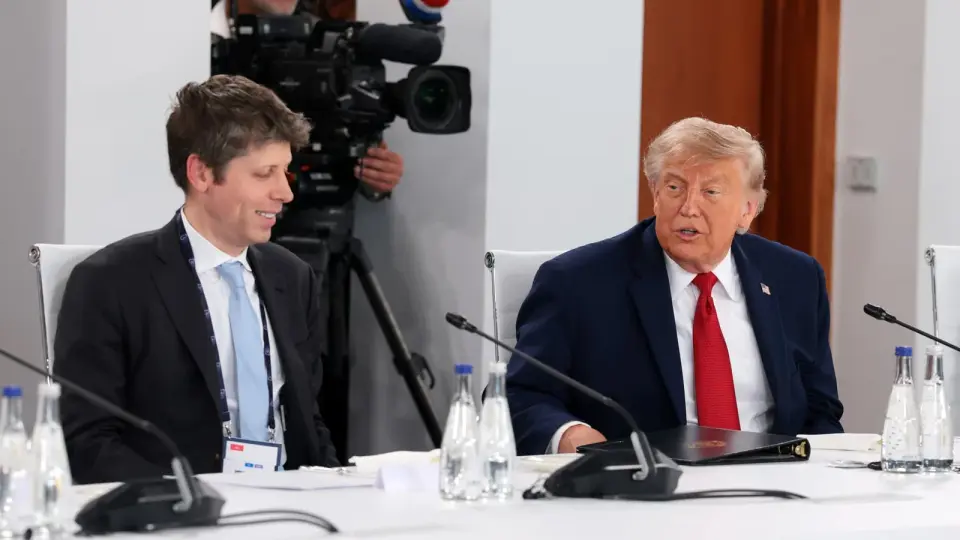
The 60-day deadline for the Trump administration’s AI executive order framework has arrived, triggering intense lobbying from tech leaders. While OpenAI and Nvidia urge caution against restricting Chinese open-weight models, the administration faces internal divisions over national security risks. Simultaneously, the General Services Administration’s proposal to ban 'woke' AI in federal contracts has drawn sharp criticism from industry groups as technically infeasible, complicating the government’s procurement strategy.
Key points
- The August 1 deadline for the AI framework mandated by Trump’s June executive order has arrived, with the White House confirming it will meet the self-imposed timeline.
- OpenAI CEO Sam Altman and Nvidia CEO Jensen Huang met with administration officials to influence policy, with Huang leading a broad industry campaign against premature restrictions on Chinese open-weight models.
- The General Services Administration proposed requiring 'unbiased' AI in federal contracts, a move the Business Software Alliance and IT Industry Council called 'infeasible' and 'impossible' to enforce.
- Treasury Secretary Scott Bessent has threatened sanctions against Chinese AI firms for 'distillation' (stealing US model data), while former AI Czar David Sacks argues the US remains ahead and should avoid restrictions.
- Recent cybersecurity incidents involving OpenAI tools have prompted Trump to consider tighter controls, though he warned against falling behind China in innovation.
Background
This regulatory push follows a series of executive orders in 2026, including measures on quantum-proof cryptography and mail ballots, reflecting the administration’s broader effort to assert control over critical technologies. The current AI framework builds on earlier export control directives that forced Anthropic and OpenAI to limit model access to 'trusted partners' in early 2026.
How outlets are covering it
Outlets highlight significant internal and external divisions. CNBC and WIRED emphasize the fragmented nature of the administration’s AI brain trust, noting conflicting views between Treasury Secretary Bessent (hardline on China) and former AI Czar David Sacks (laissez-faire). BBC focuses on the shift in tone following OpenAI’s hacking incidents, suggesting a move toward more hands-on control. NOTUS contrasts this with the industry’s rejection of the GSA’s 'unbiased AI' contract language, with experts arguing the standard is scientifically impossible and designed to create legal ambiguity. While CNBC notes Altman’s neutral stance on the draft framework, WIRED details the specific power brokers, including Commerce Secretary Lutnick and National Cyber Director Sean Cairncross, who are shaping the final policy.
Why it matters
The outcome of these deadlines will determine the regulatory landscape for US AI development and its competitive position against China. The clash between national security concerns and the industry’s push for open-weight models could define the future of global AI innovation. Furthermore, the GSA’s procurement rules may set a precedent for how the federal government interacts with private AI developers, potentially stifling innovation or creating legal liabilities for contractors.
What to watch
The White House is expected to release the finalized AI framework shortly after the August 1 deadline. The GSA will review public comments on the 'unbiased AI' contract language, with a deadline of August 3. The administration will also continue to evaluate potential sanctions against Chinese AI firms ahead of President Xi Jinping’s visit in September and the APEC summit in November.
- Trump's AI executive order nears key deadline as regulation debate intensifies CNBC
- Trump considering AI controls after OpenAI hacking incidents BBC
- Tech Companies Are Rejecting Trump’s Proposed ‘Woke’ AI Ban News of the United States - NOTUS
- This Is Donald Trump’s AI Brain Trust WIRED
- Five Reasons AI Regulation Is Coming To The US, How And When Forbes
Want the full story? Read the original reporting
Read on CNBC