
US Suspends Microsoft, Adobe, and Indian IT Giants from Green Card Labor Certification
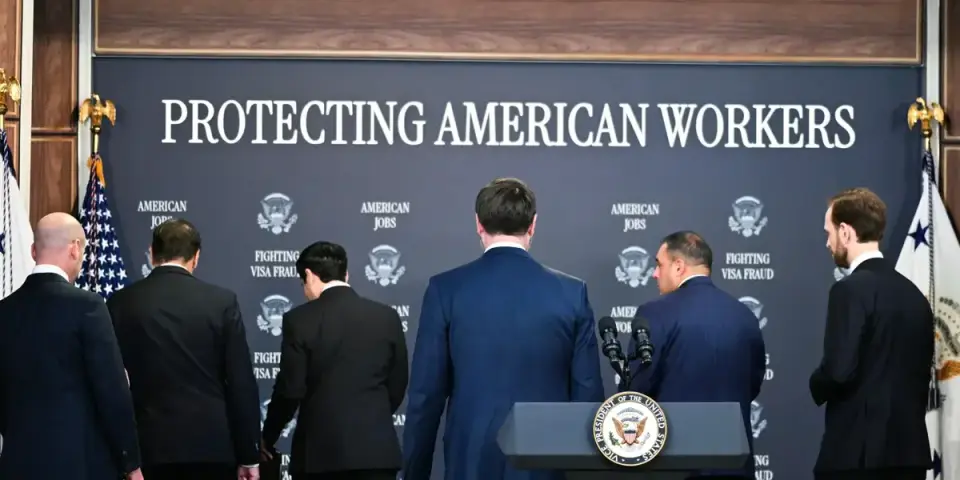
The US Labor Department has suspended Microsoft, Adobe, and six major Indian IT firms from the Permanent Labor Certification (PERM) program, halting their ability to sponsor employees for green cards. Vice President JD Vance accused these companies of replacing laid-off American workers with foreign H-1B visa holders, a claim Microsoft disputed by stating 80% of its recent visa filings were for existing staff. While critics argue the move protects domestic wages, immigration experts warn it could drive talent away from suspended firms and worsen the very 'indentured' conditions the administration claims to oppose. The decision impacts a sector that has requested nearly 3 million foreign workers since 2009, with India facing potential drops in remittances and soft power, though some argue it may shift work back to Indian shores.
Key points
- Labor Secretary Keith Sonderling announced the suspension of Microsoft, Adobe, and six Indian IT firms (Tata, Infosys, Wipro, HCLTech, Cognizant, Capgemini) from the PERM program on October 8, 2026.
- Vice President JD Vance claimed Microsoft replaced 6,000 laid-off workers with 1.5 foreign 'indentured servants' per job, citing 'multiple active federal investigations' into the companies.
- Microsoft responded that 80% of its 6,000 H-1B applications in the last fiscal year were for existing employees, not new hires, and that its wages are among the highest in the category.
- The suspension prevents affected companies from moving employees toward permanent residence, potentially causing talent loss to non-suspended employers or back to home countries.
- India receives approximately $125 billion in annual remittances, with the US accounting for about a quarter; experts warn the policy could reduce this flow and US soft power, though some argue it may shift work to India.
Background
This action follows a broader trend of the Trump administration targeting skilled immigration programs ahead of November midterm elections. It occurs shortly after Microsoft published a 'humanist AI code of conduct' emphasizing human oversight, highlighting the company's ongoing efforts to manage its public image amidst regulatory scrutiny. The suspension targets companies that have been top sponsors of H-1B visas for decades, with Amazon and Cognizant currently leading in petition numbers for 2026.
How outlets are covering it
Vice President JD Vance and Labor Secretary Keith Sonderling framed the suspension as a necessary measure to protect American workers, alleging that named companies abused the system to undercut domestic wages and replace laid-off staff with foreign labor. Microsoft and Adobe disputed these claims, with Microsoft emphasizing that most H-1B filings were for existing employees and that its wages are among the highest. Immigration experts were divided: Ron Hira of Howard University supported the move as a long-overdue enforcement of protections for US workers, while Doug Rand, a former senior advisor at US Citizenship and Immigration Services, called the policy 'incoherent,' arguing that blocking green cards traps workers in H-1B status, making them more, not less, dependent on their employers. Indian tech voices, including Nasscom and Dinesh Pai, argued that immigration and talent mobility are distinct issues, with some suggesting the policy could reduce remittances but also shift work back to India.
Why it matters
The suspension of PERM applications for major tech and IT firms could significantly disrupt the H-1B-to-green-card pipeline, affecting the retention of specialized foreign talent in the US. It may lead to a loss of critical talent to non-suspended employers or back to home countries, impacting innovation and competitiveness in the tech sector. For India, the policy could reduce remittances and soft power, but it may also encourage US companies to bring work to India, potentially boosting domestic tech development. The move also highlights ongoing tensions between immigration policy and corporate hiring practices, with potential legal challenges from affected companies.
What to watch
Affected companies are expected to 'vigorously defend themselves' against the government's allegations, potentially leading to legal challenges. The Labor Department may continue to investigate the named companies, with the possibility of further suspensions or penalties. The policy could influence future immigration legislation and corporate hiring strategies, with tech firms potentially shifting more work to India or other countries. The impact on remittances and US-India relations will be monitored, with potential adjustments in trade and investment policies.
- What smart people are saying about the US suspending PERM visas for Microsoft, Adobe, and Indian tech giants Business Insider
- Trump administration freezes green cards for Microsoft, IT firms, probes universities Reuters
- World in Brief: White House suspends tech companies from visa programme; Polanski fails to become MP The Economist
- The Trump administration is suspending Microsoft from a green card program, alleging fraud AP News
- U.S. suspends Microsoft, Adobe from green card labor program in foreign worker crackdown CNBC
Want the full story? Read the original reporting
Read on Business Insider