
OpenAI’s Navier-Stokes Claim Ignites Math Community Over AI Credit and Future Prizes
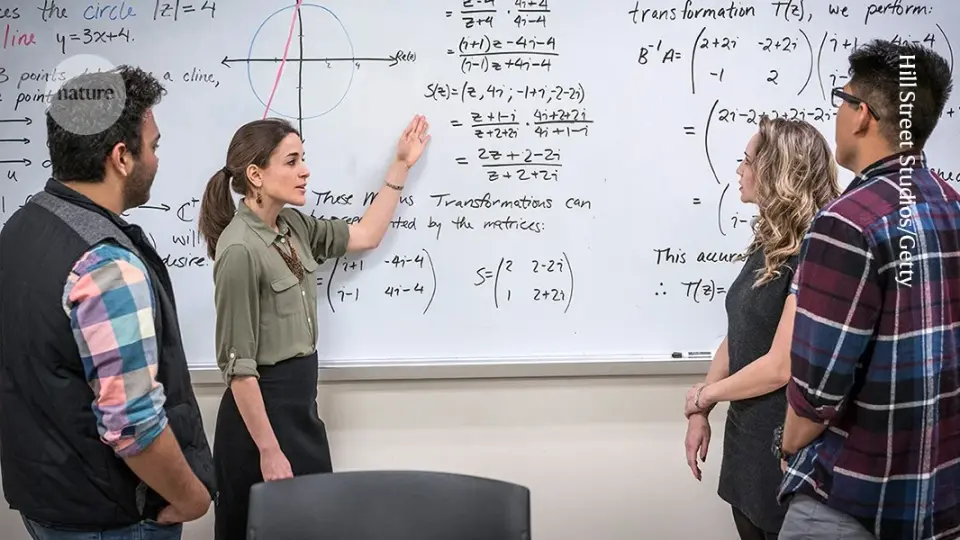
OpenAI’s September 8 announcement that its AI solved the Navier-Stokes problem has triggered a major controversy over academic credit and AI training data. While OpenAI denies using recent user inputs, mathematicians argue that chatbot interactions may have inadvertently trained the model on their unpublished work. The dispute has escalated with 25 Fields Medal winners signing an open letter, and OpenAI is now reportedly targeting the Hodge Conjecture next, raising fears about AI appropriating human intellectual labor.
Key points
- OpenAI announced on September 8, 2026, that its AI solved the Navier-Stokes problem, one of the seven Millennium Prize Problems carrying a $1 million reward.
- Mathematicians Tristan Buckmaster and Levent Alpöge allege OpenAI’s model learned from their unpublished work via ChatGPT, despite OpenAI claiming no user inputs after July 3 influenced the solution.
- 25 Fields Medal winners signed an open letter criticizing AI for muddying attribution and raising plagiarism concerns in mathematics.
- The Clay Mathematics Institute stated it will only validate the solution after peer-reviewed publication and community vetting.
- OpenAI is reportedly now targeting the Hodge Conjecture, with internal goals focused on avoiding further PR backlash from the math community.
- OpenAI’s proof was verified using the Lean programming language, but the broader math community remains skeptical of the credit allocation process.
Background
This controversy follows a series of AI breakthroughs in mathematics, including Anthropic’s formalization of Fermat’s last theorem and OpenAI’s earlier work on non-sofic groups. The Navier-Stokes dispute is part of a larger trend where AI is accelerating mathematical discovery but raising fundamental questions about authorship, intellectual property, and the role of human mathematicians. Previous archive coverage noted concerns about AI’s impact on creative work and the democratization of discovery, but the Navier-Stokes case is the first to directly challenge the integrity of credit in high-stakes, prize-winning research.
How outlets are covering it
Nature emphasizes the systemic risk to scholarly credit, highlighting how researchers may inadvertently share ideas through chatbots without realizing it. Gizmodo focuses on OpenAI’s strategic pivot to the Hodge Conjecture and its internal desire to avoid another PR disaster, framing the issue as a corporate vs. academic feud. The Atlantic underscores the 'crisis in mathematical values' described by Terence Tao, noting that AI is changing the nature of mathematical work so rapidly that many researchers are unprepared. Scientific American provides a broader context, listing the remaining five Millennium Prize Problems and assessing which are most likely to be solved by AI next, with the Birch and Swinnerton-Dyer Conjecture and Hodge Conjecture seen as the most plausible targets. The outlets differ in emphasis: Nature and The Atlantic focus on ethical and attribution issues, while Gizmodo and Scientific American focus on the competitive and strategic dimensions of AI in mathematics.
Why it matters
This dispute sets a precedent for how credit and intellectual property will be handled in AI-assisted research. If AI models can absorb unpublished human work through chatbot interactions without proper attribution, it could undermine the foundations of academic integrity. The Navier-Stokes case is the first high-profile instance where AI has claimed a solution to a Millennium Prize Problem, raising questions about the future of human mathematicians and the role of AI in scientific discovery. The outcome will influence how AI companies interact with research communities and how credit is assigned in a world where AI is a co-creator of knowledge.
What to watch
The Clay Mathematics Institute will evaluate the Navier-Stokes solution after peer-reviewed publication. OpenAI is reportedly working on the Hodge Conjecture, with internal goals to collaborate with the math community to avoid another PR crisis. The broader math community is expected to debate how to apportion credit for AI-assisted work, potentially leading to new norms or policies for AI in research. The next few months will determine whether AI can solve other Millennium Prize Problems and how the academic community will respond to AI’s growing role in mathematical discovery.
- Who gets credit in the AI era? OpenAI maths bombshell sparks debate Nature
- OpenAI Is Close To Solving Another Millennium Prize Math Problem The Information
- OpenAI Reportedly Trying to Solve Hodge Conjecture Amid Feud With Math Community gizmodo.com
- Math Can’t Go On Like This The Atlantic
- Which million-dollar math problem could AI solve next? Scientific American
Want the full story? Read the original reporting
Read on Nature