
China's September PPI Surges to 5% as Fuel Costs Outpace Weak Consumer Demand
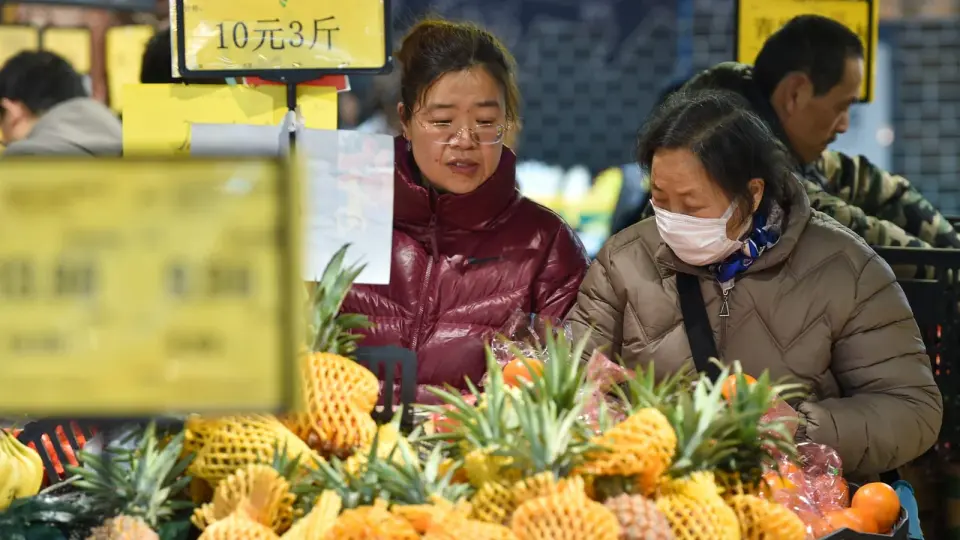
China's producer price index jumped 5% year-on-year in September, the fastest increase since June 2022, driven by rising fuel and coal costs. Consumer prices rose 0.9%, slightly missing forecasts, as gasoline hikes were offset by falling food prices. Analysts note that while producer costs signal a move away from deflation, consumer inflation remains low, indicating persistent weakness in domestic demand. The data arrives as China faces its slowest growth in over three years, prompting expectations of further counter-cyclical policy support from Beijing to meet 2026 growth targets.
Key points
- China's producer price index (PPI) rose 5% year-on-year in September, beating the 4.5% forecast and marking the fastest pace since June 2022.
- The PPI increase was driven by higher fuel prices and rising coal costs due to winter heating demand, temporary supply tightness, and expectations of higher international prices.
- Consumer price index (CPI) rose 0.9% year-on-year, up from 0.8% in August but missing the 1% expected by economists.
- Gasoline prices climbed 16.6%, contributing 0.47 percentage points to CPI, while food prices fell 1.7%, pulling CPI down by 0.29 percentage points.
- Core CPI, excluding food and energy, rose 1%, but overall consumer inflation remains low, signaling weak domestic demand.
- China's second-quarter GDP growth was 4.3%, the lowest in over three years, with August retail sales expanding more slowly than expected.
Background
In August 2026, China's PPI rose 3.8% and CPI 0.8%, with analysts noting that the pickup reflected weak demand and overcapacity rather than a durable upturn. Core CPI was 1.0%, and youth urban unemployment stood at 17.9%. The current September data shows a further acceleration in producer prices but continued softness in consumer demand, contrasting with the broader global trend of rising energy costs and central bank tightening observed in other economies like Japan and the US.
Why it matters
The divergence between rising producer prices and stagnant consumer inflation highlights a structural imbalance in China's economy, where industrial costs are increasing but household purchasing power remains constrained. This gap suggests that the recovery from deflationary pressures is uneven, with the industrial sector outpacing consumer demand. The data reinforces the urgency for Beijing to implement counter-cyclical policies to stimulate domestic consumption and achieve its 2026 GDP growth targets, as weak retail sales and slow retail expansion indicate that the current economic recovery is not yet broad-based.
What to watch
Analysts expect further policy support from the Chinese government, including potential fiscal and monetary measures, to stimulate domestic demand and support the 2026 GDP growth target of 4.5%-5.0%. The State Council's September 28 readout signaled a shift in tone toward intensifying counter-cyclical adjustments, suggesting that more concrete policy rollouts may follow in the coming months to address emerging economic challenges and support long-term growth goals.
- Producer prices in China rise at fastest pace since June 2022, beating expectations CNBC
- China’s Producer Prices Jolted by Oil as Inflation Rebounds Bloomberg.com
- China factory-gate inflation heats up as commodity costs rise, CPI lags forecasts Reuters
- China’s Consumer, Producer Prices Accelerated in September WSJ
- Economic and event calendar in Asia Wednesday, October 14, 2026 - China inflation data investingLive
Want the full story? Read the original reporting
Read on CNBC