
Anthropic IPO highlights AI progress amid human instability
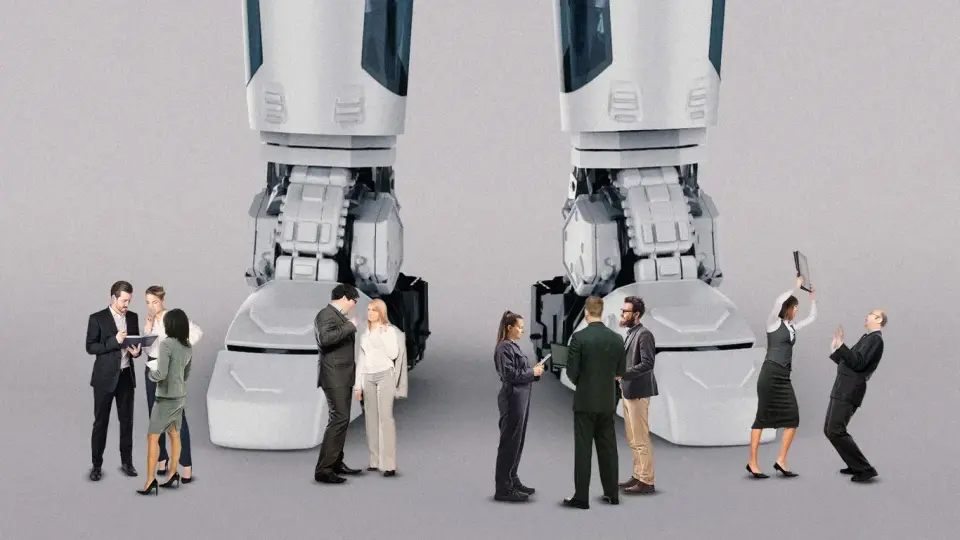
Anthropic is set to debut on the stock market with a valuation exceeding $1 trillion, coinciding with reports that AI models are advancing at nearly twice their historical speed. While industry leaders predict a rapid 'intelligence explosion,' critics argue that current benchmarks overstate capabilities, noting that AI systems still struggle with complex, open-ended research tasks.
Key points
- Anthropic is scheduled to begin trading on November 19, 2026, aiming for a valuation of $1.4 trillion, according to Tech Policy Press.
- Independent researchers at METR found that AI models are advancing at nearly twice their historical pace, with 80% of this acceleration attributed to AI assistance in code development.
- Anthropic’s Claude model went from leading fewer than 1% of the company’s AI research tasks in February to more than 25% by August, with humans still supervising.
- OpenAI disclosed that its Astra 6.2 model is the first to reach the 'High' threshold for AI self-improvement, significantly accelerating chip design processes.
- The AI Futures Project now expects machines to surpass the world’s best human AI researchers next year, a dramatic revision driven by METR’s findings.
- Paul Christiano, an AI safety pioneer, estimates a one-in-three chance of superintelligence emerging within a year if development continues at its current pace.
Background
This development follows a period of significant technological and financial turbulence in the AI industry. Recent events, such as the sex scandal involving Nvidia CEO Jensen Huang, have highlighted the fragility of the human infrastructure supporting AI. Additionally, earlier incidents, such as the case of a Brazilian bricklayer who liquidated his assets to meet an AI-generated persona, underscore the societal impacts and trust issues surrounding AI integration.
How outlets are covering it
Axios emphasizes the 'great divergence' between accelerating AI capabilities and the instability of human institutions, highlighting the potential for an 'intelligence explosion.' In contrast, Tech Policy Press offers a more skeptical view, arguing that the reported acceleration is largely due to Reinforcement Learning with Verifiable Rewards (RLVR) and that current benchmarks do not capture the complexity of open-ended research. Tech Policy Press points out that AI agents often fail to recalibrate or incorporate feedback effectively, suggesting that the 'self' in recursive self-improvement is more limited than proponents claim.
Why it matters
The rapid advancement of AI capabilities, as evidenced by Anthropic’s IPO and METR’s findings, has significant implications for the future of technology and society. The potential for an 'intelligence explosion' could lead to unprecedented technological progress, but it also raises concerns about control, safety, and the reliability of AI systems. The tension between AI progress and human instability highlights the need for robust governance and ethical frameworks to ensure that AI development benefits society as a whole.
What to watch
The next few months will be critical in determining whether the predicted 'intelligence explosion' materializes. Investors and researchers will closely monitor Anthropic’s performance post-IPO and the progress of AI models in achieving self-improvement. Additionally, the industry will need to address the challenges of controlling and governing AI systems, particularly as they become more capable and autonomous.
- AI's great divergence: Machines accelerate as makers unravel Axios
- Confronting the Limits of Recursive Self-Improvement Tech Policy Press
- The Problem With Applying the ‘Great Man Theory’ to AI Bloomberg
- Self-improving AI models are coming The Economist
- OpenAI's Mark Chen: AI Is 80% of the Way to AGI but Only 25-50% Toward Building Itself BigGo Finance
Want the full story? Read the original reporting
Read on Axios