
Arm's New AI-Native GPU Targets Mobile Gaming Efficiency
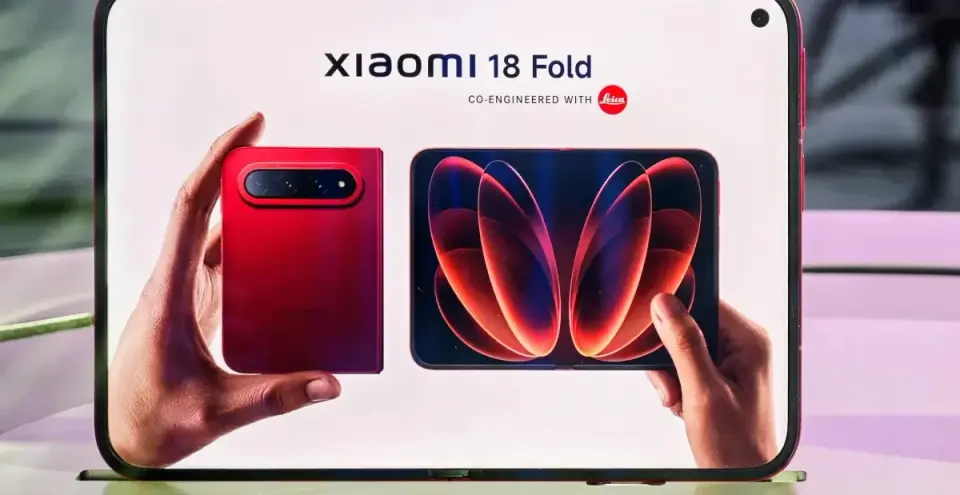
Arm has launched its first AI-native GPU, the Mali G2-Ultra NX, debuting in the Xiaomi 18 Fold in China. The chip uses neural processing to boost graphics performance by up to four times while reducing power consumption and memory traffic. Arm claims this technology offers an open, developer-friendly alternative to Nvidia's closed DLSS system, with broader device availability expected next year.
Key points
- The Mali G2-Ultra NX is the first Arm GPU to integrate AI directly into the graphics pipeline, reducing latency and power usage.
- The chip debuted in the Xiaomi 18 Fold, which launched in mainland China on September 7, 2026.
- Arm claims the technology offers up to 85% performance improvement over previous Xiaomi GPUs and 14% over its own prior flagship.
- The technology includes Neural Super Sampling, Neural Frame Rate Upscaling, and Neural Denoising to enhance resolution and framerate.
- Arm states its neural networks are open and available on GitHub and Hugging Face, allowing developers to retrain them for specific art styles.
- Arm's Chris Bergey confirmed the technology will be available in phones, tablets, and potentially Googlebooks in 2027.
Background
Arm has been developing this AI-native graphics technology for five years. The Xiaomi 18 Fold was previously unveiled at IFA 2026 with the XRing O3 SoC, which now includes this new GPU. This follows Arm's earlier CSS for Mobile platform and precedes the broader rollout of AI-enhanced mobile chips expected in 2027.
How outlets are covering it
The Verge emphasizes the chip's potential to eliminate jagged edges in mobile games and compares it to Nvidia's DLSS, noting Arm's open approach. CNET highlights the technical benefits, such as 70% lower external memory traffic and the ability to enable smaller, cheaper device form factors. GamesIndustry.biz focuses on the developer-friendly aspect, contrasting Arm's open, retrainable neural networks with Nvidia's proprietary 'black box' DLSS 5. Tom's Hardware provides context on Arm's broader Neoverse platform but does not detail the mobile GPU's specific gaming features.
Why it matters
This technology could significantly improve mobile gaming by allowing high-fidelity graphics without the power and heat constraints typical of smartphones. It also offers developers a more flexible and transparent alternative to existing AI graphics solutions, potentially changing how mobile games are developed and optimized for performance and battery life.
What to watch
Arm expects the Mali G2-Ultra NX to be available in other phones, tablets, and possibly Googlebooks in 2027. Developers can integrate the technology into existing games within three months, and Arm is expanding its tools to support game engines beyond Unreal, including Unity.
- First Xiaomi, then the world: why Arm might give phone gaming a huge graphics boost The Verge
- Arm introduces new AI-native compute platform built for agentic AI and mobile graphics Arm Newsroom
- Arm debuts next-gen semi-custom Neoverse CSS N4 ‘Ranger’ platform — compute subsystem packs up to 128 cores per die on TSMC N3P Tom's Hardware
- 2027 Android Phones Could Boost Gaming Graphics and AI Tasks With Arm’s New Chip Tech CNET
- Arm explains its mobile-first AI-reconstruction technology, which takes a different tack from the "black box" approach of DLSS 5 GamesIndustry.biz
Want the full story? Read the original reporting
Read on The Verge