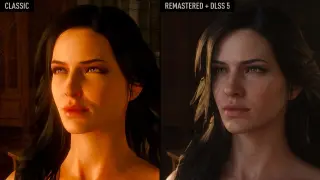
Unofficial mods injecting NVIDIA DLSS 5 into The Witcher 3: Wild Hunt Remastered significantly enhance character facial details but incur a 26-30% performance penalty on high-end hardware, with frame rates dropping to 38 FPS in demanding scenes.
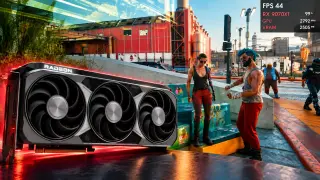
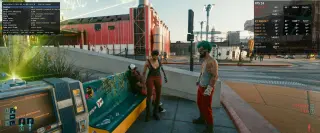
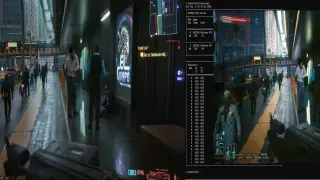
A developer known as Daniel has significantly improved the performance of an unofficial tool that enables NVIDIA’s DLSS 5 Neural Rendering on AMD Radeon GPUs. Within a single day, two new alpha releases (0.3.3 and 0.4.0) combined to deliver a 74% performance boost, with a subsequent 0.4.1 update adding another 8%. Testing in Cyberpunk 2077 at 3440x1440p showed framerates rising from roughly 30 FPS to 50 FPS. The tool leverages RDNA 4’s FP8 support to run NVIDIA’s proprietary technology on AMD hardware, though it remains an unofficial workaround with potential visual and latency issues.
A developer has significantly optimized an unofficial tool that runs NVIDIA’s DLSS 5 Neural Rendering on AMD Radeon GPUs, achieving a 74% performance increase in a single day. The update enables playable framerates in titles like Cyberpunk 2077, though critics note severe input lag and visual artifacts when combined with frame generation.
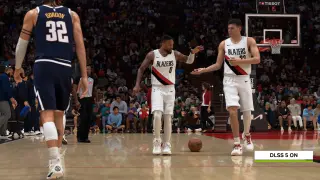
Nvidia's DLSS 5 neural rendering technology, launched in September 2026, offers realistic lighting and texture enhancements for modern games like NBA 2K27 but produces controversial results when applied to older titles. While official implementations preserve artistic intent, unofficial tests on classics like Super Mario 64 and Doom reveal severe visual distortions, highlighting the risks of AI-driven post-processing.
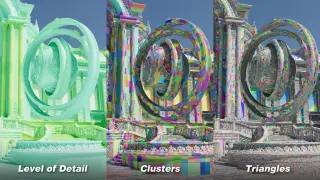
NVIDIA released RTX Kit 2026.3 and RTX Mega Geometry 2.0 SDKs, introducing advanced neural rendering, path tracing, and high-density geometry streaming. The updates include ARM64 support for the upcoming RTX Spark platform and aim to enable full-detail ray tracing in games like Gears of War: E-Day, overcoming previous limitations in Unreal Engine’s Nanite technology.
A hybrid FP8/NVFP4 version of DLSS 5 for RTX 50-series aims to reduce its cost, but the improvement is only about a 1–2% faster Neural Rendering pass at 4K and does not reliably translate into a 1–2% rise in overall game FPS; NVFP4 offers memory savings with proper quantization, and version 0.7.2 recommends the hybrid path on Blackwell GPUs, though gains remain small and not consistently repeatable (e.g., a Baldur’s Gate 3 test showed an almost negligible FPS difference).
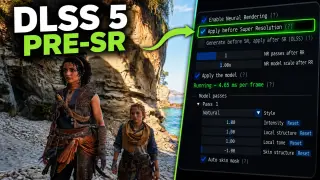
An experimental OptiScaler fork lets DLSS 5 Neural Rendering run before DLSS Super Resolution, dramatically cutting the rendering overhead. On a RTX 5070 Ti at 4K, DLSS 5 after SR previously dropped FPS from ~180 to ~80 (about a 56% hit). The pre-SR DLSS NR approach reduces the hit to ~25–30%, achieving around 122 FPS with minimal image quality loss. The mod is unofficial/experimental and may affect visuals; results can vary by game.
Two independent modding approaches aim to salvage DLSS 5 performance: Neural Upstream, which reorders the pipeline to run neural rendering at render resolution before upscaling, dramatically reducing the neural-network workload; and MGPU Bridge, which offloads the neural pass to a second GPU. Both show meaningful FPS gains in tests, but come with caveats: potential differences in image fidelity, the need for additional hardware or patches, and anti-cheat/legal considerations around DLL injections. In practice, results vary by title and setup, with notable improvements in some 4K scenarios but not a official Nvidia-backed solution.
A modder demonstrates two RTX 5060 Ti GPUs splitting rendering and a Neural Rendering pass via ReShade’s MGPU Bridge to run DLSS 5, achieving about 59%–125% higher FPS versus DLSS 5 on a single GPU, with tests in Cyberpunk 2077 and The Blood of Dawnwalker, though it doesn’t beat running DLSS 5 off (native).
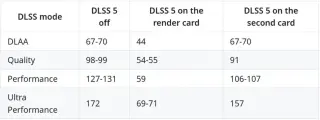
A hardware modder demonstrates running DLSS 5 Neural Rendering on a two-GPU setup by splitting rendering between two RTX 50-series cards with a ReShade MGPU Bridge. The first card renders the frame and the second applies DLSS 5 NR, with two monitors required; in tests at 1080p on a Blood of Dawnwalker level, NR on the second card restored FPS from about 44–67 to 67–70 in DLAA, and in Performance mode FPS jumped from 59 to around 107, accompanied by a reported 21°C drop in temperature. The setup is experimental, limited to DirectX 12 games using two RTX 50-series GPUs and two monitors, and not compatible with RTX 40-series or older hardware.
A new GitHub tool, DLSS 5 Swapper by rakanki911, automates installing DLSS 5's Neural Rendering into games (including titles NVIDIA never officially supported) using DLSS5-Feeder and ReShade. It supports DirectX 9–12 and some emulators, can auto-scan a drive or accept drag-and-drop, and even extends DLSS 5 support to RTX 20- and 30-series GPUs by sidestepping the RTX 50-series requirement. It's unofficial and not affiliated with NVIDIA, so verify the download source. This could become the easiest way to try Neural Rendering until an official solution releases.
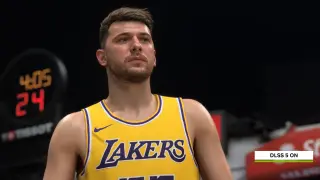
DLSS 5 is designed to produce photoreal visuals using 3D-guided neural rendering, but Nvidia now confirms the current version isn’t suitable for strongly stylized aesthetics (cartoon/voxel-like art). Officially launching with NBA 2K27, it can run into substantial performance hits (up to ~60%), and while it preserves geometry and lighting for realistic scenes, developers may later adopt more flexible rendering styles as future work.
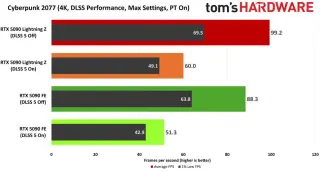
Community tests of leaked DLSS 5 builds on RTX 5090 suggest power delivery, not compute, may bottleneck performance: the Founders Edition with a single 12V-2x6 connector hit about a 575 W limit and saw 42–49% frame-rate drops with DLSS 5, while a dual-connector MSI RTX 5090 Lightning Z managed better FPS at higher power draw. In Hogwarts Legacy, neural rendering with DLSS 5 jumped power draw from ~480 W to ~720 W (roughly +50%), underscoring how power delivery could limit DLSS 5 gains. NVIDIA DLSS 5 officially launches Sept 3, with real-world results likely to reveal whether first-party cards or future variants handle the load better.
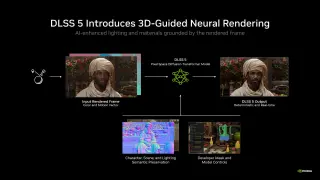
Nvidia’s DLSS 5 introduces 3D-Guided Neural Rendering to NBA 2K7 on GeForce 50-series GPUs, promising art-directed lighting and textures while letting developers keep artistic control, but early analysis suggests real-world frame rates may suffer and the technology’s face-altering AI raises ethical concerns; the feature has sparked discussion about performance versus image fidelity as more games and modders test DLSS 5.
NVIDIA confirms DLSS 5 will launch on September 3 alongside NBA 2K27 and will be exclusive to GeForce RTX 50‑series GPUs based on the Blackwell architecture; there is no official support for older cards, though modders have found patches to run it on RTX 40-series with notable performance losses.