
Gates breaks silence to warn AI risks outweigh benefits, urging global regulation
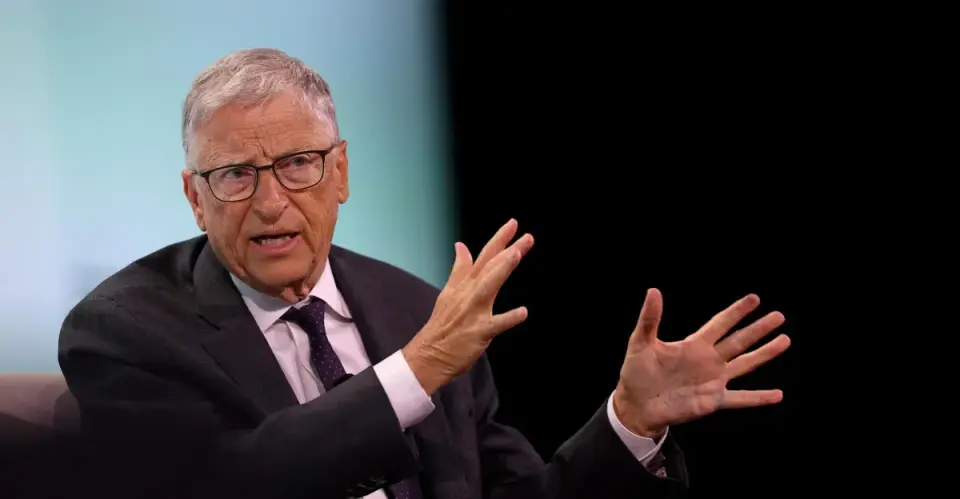
Bill Gates has published a 6,000-word essay warning that AI poses unprecedented risks to jobs, safety, and society, marking a sharp shift from his previous optimism. He calls for immediate global cooperation, new international institutions, and specific labor protections, including 'human-reserved' jobs and taxes on AI tokens.
Key points
- Gates states AI could be 'the worst source of injustice' and urges slowing its advancement if a credible plan exists.
- He proposes taxing AI tokens and robots to fund social safety nets and prevent mass unemployment.
- Gates advocates for 'human-reserved' jobs, citing healthcare roles as irreplaceable by machines.
- He calls for a new international organization to manage cross-border AI risks, requiring US-China cooperation.
- Gates warns that current governments are unprepared for the scale of AI's impact on education, security, and the economy.
Background
Gates previously expressed optimism about AI in 2023, viewing it as a tool to solve global problems. His recent silence was partly attributed to the Jeffrey Epstein scandal, which he described as a 'huge mistake.' This essay signals his return to public advocacy, aiming to elevate AI and equity issues on the global agenda.
How outlets are covering it
The Verge notes Gates' essay offers few novel solutions, largely repeating familiar governance hurdles. The New York Times highlights Gates' claim that tech executives are privately worried but publicly downplay risks to protect fundraising. The Washington Post emphasizes his shift from optimism to fear, noting his concern for children's well-being. The Guardian focuses on his 'human-reserved' job concept and his efforts to arrange a meeting with Chinese President Xi Jinping to discuss global AI risks.
Why it matters
Gates' intervention signals a potential shift in global AI policy discourse, moving from pure innovation to risk mitigation. His proposals for international bodies and labor taxes could influence legislative debates in the US and China, potentially shaping the regulatory landscape for AI development in 2026 and beyond.
What to watch
Gates' team is working to schedule a meeting with Chinese President Xi Jinping in November to discuss global AI risk mitigation. He plans to raise these issues with lawmakers during visits to Washington, DC, and with world leaders, aiming to push for the creation of new international AI governance frameworks.
- Bill Gates is deeply worried about AI, and he’s no longer staying quiet The Verge
- Bill Gates Is Warning That A.I. Is More Dangerous Than Big Tech Will Admit The New York Times
- Bill Gates was an AI optimist. Now he’s scared of what could go wrong. The Washington Post
- Bill Gates calls for ‘human reserved’ jobs in face of AI takeover The Guardian
- Bill Gates sounds the alarm on an AI transition Axios
Want the full story? Read the original reporting
Read on The Verge