
NAND Shortage to Last Four Years, Locking in Higher SSD Prices Through 2030
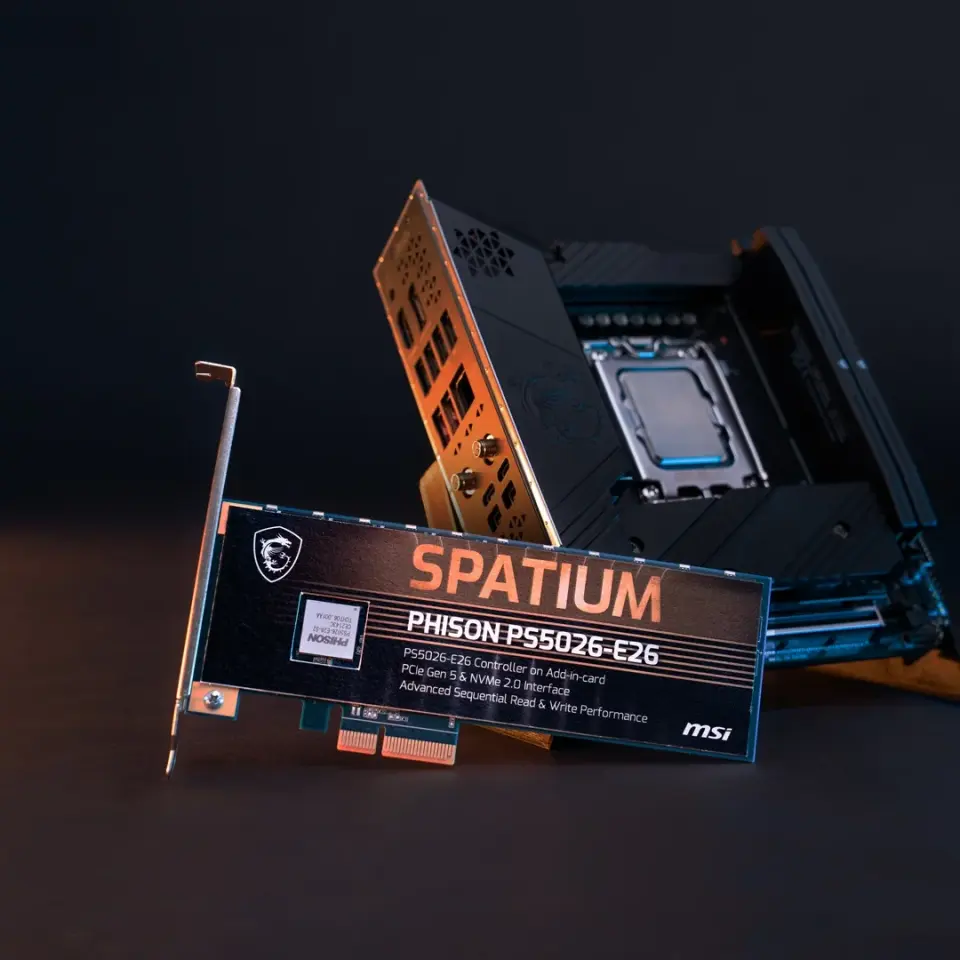
NAND flash supply will lag demand for at least four years, keeping SSD prices elevated through 2030. Phison CEO Pua Khein-Seng warns that new production capacity takes four years to build, not two. AI data centers are consuming massive storage, while DRAM and HBM shortages compound the crisis. Prices for memory have risen sixfold in a year, and relief is unlikely before 2030.
Key points
- Phison CEO Pua Khein-Seng states that NAND production capacity cannot meet demand in the short term, with new factories taking four years to build.
- Phison is holding a 'strategic' inventory to ensure stable supply for enterprise SSDs and AI firms over the next two years.
- NAND shortages are expected to persist for at least four years, driving substantial price increases as demand continues to grow.
- Phison’s gross margins won’t increase significantly due to rising NAND procurement costs, despite a record-high 65.3% margin in Q2 2026.
- The company is shifting strategy under 'Phison 3.0' to focus on AI Storage, Edge AI, and AI platforms rather than relying solely on NAND controllers.
Background
In July 2026, UBS raised memory price forecasts, predicting DDR contract prices to rise 32% quarter-over-quarter in Q3 and 18% in Q4, with NAND up 30% in Q3 and 12% in Q4. TrendForce also flagged persistent shortages, noting demand growth outpacing supply. In August 2026, Sandisk saw a 372% revenue surge in fiscal Q4, driven by AI hyperscaler demand, though analysts warned of potential pricing gluts if capacity expands too quickly.
How outlets are covering it
Wccftech emphasizes the four-year timeline for new NAND production, citing Phison’s CEO and NAND manufacturers. Engadget highlights the broader 'RAMpocalypse,' noting that AI companies have bought up years of RAM supply, with SK Hynix and Micron expecting tight conditions beyond 2030. Axios focuses on 'chipflation,' with the Producer Price Index for electronic components rising 27.6% in June, the largest increase since 1966. The Independent notes that Apple is testing memory chips from Chinese maker CXMT to deal with skyrocketing costs, requiring White House approval. All sources agree that AI demand is the primary driver, but they differ on the severity: Engadget and Axios stress the unprecedented price spikes, while Wccftech focuses on the structural supply constraints in NAND specifically.
Why it matters
The four-year NAND shortage will keep SSD prices elevated through 2030, affecting consumer electronics, cloud storage, and AI infrastructure. Phison’s strategic inventory and shift to AI-focused storage reflect the industry’s adaptation to sustained demand. The broader memory crisis, driven by AI, is reversing decades of declining memory costs, with prices rising sixfold in a year. This impacts everything from laptops to smartphones, with Morgan Stanley forecasting a 15 percentage point increase in CPI for PCs and smartphones. The situation underscores the structural challenges of scaling memory production and the long-term implications of AI-driven demand.
What to watch
Phison will continue to hold back inventory and accelerate its NAND product roadmap in the Enterprise SSD and AI-SSD segments. The company’s 'Phison 3.0' initiative will focus on AI Storage, Edge AI, and AI platforms. NAND manufacturers will take at least four years to build new production capacity, with SK Hynix’s new factories expected to begin production in June 2029. Prices are expected to rise substantially through 2030, with no relief anticipated before then. Apple may seek White House approval to source memory from CXMT, while other companies may explore alternative suppliers or adjust their procurement strategies.
- Phison CEO Warns NAND Supply Won’t Meet Demand For Four Years, Locking In Higher SSD Prices Through 2030 Wccftech
- Why Are RAM Prices So High Right Now? Engadget
- A.I.-Driven Chip Crunch Leads to New Rush of Lobbying in Washington The New York Times
- Why "chipflation" is here to stay Axios
- What is ‘chipflation’ and why is it making all your electronics more expensive? The Independent
Want the full story? Read the original reporting
Read on Wccftech