
Gates urges 'human-reserved' jobs and global AI governance in new essay
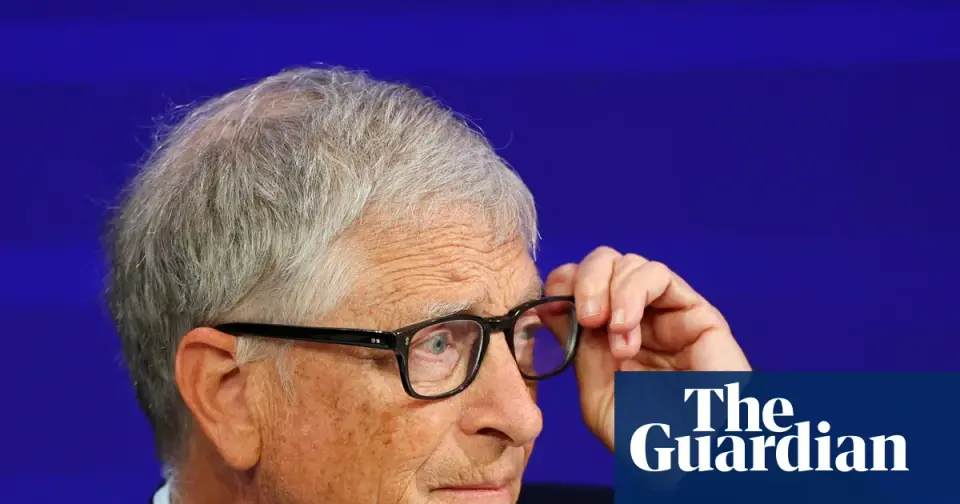
Bill Gates has published a 6,000-word essay warning that governments are unprepared for the economic and social upheaval caused by artificial intelligence. He proposes designating certain roles as 'human-reserved' to protect jobs that require emotional connection, similar to nature reserves. Gates argues that AI could become the 'worst source of injustice' if it displaces workers faster than they can retrain, but also notes its potential to solve global challenges like climate change. He calls for new national and international bodies to manage AI risks, citing the need for US-China cooperation. This marks a shift from his previous optimistic stance on AI, reflecting concerns about its impact on education, employment, and societal stability.
Key points
- Gates calls for 'human-reserved' jobs in sectors like healthcare, citing his father's care as an example of irreplaceable human interaction.
- He warns that AI could displace white- and blue-collar workers, creating a 'vicious cycle' of cost-cutting and job loss.
- Gates argues that governments lack a plan for the 'social, political, and economic upheaval' AI will cause, comparing the needed reorganization to post-9/11 efforts.
- He proposes creating new national coordinating bodies and an international organization, modeled on nuclear inspection regimes, to manage AI risks.
- Gates acknowledges AI's potential to advance clean energy and healthcare but fears it could reduce critical thinking among young people.
Background
This essay follows Gates's earlier warnings about AI's risks to workers and children, as noted in our August 2026 coverage. It also comes after the Gates Foundation's external review regarding its past interactions with Jeffrey Epstein, which Gates has previously regretted. The essay represents a significant shift from his earlier optimism about AI as a 'greatest equalizer,' reflecting growing concerns about its societal impact.
How outlets are covering it
The Guardian emphasizes Gates's personal motivation, citing his father's Alzheimer's care as a reason for 'human-reserved' jobs, and notes the essay's timing after the Epstein scandal. CNBC focuses on the economic upheaval, highlighting Gates's warning that AI could be the 'worst source of injustice' and his call for new national and international bodies. The Washington Post frames Gates's stance as a shift from his previous optimism, noting his concern for children's well-being and the need for bipartisan action. The Telegraph source was inaccessible due to a security block, so its perspective could not be assessed.
Why it matters
Gates's call for 'human-reserved' jobs and global AI governance signals a growing consensus among tech leaders that AI's rapid adoption requires proactive regulation. His proposal for new national and international bodies could influence policy discussions in the US and China, potentially shaping how governments manage AI's impact on employment, education, and public safety. The essay also highlights the tension between AI's potential benefits and its risks, urging a balanced approach to ensure that technological progress does not exacerbate inequality or harm societal well-being.
What to watch
Gates's team is working to arrange a meeting with Chinese President Xi Jinping in November to discuss global AI risks. The essay may prompt further debate on the need for new regulatory frameworks and international cooperation to manage AI's impact on jobs, education, and public safety. Gates's call for 'human-reserved' jobs could influence policy discussions on protecting certain roles from automation, while his warnings about AI's impact on critical thinking may lead to increased scrutiny of AI's role in education.
- Bill Gates calls for ‘human-reserved’ jobs in face of AI takeover The Guardian
- Bill Gates Is Warning That A.I. Is More Dangerous Than Big Tech Will Admit The New York Times
- Bill Gates warns ‘there is no plan’ for the ‘upheaval’ AI will cause CNBC
- Bill Gates was an AI optimist. Now he’s scared of what could go wrong. The Washington Post
- Bill Gates: Ban AI from taking some jobs from humans The Telegraph
Want the full story? Read the original reporting
Read on The Guardian