
Huang Calls AI Distillation 'Competition,' Defying White House 'Theft' Accusations Amid US-China Summit
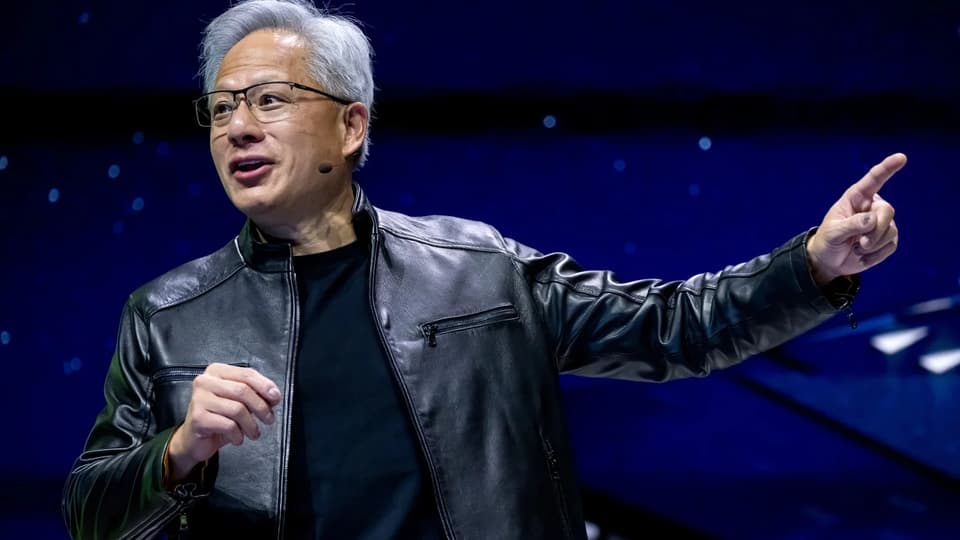
Nvidia CEO Jensen Huang rejected the White House characterization of AI model distillation as 'theft,' labeling it standard 'competition' during a CNBC interview. This stance contrasts with U.S. officials' accusations that Chinese firms are illegally extracting capabilities from American systems. The dispute highlights a broader geopolitical rift, with China promoting open-weight models to global markets while the U.S. pushes for proprietary safeguards and export controls.
Key points
- Jensen Huang stated that training models on competitors' outputs is 'competition,' not robbery, and argued that companies can disable services if they dislike usage.
- U.S. Treasury Secretary Scott Bessent previously called distillation 'theft' and threatened sanctions against overseas companies using it to extract U.S. capabilities.
- The U.S. Cybersecurity and Infrastructure Security Agency accused Chinese firms of 'industrial-scale knowledge distillation campaigns' violating terms of use.
- Anthropic reported that Alibaba and DeepSeek engaged in 'illicit distillation,' while China has rejected these claims.
- Chinese open-weight models now account for over 54% of global usage on OpenRouter, driven by lower costs and accessibility for the Global South.
- Trump and Xi Jinping met to discuss AI safety, but yielded little progress beyond a bilateral communication channel due to deep mutual mistrust.
Background
Recent weeks have seen heightened tensions over AI governance, with President Trump calling Huang during an all-hands meeting to dismiss safety concerns and promote aggressive development. Huang has previously argued against new laws, favoring engineering-based safety, while also suggesting labs should shut down if they cannot contain models. This current dispute over distillation fits into a broader narrative where the U.S. seeks to maintain technological dominance through proprietary controls, while China leverages open ecosystems to expand global influence.
How outlets are covering it
CNBC highlights the direct conflict between Huang’s pro-competition stance and the White House’s 'theft' narrative, noting that the White House did not immediately respond to comments. Scientific American emphasizes the practical implications of open models, citing a Hugging Face breach where a Chinese model helped investigate an attack by an American system, illustrating the limits of proprietary safeguards. CNN frames the issue as a geopolitical choice for the Global South, noting that while the U.S. pushes for alignment through the Pax Silica alliance, China’s open models offer a cheaper, more accessible alternative, with 29 countries joining Xi’s World Artificial Intelligence Cooperation Organization. CNN also notes a rift between U.S. tech companies and the administration, as firms like Nvidia and Meta warned against sweeping restrictions on open models in July.
Why it matters
The distillation debate is central to the U.S.-China AI race, influencing global adoption of open versus proprietary models. If the U.S. imposes sanctions, it may push more countries toward Chinese open-weight systems, accelerating Beijing’s global influence. Conversely, the success of open models challenges the U.S. model of controlled, high-cost AI, potentially reshaping international standards for AI safety and accessibility. The outcome will determine whether the U.S. can maintain its technological edge or if China’s open ecosystem becomes the global default.
What to watch
U.S. officials are considering sanctions against overseas companies using distillation, though implementation remains unclear. The Trump-Xi summit established a communication channel for AI incidents but failed to resolve core disagreements. Experts predict a mix of open and closed-source AI from China, with potential licensing restrictions on powerful models. The global market may continue to diversify suppliers, with companies balancing cost and capability, while the U.S. grapples with how to enforce export controls in a leaky regulatory environment.
- Jensen Huang says AI distillation is 'competition.' Scott Bessent has called it 'theft' CNBC
- Is China Really Stealing A.I. From American Companies? nytimes.com
- Central Asia’s Technology Trap The National Interest
- China’s open AI models are testing America’s approach to AI safety Scientific American
- The US wants the world to pick a side on AI. But for many countries, China’s pitch may be more compelling CNN
Want the full story? Read the original reporting
Read on CNBC