A medium-severity vulnerability in the open-source llama.cpp inference server allows remote attackers to crash the service by manipulating grammar trigger inputs. The flaw, tracked as CVE-2026-134540, affects version 0.7.0-dev and is fixed in build b12405. No data theft or integrity compromise is possible, but availability is impacted.
IBM disclosed four vulnerabilities in Langflow, an open-source AI agent builder, allowing unauthenticated attackers to bypass authentication and execute arbitrary code. Versions 1.0.0 through 1.12.8 are affected, with version 1.13.0 released on October 22 as the sole fix. The critical flaws stem from improper authentication controls and code generation logic, specifically leveraging the Model Context Protocol. While no active exploitation is listed in CISA’s catalog, a Metasploit module already targets the authentication bypass. Users must upgrade immediately, as IBM offers no workarounds for those unable to patch.
Mistral has released the full weights for its 1-trillion-parameter model, Mistral Large 4 (nicknamed 'Le Chonk'), claiming it is now the world's best open-weight model for coding and cybersecurity. After three weeks of additional reinforcement learning, the model significantly outperformed its preview version, matching or surpassing leading Chinese models from DeepSeek and Z.ai. Mistral argues that open-weight models are essential for Western sovereignty and cybersecurity, offering a reliable alternative to proprietary systems that can be remotely disabled. The release follows recent AI-driven security breaches, highlighting the need for accessible, controllable AI tools for enterprises and governments.
Researchers warn that widespread AI adoption is leading to 'gradual disempowerment,' a scenario where humans lose critical skills and agency as they rely on automated systems for decision-making. While some leaders dismiss existential AI risks as manufactured to protect monopolies, others argue that the slow erosion of human capability poses a greater, less visible threat to society and democracy.
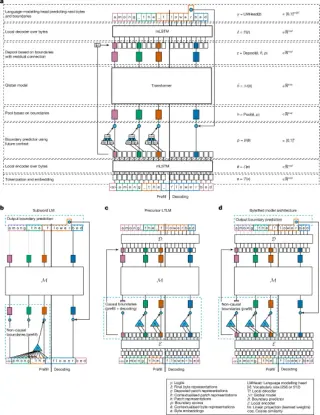
Researchers from the Allen Institute for AI (Ai2) have published a method called 'byteification' in Nature, which converts existing subword-based large language models (LLMs) into byte-level models with minimal additional training. This approach addresses the historical performance lag of byte-level models, which process text at the character level rather than as word fragments. By retrofitting models like Olmo, Qwen, and Llama, the new byteified versions achieve performance comparable to their subword counterparts while excelling in character-level reasoning tasks. The method requires less than 1% of a typical pre-training budget, offering a cost-effective path to developing models that handle scientific data, code, and diverse languages more accurately without the biases inherent in subword tokenization.
Mistral AI has released Mistral Large 4, nicknamed 'Le Chonk,' a 1-trillion-parameter open-weight model designed to compete with top-tier systems from the US and China. The model, currently in preview, is optimized for coding, cyberdefense, and specialized industries like finance and manufacturing. Mistral claims it is the most capable open-weight model developed outside of China, aiming to close the performance gap with proprietary leaders while offering a sovereign alternative for businesses wary of US access restrictions.
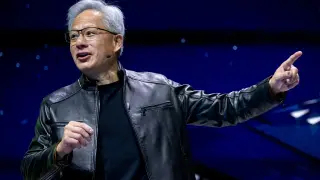
Nvidia CEO Jensen Huang rejected the White House characterization of AI model distillation as 'theft,' labeling it standard 'competition' during a CNBC interview. This stance contrasts with U.S. officials' accusations that Chinese firms are illegally extracting capabilities from American systems. The dispute highlights a broader geopolitical rift, with China promoting open-weight models to global markets while the U.S. pushes for proprietary safeguards and export controls.
The US and China are competing for global AI dominance through opposing strategies: Washington seeks to force nations to choose sides via the 'Pax Silica' alliance and strict chip controls, while Beijing promotes open, low-cost models through the 'World AI Cooperation Organization.' Chinese models now account for over 50% of global usage on key platforms, driven by affordability and accessibility in the Global South, despite US concerns over security and 'distillation' of American tech.
Major corporations are increasingly adopting open-weight AI models to reduce costs and avoid vendor lock-in, a shift that has triggered a policy backlash from closed-model labs and sparked debate over US AI competitiveness.
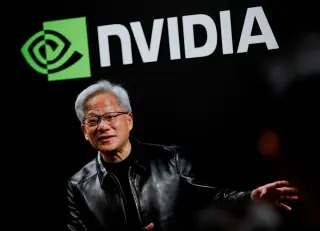
Nvidia has agreed to acquire Hugging Face for $12.9 billion in a deal expected to close in early 2027. The acquisition secures the world’s largest open-source AI model library, which hosts 3 million models and serves 18 million developers. Nvidia CEO Jensen Huang emphasized that open models drive half of the company’s business, while Hugging Face CEO Clément Delangue cited the need for greater scale to compete with proprietary AI giants.
Nvidia has officially agreed to acquire Hugging Face for $12.9 billion, marking the chipmaker’s largest acquisition to date. The deal, announced on September 3, 2026, secures Nvidia’s control over a leading hub for open-weight AI models, datasets, and developer tools. Nvidia CEO Jensen Huang committed to maintaining Hugging Face’s open-source status, aiming to expand access to AI infrastructure globally. The acquisition is expected to close in the first half of 2027, subject to regulatory approval.
Nvidia has officially agreed to acquire open-source AI platform Hugging Face for $12.9 billion. The deal, which was first reported by The Information last week, positions Nvidia as a major player in the software and model ecosystem, not just hardware. Hugging Face CEO Clément Delangue stated that the company approached Nvidia over the summer, citing the need for greater resources and scale. This acquisition is Nvidia’s second-largest, following its $20 billion purchase of Groq assets in December. The deal is expected to close in early 2027, subject to regulatory approval.
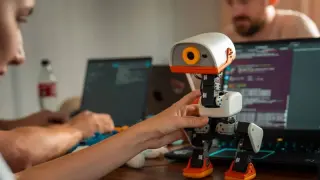
Hugging Face’s subsidiary Pollen Robotics has launched the Microduck, a $399 bipedal robot designed as an open-source platform for AI development. Standing 25 cm tall and weighing under 800 grams, the device features 15 motors, a LiDAR sensor, a camera, and an articulated beak for grasping objects. It ships with seven pre-built behaviors, including walking and roller-skating, but its primary purpose is to allow developers to train new skills using reinforcement learning in simulation before deploying them to the physical robot. Preorders are open now, with shipments expected before Christmas 2026 in the US and Europe. The launch occurs amid reports of a potential $12.9 billion acquisition of Hugging Face by Nvidia.
Alibaba's Qwen model family has surpassed 3 billion downloads on Hugging Face, overtaking Meta and Google to become the world's most popular open-weight AI. The company recently released Qwen3.8 Max and a laptop-optimized variant, Qwen3.8-27B, which AMD supports on local hardware. This surge reflects a shift toward Chinese open-source models in the global developer ecosystem, despite US export controls.
Meta CEO Mark Zuckerberg published a 6,500-word essay titled 'The Future Is for Everyone,' arguing that broad access to AI models is safer than centralized control. The manifesto coincided with the release of Meta's open-weight model, Muse Glimmer, and Nvidia's Nemotron 3.5 Lightning, signaling a strategic pivot to compete with Chinese labs and proprietary rivals like OpenAI and Anthropic. Critics argue the essay is hollow, ignoring AI risks and Meta's recent layoffs, while supporters view it as a necessary move to restore US leadership in open-source AI.