
IBM and partners claim verifiable quantum advantage, challenging classical supercomputers
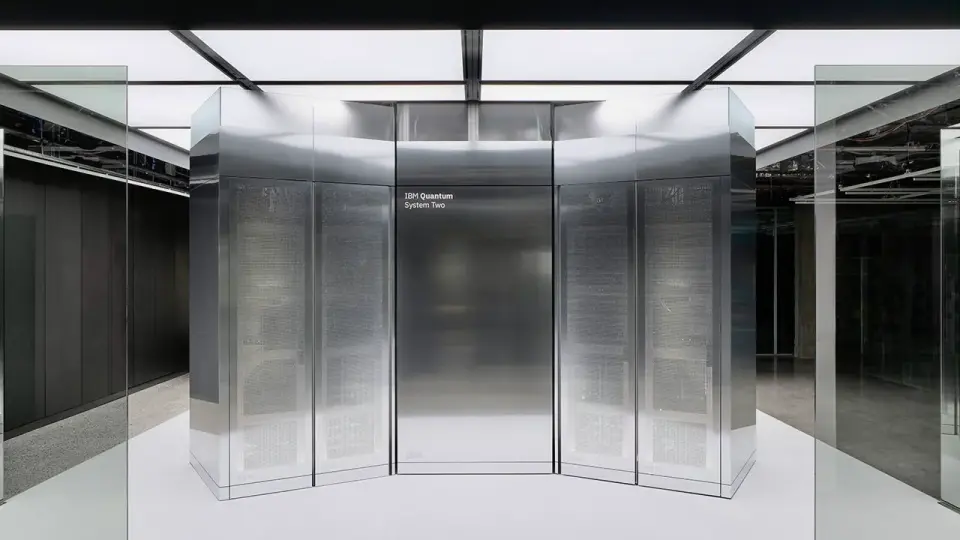
IBM, the University of Chicago, and Qedma announced on July 30 that they have achieved verifiable quantum advantage, demonstrating that quantum computers can solve specific physics problems beyond the reach of classical supercomputers while maintaining result accuracy. IBM CEO Arvind Krishna projects measurable financial impact by 2028-2029 and a trillion-dollar market by the end of the 2030s.
Key points
- IBM, University of Chicago, and Qedma demonstrated quantum advantage on July 30, 2026, using error-mitigated hardware to model quantum materials.
- The demonstration used 70 logical qubits and 74 physical qubits, outperforming classical simulations on supercomputers like Fugaku.
- IBM CEO Arvind Krishna stated quantum computing will have a measurable impact on earnings by 2028 or 2029.
- The achievement addresses the verification challenge, allowing researchers to trust quantum results without relying on classical benchmarks.
- IBM announced a $1 billion investment in a quantum chip foundry, supported by a matching $1 billion from the U.S. Department of Commerce.
Background
In late July 2026, IBM and partners published multiple papers detailing methods for real-time verification of quantum calculations. This followed earlier announcements about three routes toward verifiable quantum advantage on noisy hardware, including robust error mitigation and Floquet-Ising modeling. The current announcement builds on these foundational steps, moving from theoretical verification methods to practical demonstrations of outperforming classical systems.
How outlets are covering it
Live Science emphasizes the bold claim of quantum advantage and the challenge to others to prove it wrong. CNBC focuses on the business implications, highlighting IBM CEO Arvind Krishna's projection of a trillion-dollar market by the end of the 2030s and the measurable impact on earnings by 2028-2029. The University of News highlights the technical breakthrough in verification, noting the use of 70 logical qubits and the ability to detect errors during computation. IBM Newsroom details the collaboration with Qedma and RIKEN, emphasizing the use of error-mitigation software to model physics beyond classical capabilities, including on the Fugaku supercomputer.
Why it matters
This milestone marks a shift from theoretical quantum supremacy to practical, verifiable quantum advantage, potentially accelerating commercial applications in materials science, medicine, and energy. It also signals IBM's confidence in the long-term financial viability of quantum computing, despite current challenges in scalability and error rates.
What to watch
IBM and partners will continue to benchmark quantum results through the Quantum Advantage Tracker, releasing circuits and results publicly. The company plans to expand its quantum chip foundry, with a $1 billion investment from the U.S. Department of Commerce and a matching $1 billion from IBM. Researchers will further explore the boundary between quantum and classical computation, aiming to unlock practical applications for advanced materials and optoelectronics.
- IBM scientists claim they've achieved 'quantum advantage' — and they've dared others to prove them wrong Live Science
- IBM CEO says quantum computing will have a 'measurable impact' on earnings by 2028 or 2029 CNBC
- IBM, UChicago demonstrate ‘quantum advantage,’ outperforming traditional computers with a quantum computer University of Chicago News
- IBM and Qedma Demonstrate Quantum Advantage, Modeling Physics Beyond Classical Capabilities Through Trusted Quantum Computation IBM Newsroom
- IBM Claims New Era of ‘Quantum Advantage’ WSJ
Want the full story? Read the original reporting
Read on Live Science