Tag

Supercomputing

All articles tagged with #supercomputing

China seizes the lead in the world’s fastest supercomputer race
technology21 days ago

China seizes the lead in the world’s fastest supercomputer race

China’s LineShine supercomputer in Shenzhen has claimed the world’s top spot on the TOP500 list with 2.198 exaflops, surpassing the US El Capitan; it runs on CPUs and consumes about 42.2 MW, with four European systems also in the top 10. The milestone boosts AI research and other advanced science, framed by Beijing as part of a broader “China Opportunity 2.0” amid ongoing debates about subsidies and global tech leadership.
China’s LineShine tops the world’s fastest supercomputer ranking
technology21 days ago

China’s LineShine tops the world’s fastest supercomputer ranking

China’s LineShine overtook the US El Capitan to become the world’s fastest supercomputer on the biannual TOP500 list, attaining 2.198 exaflops on a CPU-only design at Shenzhen’s National Supercomputing Centre. El Capitan had led since November 2024, Frontier remains third, and other nations’ systems populate the top 20, underscoring ongoing tech competition even as AI advances reshape how the rankings are viewed. The TOP500 ranking relies on the LINPACK benchmark, a measure of solving large linear systems.

LineShine claims world’s fastest supercomputer title, displacing U.S. El Capitan
technology21 days ago

LineShine claims world’s fastest supercomputer title, displacing U.S. El Capitan

China’s LineShine supercomputer, built at Shenzhen’s National Supercomputing Center and running on conventional CPUs, tops the Top500 list with 2.198 exaflops and about 42.2 MW of power, marking the first Chinese lead since 2017. It dethrones the U.S. El Capitan at Lawrence Livermore National Laboratory, with other top systems in Tennessee, Illinois and Germany making up the upper ranks; the article also notes Europe’s plan for AI gigafactories and concerns about cooling water use and power consumption in large-scale machines.

technology21 days ago

LineShine Tops TOP500, Signaling a Global Exascale Era

At ISC 2026, LineShine debuts at No. 1 on the TOP500 with 2.198 exaflops in HPL (CPU‑only LingKun cores), signaling a new global exascale era as Asia joins North America and Europe at the forefront. El Capitan remains No. 2 and Frontier No. 3, while Aurora and JUPITER Booster sit at Nos. 4–5 and HPC7 enters the Top 10 at No. 6. The list shows diversified architectures across continents, with Green500 leaders unchanged. LineShine also leads HPCG, while El Capitan remains No. 1 on HPL‑MxP.

science5 months ago

Brookhaven's RHIC Ends 25-Year Run, Paving the Way for the Electron-Ion Collider

Brookhaven Lab’s Relativistic Heavy Ion Collider wraps up a 25-year run with its largest-ever dataset from heavy-ion collisions, advancing understanding of quark-gluon plasma and proton spin while laying groundwork for the future Electron-Ion Collider; the article also rounds up related HPC/AI/quantum news, including Capgemini’s Google Cloud sovereign AI partnership, ACCESS crop-trade modeling, ETH Zurich’s lattice-surgery quantum work, ISC 2026’s EESP workshop, and Quobly’s Canadian subsidiary expansion.

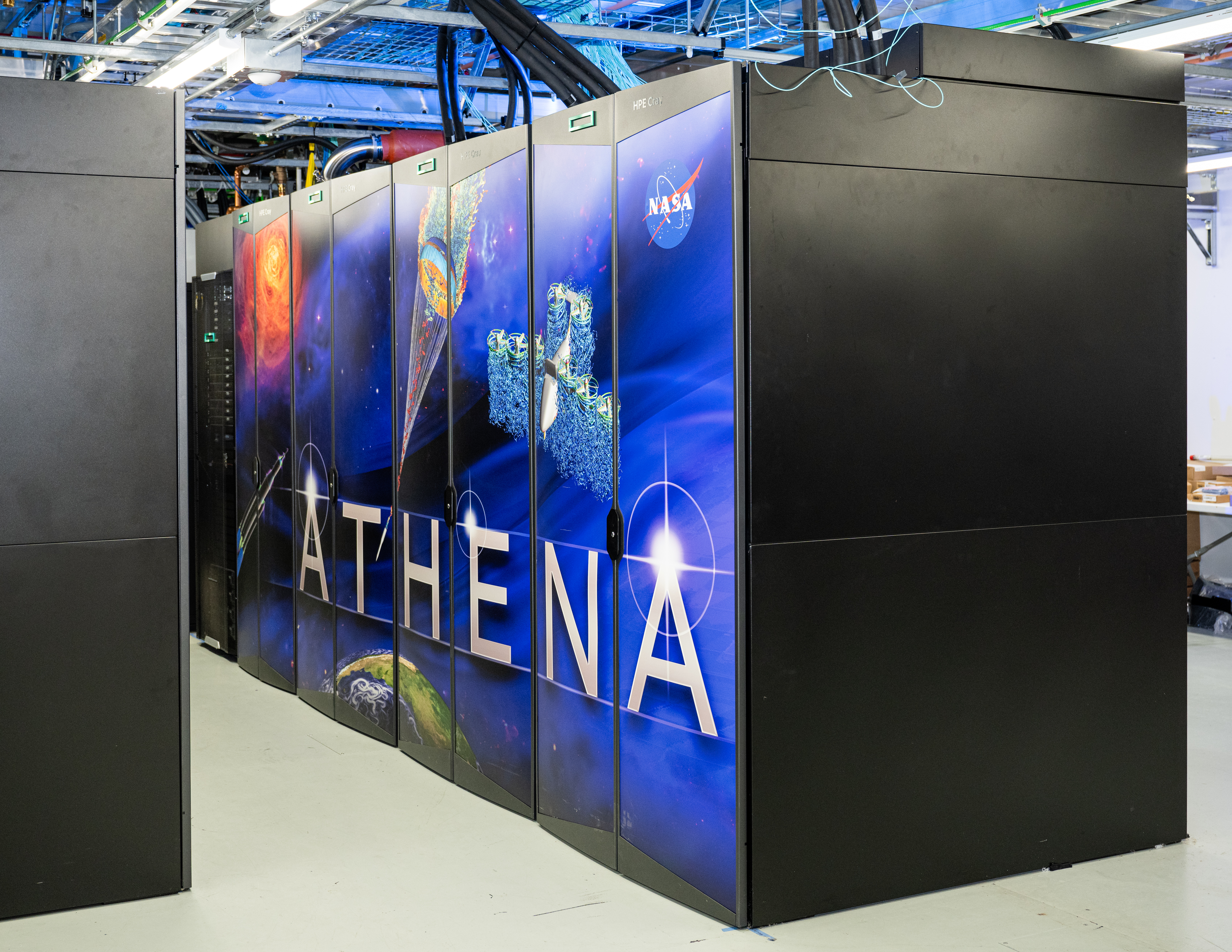
NASA's Athena: The Next-Gen Supercomputer Fueling Future Space Research
technology5 months ago

NASA's Athena: The Next-Gen Supercomputer Fueling Future Space Research

NASA unveiled Athena, its most powerful and efficient high-end computing system at Ames Research Center, delivering over 20 petaflops to accelerate simulations, AI model training, and large-scale data analysis for space, aeronautics, and science missions; it uses a flexible, hybrid approach that pairs traditional supercomputing with cloud tools and is available to internal and external researchers through allocated time.

The 9th Dedekind Number: A 32-Year Quest and the Elusive 10th
mathematics6 months ago

The 9th Dedekind Number: A 32-Year Quest and the Elusive 10th

Dedekind numbers are a sequence of mathematical values with complex growth, first studied by Richard Dedekind, and are extremely difficult to compute beyond the eighth term due to their exponential complexity. The ninth Dedekind number was only recently discovered through advanced computational methods, but finding the tenth may be impossible for the foreseeable future due to the astronomical computational power required.

AMD Gains as U.S. Department of Energy Announces $1B Supercomputing Partnership
technology8 months ago

AMD Gains as U.S. Department of Energy Announces $1B Supercomputing Partnership

AMD has partnered with the U.S. Department of Energy in a $1 billion project to develop two supercomputers, Lux and Discovery, aimed at advancing scientific research in areas like nuclear energy, cancer treatment, and national security. The project enhances AMD's role in high-performance computing and AI infrastructure, with the first system, Lux, launching within six months, and the second, Discovery, expected in 2029. AMD stock has gained over 1% following the announcement.

Frontier Supercomputer Sets New Record in Universe Simulation
science-and-technology1 year ago

Frontier Supercomputer Sets New Record in Universe Simulation

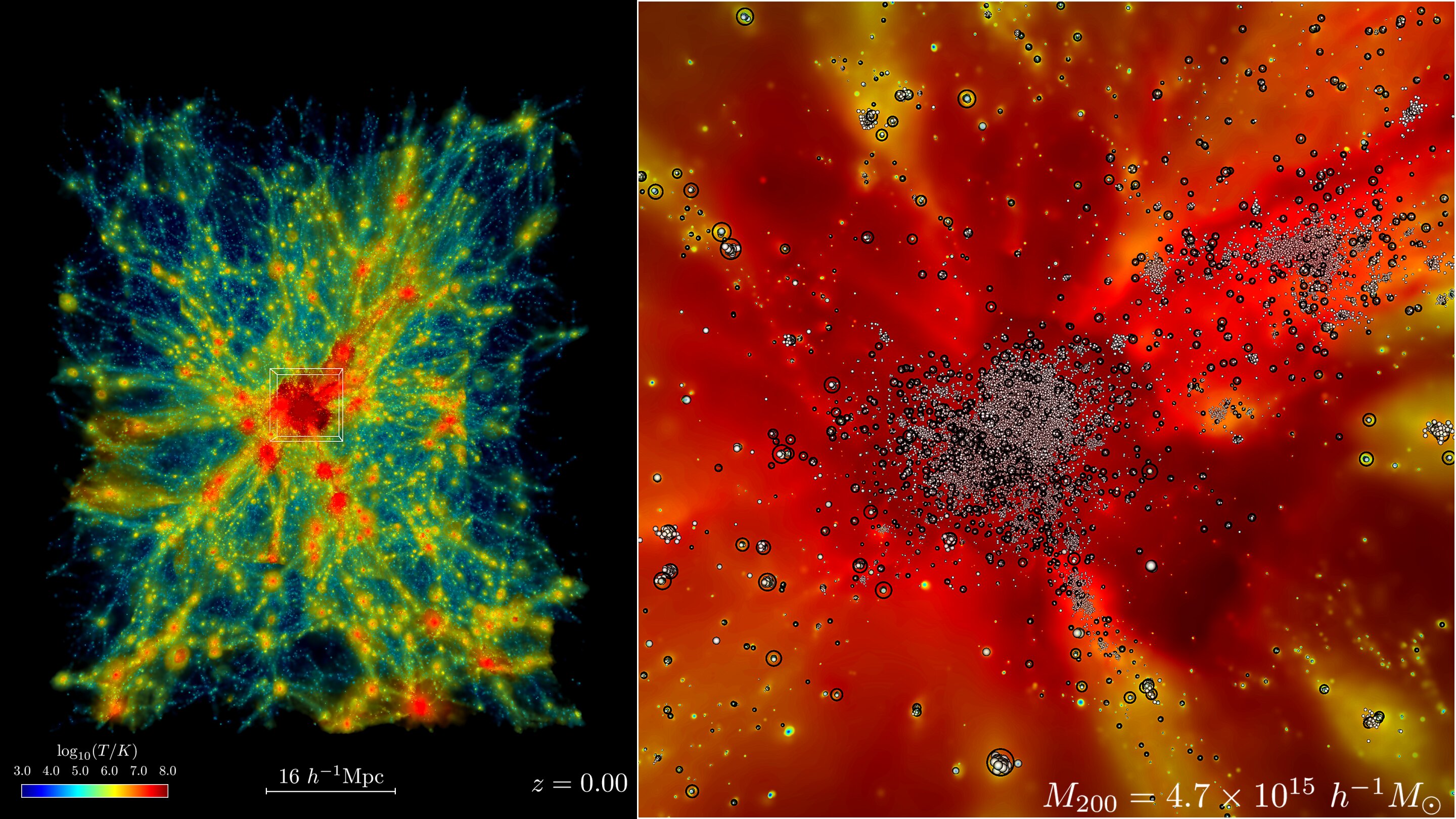
Researchers at the Department of Energy's Argonne National Laboratory have used the Frontier supercomputer to conduct the largest astrophysical simulation of the universe to date. This groundbreaking simulation, which incorporates both atomic and dark matter, sets a new standard for cosmological hydrodynamics simulations. The project, part of the Exascale Computing Project, utilized the HACC code, significantly upgraded for exascale machines, achieving speeds nearly 300 times faster than previous benchmarks. This advancement allows for unprecedented simulations of the universe's evolution, comparable to large telescope surveys.

NVIDIA Unveils Powerhouse GB200 NVL4 with Quad GPUs and Dual CPUs
technology1 year ago

NVIDIA Unveils Powerhouse GB200 NVL4 with Quad GPUs and Dual CPUs

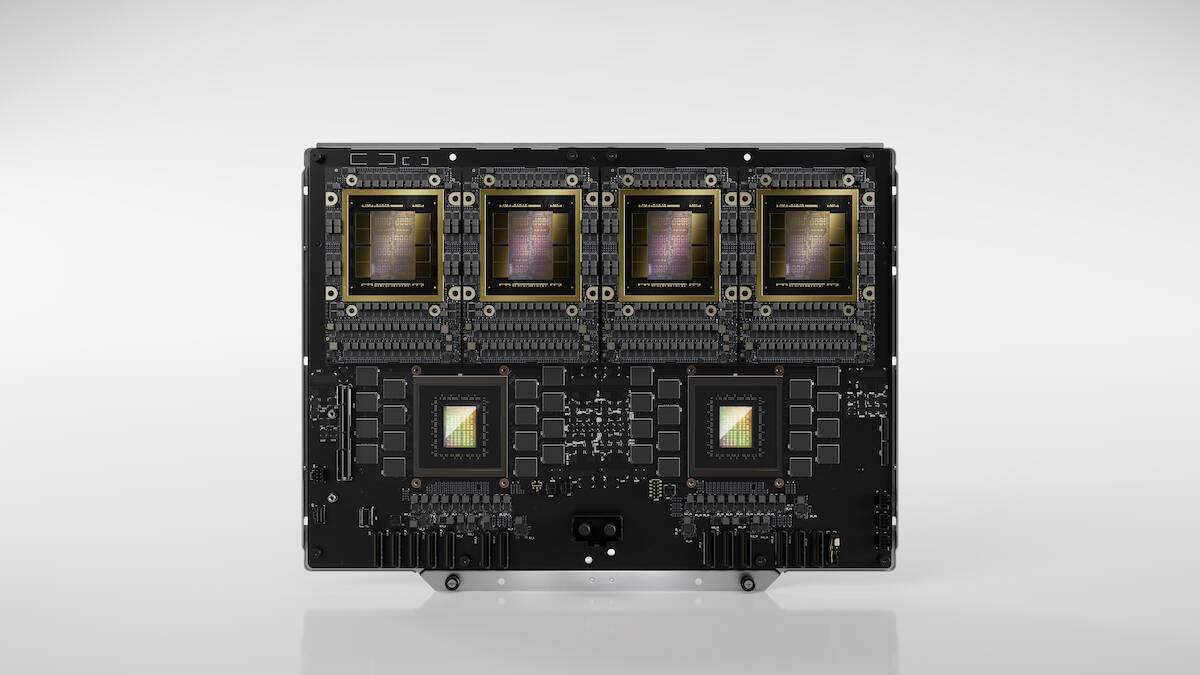
Nvidia has unveiled its latest high-performance computing (HPC) and AI chip, the GB200 NVL4, which integrates four Blackwell GPUs and two Grace CPUs on a single board, consuming 5.4 kilowatts of power. This configuration, showcased at the Supercomputing event in Atlanta, allows for significant compute power without relying on Nvidia's proprietary interconnects, making it compatible with existing HPC systems from companies like HPE and Eviden. The GB200 NVL4 can deliver up to 10 petaFLOPS of FP64 compute per cabinet, although AMD-based systems still offer higher floating-point performance. Nvidia also announced the H200 NVL, a PCIe-based configuration that supports up to 13.3 petaFLOPS of FP8 performance with sparsity, emphasizing flexibility and compatibility with standard server racks.