
IIHS Data Shows Waymo Robotaxis Crash Less Than Humans, But Experts Warn of Statistical Flaws
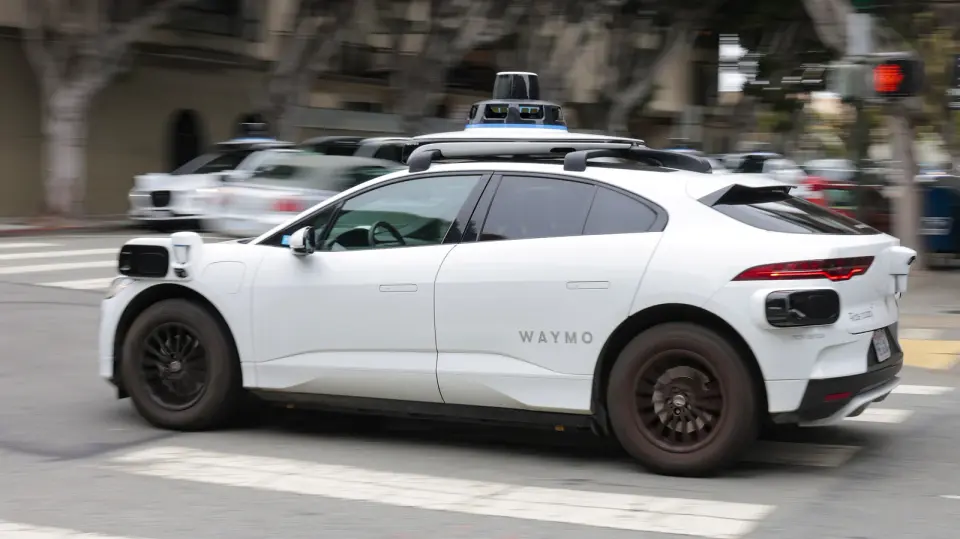
The Insurance Institute for Highway Safety (IIHS) reports that Waymo’s autonomous taxis experienced 68% fewer crashes per mile than human drivers between 2021 and 2024. However, the study relied on a tiny sample of 89 police-reportable incidents compared to over 24 million human crashes, and required significant data cleaning to align reporting standards. While Waymo showed lower crash rates in Phoenix, San Francisco, and Los Angeles, it performed slightly worse in Austin. Critics argue the comparison is skewed because Waymo avoids highways and operates in lower-speed zones, while the lack of mandatory mileage reporting for other companies makes broad industry conclusions impossible.
Key points
- IIHS found Waymo’s crash rate was 1.28 per million miles versus 4.06 for human drivers.
- Only 22% of 736 reported autonomous crashes were deemed 'police-reportable' after data cleaning.
- Waymo had 85% fewer single-vehicle crashes and 81% fewer injury crashes than humans.
- Waymo’s crash rate was 4% higher than humans in Austin due to small sample sizes.
- IIHS notes that mandatory mileage reporting for autonomous vehicles is currently lacking.
Background
This follows earlier IIHS coverage in July 2026, which highlighted similar findings but emphasized the caution needed due to data limitations. Previous reports noted that Waymo’s safety claims are often tempered by the fact that autonomous vehicles do not drive on highways, a domain where human crash rates are lower. The current study expands on these concerns by detailing the specific statistical adjustments made to compare autonomous and human driving data.
How outlets are covering it
Jalopnik criticizes the IIHS for 'statistical gymnastics,' arguing that the small sample size and data cleaning make the comparison statistically irrelevant. The Drive acknowledges the positive results but stresses that the limitations of the data are the real takeaway, noting that only Waymo voluntarily shares mileage data. Electrek points out that comparing autonomous vehicles to 'average' human drivers is flawed because humans are often impaired or distracted, and that Waymo’s operation in lower-speed zones skews severity metrics. CBC highlights the promise of the technology but notes public skepticism due to viral videos of Waymo failures, such as driving into flooded roads. All sources agree that while the data is encouraging, it is not definitive proof of superior safety due to structural data gaps.
Why it matters
The study provides the first major independent benchmark for autonomous vehicle safety, but it also exposes the lack of standardized data collection in the industry. If Waymo cannot be reliably compared to other companies like Tesla or Zoox due to missing mileage data, regulators cannot effectively assess the overall safety of the autonomous vehicle sector. This gap hinders the development of clear policies for widespread deployment and public trust in driverless technology.
What to watch
IIHS is calling for improved national crash and vehicle miles traveled data collection for Level 4 autonomous vehicles. Waymo plans to expand its operations to the United Kingdom and Japan, while also lobbying for entry into Canadian markets, though it faces regulatory hurdles in Ontario and British Columbia. The industry awaits more comprehensive data to validate these early safety claims as deployment scales up.
- IIHS Claims Waymos Are Safer Than Human Drivers If You Squint Real Hard While Reading The Data Jalopnik
- Waymo’s Self-Driving Cars Crash Less Often Than Human Drivers: Study The Drive
- Waymo crashes 1/3 as much as a human driver, says IIHS – with some caveats Electrek
- Waymo’s driverless cars involved in 68% fewer crashes than human drivers, U.S. study finds CBC
- Waymo robotaxis show lower crash rates: IIHS Axios
Want the full story? Read the original reporting
Read on Jalopnik