
Diesel Crisis Forces Small US Truckers to Add Fuel Surcharges Amid Thin Margins
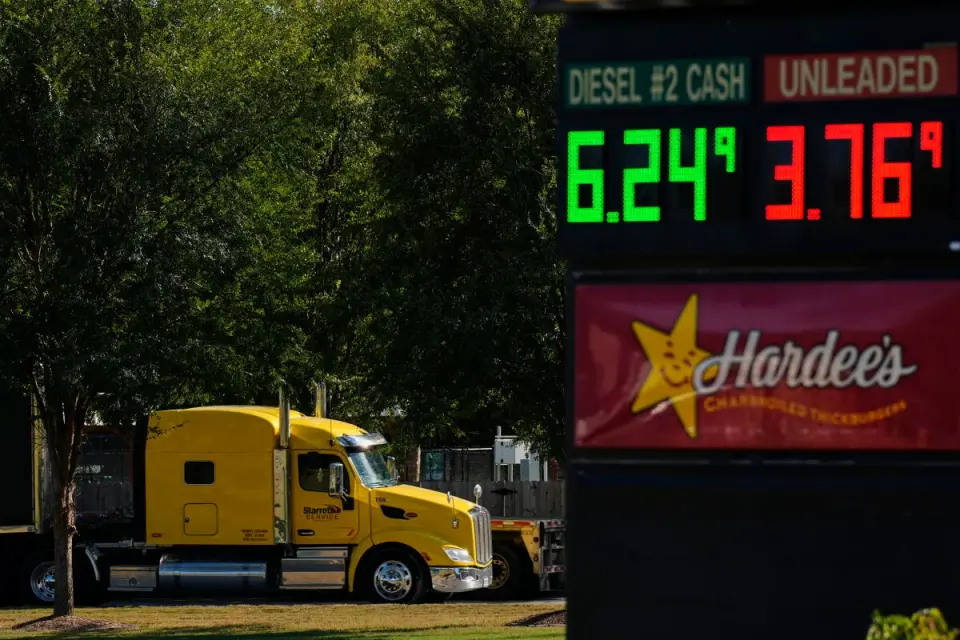
US diesel prices surged to a record $6.53 per gallon in September due to the Iran war, severely straining small trucking firms. With operating margins near zero, operators like Kevin Otto are adding fuel surcharges to survive. While freight rates have risen, they lag behind fuel costs, and non-fuel expenses continue to climb, leaving many carriers breaking even or losing money.
Key points
- On-highway diesel reached a record national average of $6.53 in September, up 56% from pre-war levels.
- Small carriers lack the cash reserves and bulk discounts of large fleets, making them vulnerable to price spikes.
- Freight rates have increased by 44% to 48%, but payment delays of 30 to 90 days hinder cash flow.
- Operating costs hit a record $2.34 per mile in 2025, with non-fuel expenses rising 4.2%.
- Profit margins are exceptionally thin, with flatbed carriers averaging a 0.5% operating loss in 2025.
Background
This crisis follows a 'freight recession' beginning in 2022, where weak demand and excess trucks depressed rates. Recent archive reports note that 16 trucking bankruptcies occurred in late 2026 as diesel prices spiked, while global oil majors reported record profits despite consumer fuel costs rising over 30%.
Why it matters
The trucking industry is the backbone of US supply chains. If small carriers fail due to unsustainable fuel costs, it could trigger a domino effect on consumer prices and disrupt the delivery of essential goods, despite the industry's tentative recovery from previous slumps.
What to watch
The Energy Information Administration expects diesel prices to ease next year as Middle East oil production recovers, but forecasts remain elevated at $5.03 per gallon for 2027. The White House has suspended federal penalties for using dyed diesel on highways through December 31, though state restrictions remain, and carriers are closely watching for rate adjustments to match fuel costs.
Want the full story? Read the original reporting
Read on AP News