
JCB Hydromax shatters hydrogen land speed record at 406 mph
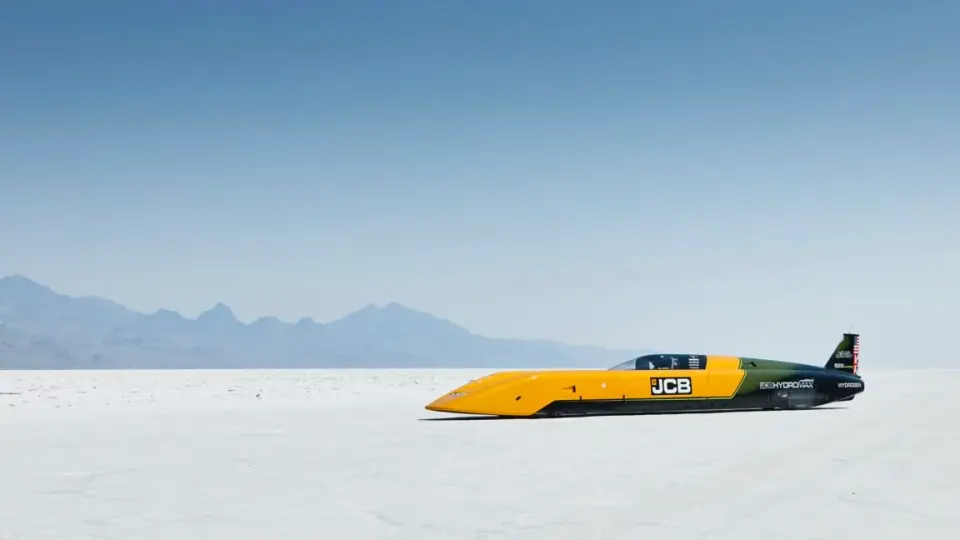
JCB’s Hydromax set a new hydrogen-powered land speed record of 406.320 mph at the Bonneville Salt Flats, driven by Andy Green. The vehicle uses two modified hydrogen combustion engines producing 1,600 hp, doubling the previous record and outpacing electric and fuel-cell benchmarks.
Key points
- The JCB Hydromax achieved a two-way average speed of 406.320 mph (653.91 km/h) at the Bonneville Salt Flats in Utah on August 12, 2026.
- The vehicle is powered by two hydrogen internal combustion engines, each producing 800 hp, for a combined total of 1,600 hp and 2,600 lb-ft of torque.
- Driver Andy Green, who previously broke the sound barrier in 1997, piloted the car, marking his second land speed record with JCB after the 2006 Dieselmax.
- The new record more than doubles the previous hydrogen combustion record of 185.5 mph set by BMW in 2004 and exceeds the fastest electric vehicle record of 341 mph.
- Prodrive, a Banbury-based motorsport firm, led the engineering and track operations, building the car in just five weeks after design planning began.
Background
This record follows JCB’s 2006 diesel land speed record of 350.092 mph, also driven by Andy Green. JCB had previously explored hydrogen fuel cells but abandoned them due to cost and durability concerns, pivoting to combustion engines in 2020. The attempt was part of a broader push to demonstrate hydrogen’s viability in heavy machinery, following Green’s earlier practice runs reaching 368 mph.
How outlets are covering it
Ars Technica emphasizes the technical modifications to JCB’s diesel engines, including turbocharging, direct injection, and ice-cooled intercoolers, to achieve the high performance. The Guardian highlights the historical significance of the Bonneville Salt Flats and the FIA’s digitization of land speed records, framing Green’s achievement within a century of record-breaking. BBC focuses on the rapid development timeline, crediting Prodrive for building the car in five weeks and praising the collaborative effort across organizations.
Why it matters
The record demonstrates the potential of hydrogen combustion engines for high-performance applications, challenging the dominance of electric and fuel-cell technologies in speed records. It also underscores JCB’s commitment to transitioning its heavy machinery away from diesel, aligning with UK carbon emission targets.
What to watch
JCB may continue to refine hydrogen combustion technology for its industrial equipment, while the FIA’s digitization of land speed records could inspire new attempts in other categories. The success may also influence the development of hydrogen-powered vehicles in other sectors.
- Two hydrogen-burning engines powered this car to a new land speed record arstechnica.com
- Driver Sets Record for Hydrogen-Powered Vehicle at More Than 406 M.P.H. The New York Times
- ‘At any moment I might fade out’: archives reveal fearless era of land speed record breakers The Guardian
- Britain's JCB Hydromax sets world land speed record for a hydrogen-powered vehicle Reuters
- Banbury firm behind new land speed record celebrates triumph BBC
Want the full story? Read the original reporting
Read on arstechnica.com