Australian researchers show that magnetite-rich banded iron formations, when exposed to hot underground water, can generate hydrogen gas, suggesting WA’s vast deserts could become a scalable source of green hydrogen and a major export, though real-world viability depends on large-scale rock access and renewable-powered electrolysis.
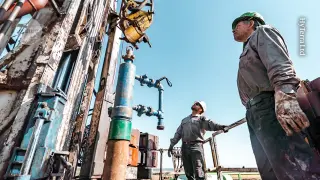
Scientists and investors are drilling for hydrogen gas trapped underground in dozens of countries, hoping to unlock a cheap, scalable green energy source. Early estimates suggest Earth may host trillions of tonnes of geologic hydrogen, but the size and extractability of deposits are still unproven and results could take months to years. If viable, underground hydrogen could accelerate the shift away from fossil fuels, but questions remain about how quickly hydrogen forms, migrates, persists, and economics—making it a high-stakes bet as campaigns like those in Kansas, Mali, and elsewhere gather data.
Australian researchers simulate underground conditions and show hydrogen can form when water interacts with magnetite in iron ore; magnetite powder yields about five times more hydrogen per gram than slab samples, and fractures/porous rocks with exposed surfaces boost production. The findings suggest Western Australia may host a large, untapped hydrogen resource for a low‑carbon energy future, with potential for export, though scaling and geological challenges remain. Published in the International Journal of Hydrogen Energy.
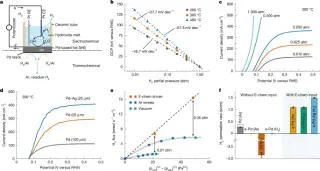
A hydrogen-selective Pd membrane wired as the anode in a molten‑hydroxide electrochemical cell (with a hydrogen-evolving cathode) enables in situ H2 removal at dehydrogenation temperatures without a pressure differential, promoting ammonia and methylcyclohexane dehydrogenation. Low anode potentials drive hydrogen pumping, improving single-pass yields and overcoming kinetic barriers; the study also analyzes how catalyst thickness and pre-wetting affect hydrogen transport and electrode resistance, pointing to a path for more efficient hydrogen production and storage with membrane-assisted thermochemical processing.
Astronomers using the MeerKAT radio telescope detected faint signals from neutral hydrogen dating back 4–5 billion years, demonstrating hydrogen intensity mapping as a practical method to trace the universe’s large-scale structure and paving the way for future surveys with the Square Kilometre Array Observatory (SKAO).
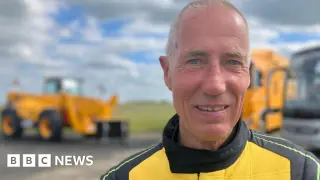
JCB’s Hydromax, powered by two hydrogen-burning engines delivering a combined 1,600 hp, set a new two-way land speed record at the Bonneville Salt Flats (406.320 mph average) with RAF Wing Commander Andy Green driving, highlighting hydrogen combustion as an alternative to diesel and fuel cells.
Researchers at the University of Hong Kong developed SS-H2, a manganese-enhanced stainless steel that forms a second protective layer atop the chromium oxide, enabling corrosion resistance up to 1700 mV in chloride-rich environments. This makes seawater electrolysis for green hydrogen more feasible and could replace expensive titanium components, potentially cutting structural-material costs by about 40x for PEM electrolyzers. The team is moving toward industrial-scale production and has filed patents, though practical deployment in components like meshes and foams remains to be solved.
British driver Andy Green set a new hydrogen-powered land speed record of 406 mph (654 km/h) at the Bonneville Salt Flats in Utah, piloting JCB's Hydromax with two hydrogen engines; the run doubles the previous hydrogen combustion record and adds to Green's history as the first person to break the sound barrier on land with ThrustSSC in 1997.
Britain’s Andy Green, the only person to break the sound barrier in a car, returns to Utah’s Bonneville Salt Flats with the hydrogen-powered JCB Hydromax to chase new land-speed records, aiming to beat the diesel record of 350.092 mph and set hydrogen and electric-vehicle marks; he has reached 368.347 mph in practice, but official records require FIA verification, while hydrogen’s appeal depends on how the fuel is produced and safety considerations.
New modeling suggests the inner core could host abundant superionic hydrogen—hydrogen that flows like a liquid and conducts electricity—with the hexagonal close-packed (HCP) phase likely more stable than body-centered cubic (BCC) under core conditions. Partitioning of hydrogen is driven mainly by temperature rather than pressure, creating a radial gradient that concentrates hydrogen toward the inner-core boundary where it re-partitions into a liquid that enriches the outer core. This ongoing exchange, plus inner-core growth, could provide chemical buoyancy to power the geodynamo, while other light elements like oxygen and carbon likely further shape the core's composition and evolution.
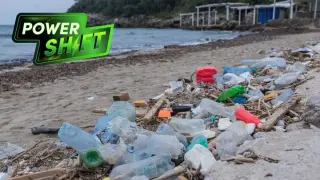
A study published in PNAS describes an alkaline thermal treatment (ATT) that converts mixed plastic waste into high-purity hydrogen at lower temperatures with negligible direct CO2 emissions, potentially tackling both plastic pollution and clean-energy needs. Lab tests on PET, PE, and PP show hydrogen yields comparable to pyrolysis/gasification, with a need for pre-treatment of some plastics. While promising, researchers caution that scalability, economic viability, and full life-cycle environmental impact still require further research, along with handling contaminated plastics and recycling the sodium hydroxide.
Saturn’s moon Enceladus vents a subsurface ocean through its south-pole tiger stripes, and Cassini measurements show hydrogen in the plume, likely produced by water-rock reactions in the ocean (serpentinisation) that energy-hungry microbes could exploit as in Earth's hydrothermal vents. New analyses find a broader suite of organic compounds and phosphates in plume grains, bringing five of the six bio-essential elements to the scene, but no life is detected and sulfur remains elusive. The results strengthen the case for habitability and set the stage for a future mission to search for signs of biology rather than a new discovery of life itself.
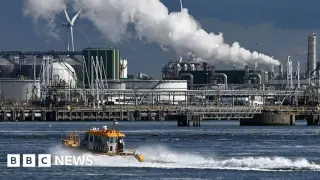
Pressure is mounting on the Port of Rotterdam to decarbonize its fossil-fuel–heavy footprint, with a lawsuit demanding a concrete plan to wind down coal, oil and gas flows. The port authority aims to cut its own energy emissions by 90% by 2030, backing a hydrogen hub, onshore power for ships, and low-carbon bunkers while pursuing CCS via the Porthos project. Critics say the port must do more than manage emissions and should accelerate a full transition, arguing the hub’s influence is limited and that global policy and corporate relocation can undermine progress; the ultimate target remains net-zero by mid-century, but the path and pace are hotly debated.
Plug Power reported Q1 2026 revenue of $163.5 million, up 22% year over year, and a 71% improvement in gross margin to negative 13% from negative 55%, driven by higher sales and cost discipline; GAAP EPS was -$0.18, with adjusted EPS -$0.08 after about $140 million of non-cash charges related to convertible debt and warrants. The company remains focused on achieving positive EBITDAS in Q4 2026 as it scales its integrated hydrogen platform, with progress across Material Handling (GenDrive/GenFuel), Electrolyzer Solutions (over 320 MW deployed and more than $8 billion in project pipeline with projects in Portugal, Spain and Canada), and Hydrogen Production (hydrogen fuel sales up 22% and margins up 54 percentage points). Liquidity stood at over $802 million in cash, plus restricted cash, and it expects further asset monetization (~$275 million) and tax-credit proceeds (~$39.2 million) to support its growth and margin expansion.
Nature highlights five uplifting science stories from 2025–26: infants can now be treated for malaria with the weight-tailored drug artemether-lumefantrine, reducing infant deaths; six Leigh syndrome patients show mobility and breathing improvements after sildenafil (Viagra) treatment, though more trials are needed; engineered bacteria produce hydrogen from waste bread with a catalyst, cutting greenhouse-gas emissions; researchers extract hydrocarbon-rich biofuel from date-palm leaf fibers, offering a new energy source and waste-management benefit; and a US study finds HPV vaccination in boys and men linked to a 46% reduction in several cancers, underscoring the vaccine’s power for cancer prevention.