
Just Eat Halts AI Food Images After Viral Backlash Over Bizarre Renderings
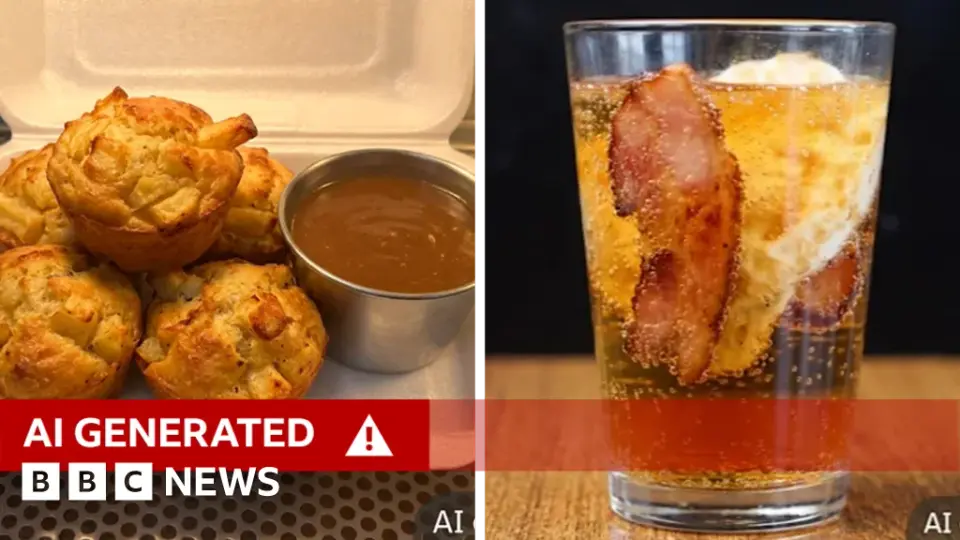
Just Eat has apologized and paused its trial of AI-generated food images after the technology produced absurd results, such as bacon floating in cola and chips inside muffins. The error stemmed from the AI misinterpreting regional terms like 'soda bread' and 'chip muffin.' While the company is removing the incorrect images, the incident highlights broader consumer skepticism regarding AI-generated visuals in the food industry, where accuracy and authenticity are increasingly valued over convenience.
Key points
- Just Eat is removing AI-generated images from its platform after they depicted nonsensical dishes, including bacon and eggs in a glass of cola and chips baked into muffins.
- The errors occurred because the AI misinterpreted regional UK terminology, confusing 'soda bread' with carbonated drinks and 'chip muffin' (a chip butty) with a baked good.
- A Just Eat spokesperson stated the company is pausing the AI trial until the technology is further developed, while continuing to fund professional photography for its partner restaurants.
- The incident sparked social media ridicule, with users posting the bizarre images on subreddits and Instagram, though some noted the images were labeled as AI-generated.
- The failure underscores the difficulty of using generative AI for nuanced food imagery, as models struggle with textures and context-specific regional names.
Background
This incident follows a broader trend of AI integration in the food sector, where small businesses have increasingly adopted generative tools to save time and costs. Recent archive coverage of the UK food industry highlights the tension between technological convenience and consumer expectations for authenticity, particularly in the context of rising prices and the resurgence of experiential dining trends like frozen yoghurt shops. The Just Eat case adds to a growing conversation about the reliability of AI in commercial applications, especially where visual accuracy directly impacts consumer trust and ordering decisions.
How outlets are covering it
BBC and The Independent focused on the specific failures of Just Eat's AI trial, emphasizing the humorous yet problematic nature of the misinterpretations and the company's subsequent apology. The Chicago Tribune provided a broader industry perspective, noting that 'AI slop' is becoming rampant in restaurant signage across the US, with many small businesses using AI due to cost constraints. The Tribune highlighted consumer backlash, with some customers refusing to eat at places using AI images, while others, like food stylists, expressed concern about the ethical implications of misleading visuals. The Telegraph source was inaccessible due to a security block, so its perspective could not be synthesized. Overall, outlets agree that while AI offers efficiency, it currently lacks the nuance required for accurate food representation, leading to consumer distrust and potential reputational damage for businesses.
Why it matters
The Just Eat incident serves as a cautionary tale for companies adopting AI in consumer-facing applications, particularly in industries where visual accuracy is critical. It highlights the risks of deploying AI without adequate testing or context awareness, especially when dealing with regional language variations. For the food industry, this underscores the importance of maintaining authenticity and transparency in marketing, as consumers are increasingly wary of AI-generated content that may misrepresent the actual product. The backlash also signals a potential shift in consumer preferences toward real, unedited imagery, which could impact how small businesses approach their marketing strategies in the future.
What to watch
Just Eat is expected to continue refining its AI technology before resuming the trial, potentially incorporating better context-awareness and regional language databases. The company may also invest more in professional photography to maintain trust with its partner restaurants. In the broader industry, expect increased scrutiny of AI-generated food imagery, with potential regulatory discussions around consumer protection and deceptive marketing practices. Small businesses may face pressure to balance cost-saving AI tools with the need for authentic representation, possibly leading to hybrid approaches that combine AI assistance with human oversight.
- Just Eat apologises for AI food mistakes after social media ridicule BBC
- ‘Off-putting’ or ‘a fine tool’? AI slop on restaurant signage is becoming rampant and repugnant. Chicago Tribune
- JustEat apologises over AI menu pictures including bacon and eggs floating in cola The Independent
- JustEat bins AI photos after it takes ‘breakfast soda’ too literally The Telegraph
- Just Eat's AI food photos are a disaster — but why are we letting AI invent pictures of things we're paying for? TechRadar
Want the full story? Read the original reporting
Read on BBC