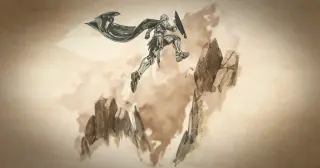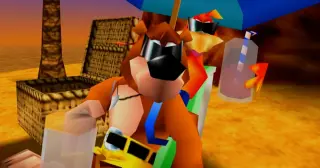
Fans accuse System 3 of using generative AI for the James Pond Legacy trailer and character art; the developer denies the claim, citing a human-driven process in a detailed blog post, but online scrutiny persists over perceived AI-like visuals.
System 3 and its PR team assert that the James Pond Legacy artwork was created by human-led methods starting from authentic James Pond sprites, not generative AI, and include a document detailing the process; it remains unclear whether AI was used for the trailer; the game will release on Nintendo Switch 2 in October 2026 with a limited physical run of up to 6,000 copies.
System 3’s James Pond Legacy: The Pond is Not Enough trailer sparked AI-art claims, leading the studio to briefly mute comments. The dev insists no generative AI was used, stating the pond characters were hand-crafted from pixel-art origins and redrawn in Illustrator/Photoshop before 3D rendering. The collection, featuring four classic James Pond titles plus an interactive historical archive, will launch exclusively on Nintendo Switch 2 in October 2026, continuing a broader industry debate over AI-generated game art.
After a Twitch executive said Amazon would use streamers’ content to train its AI by default because most creators wouldn’t opt in, creators reacted with anger, calling it a “slap to the face” and raising concerns about consent, copyright and data use as platforms debate Gen AI policies.
After a public dispute over AI, Saber Interactive updated Rideshare Stimulator’s Steam page to disclose use of generative AI for voice generation and localization, plus AI-generated passenger missions and localized dialogue in the Free Ride mode. The main Campaign remains human-written, and the game includes a mix of human-made and AI-generated music. The disclosure confirms broader AI adoption while Saber claims staff weren’t replaced.
Hello Games chief Sean Murray says he’s not rushing to adopt AI or generative tech, choosing to watch industry norms emerge after the post-COVID return-to-office era and to keep making games the way they’ve always done, arguing that AI won’t remove the fundamental hard work of crafting a great game.
Target named Chandhu Nair its first Chief AI Officer and appointed Purvi Shah as SVP of user experience, signaling a coordinated, front-line–focused AI strategy that includes tools like Target Trend Brain and a new conversational shopping assistant, as competitors like Walmart and Gap race to accelerate AI across retail.
Generative AI is reshaping mathematics by accelerating discoveries across geometry, cryptography, and coding theory (OpenAI’s Astra highlighted with ten advances). This has sparked debates on attribution, correctness, and what constitutes mathematical creativity, as AI-assisted work floods journals and arXiv. Mathematicians diverge on how to integrate AI: some ethically exclude it, others embrace it as a collaborator. Case studies show both paths—one team avoided AI, another used it to achieve in 43 hours what previously took years—leading to joint papers. The field is grappling with how to reconcile AI's capabilities with transparency, integrity, and human collaborative values, signaling a nuanced future for math where machines help but human discernment remains central.
Generative AI can speed up biology research and drug screening, but it can also generate plausible yet false biological signals. Experts say AI outputs should be treated as testable ideas or synthetic data rather than definitive findings, and must be independently verified in real experiments. The risk varies by use, with cases like AlphaFold 3 illustrating how AI errors can distort evidence if not carefully checked.
Eli Roth has confirmed that generative AI was used in Ice Cream Man, including a handful of animated sequences that he initially described as part of a traditional hand-drawn process. Dark Half is credited for AI work, and Roth later told Polygon that AI was used in a very small portion of a few scenes, emphasizing that technology and creativity helped realize his vision without detailing which sequences were AI-generated or how they were combined with human animation.
Director Eli Roth says AI was used in a very small portion of Ice Cream Man, noting he drew the frames and worked with animators, with an AI visual effects company credited; he previously mispoke about the technology as the film nears release.
USA TODAY Shopping urges the Amazon Echo Show with Alexa+ as a top back-to-school upgrade: a shared display keeps family schedules visible, Alexa+'s generative AI handles multi-step routines like calendars and grocery lists, and the built-in camera supports quick video check-ins; with options from an 8- to 11-inch model and larger 15- and 21-inch Show variants, it doubles as a study/music/video hub and central home command center as part of the Fall Reset spotlight.
Google briefly rolled out an AI image-generation feature for Google Earth that allowed synthetic imagery to be overlaid on real satellite maps, enabling alarming fake scenes like a plane crash into Manhattan, a nuclear facility in Iran, and a Moscow bombing; the company paused the feature amid concerns about misinformation and public trust, signaling the need for stronger safeguards and watermarking that’s hard to bypass.
At San Diego Comic-Con, a slide about Avatar Aang’s art design noting “According to ChatGPT” sparked AI-use backlash. The involved artists and a public statement from Kat Tsai say AI played no role in the film’s design, and the slide appears to come from an unrelated art book with no film credits. Avatar Studios and Flying Bark haven’t issued statements yet. The controversy unfolds as Avatar Aang’s release cycle continues, with Avatar: Seven Havens arriving on Paramount+ later this year on Oct. 9.
Adobe’s Indigo camera app is being updated with an experimental AI Playground offering four GenAI tools—Styles, Object Editing, Photo Guidance, and Custom Edit—powered initially by Google’s Nano Banana model and available to a test group with an opt-out option; if successful, it could become a paid feature, while Adobe notes ongoing work to add AI-content credentials (C2PA) and SynthID for transparency.