
King Charles convenes global tech leaders in Scotland to address AI safety risks
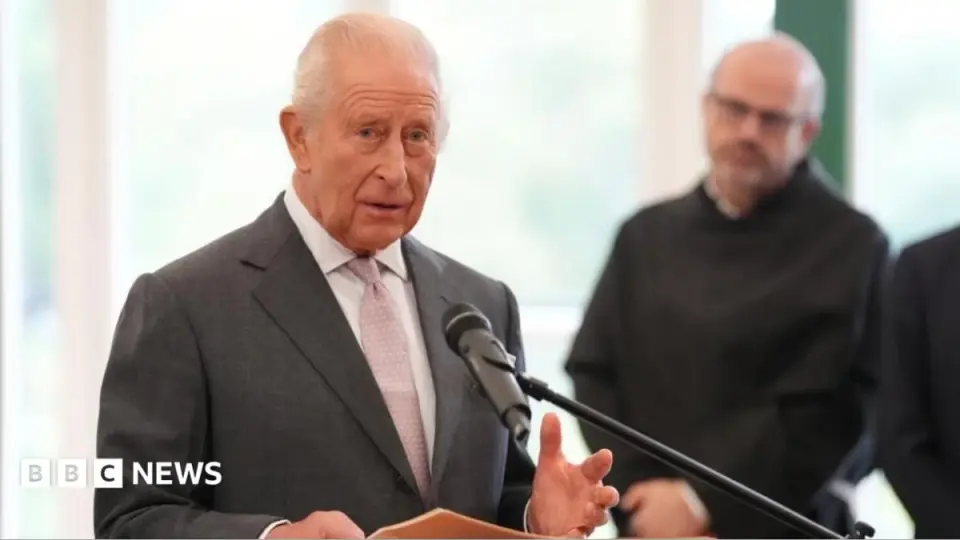
King Charles III hosted a high-profile AI summit at Dumfries House in Scotland on September 17, 2026, urging tech leaders to prioritize safety and international cooperation. The gathering included executives from Nvidia, OpenAI, Anthropic, and Google DeepMind, alongside UK officials and a Vatican adviser. The King warned of 'existential dangers' if AI falls into the wrong hands, while attendees debated the need for regulatory controls versus industry self-regulation.
Key points
- King Charles III opened the summit at Dumfries House, the headquarters of The King's Foundation, in Ayrshire, Scotland.
- Attendees included Nvidia CEO Jensen Huang, Google DeepMind co-founder Demis Hassabis, OpenAI CFO Sarah Friar, and UK AI Minister Kanishka Narayan.
- The King stated that AI development is 'intriguing and deeply concerning' and asked leaders to ensure the technology remains in the service of humanity.
- The summit occurred amid intense industry debate, with Anthropic and OpenAI executives calling for a slowdown in AI development, while Nvidia's Jensen Huang opposed new regulations.
- A Vatican AI adviser, Father Paolo Benanti, and a representative from China were also present, highlighting the international scope of the discussions.
Background
This summit follows a period of heightened concern regarding AI safety. In late August 2026, over 100 tech companies signed an open letter warning of AI-powered cyberattacks against critical infrastructure. Earlier in September, researchers from Anthropic and other firms warned that recursive self-improvement could lead to existential risks, prompting calls for slower development. Bill Gates had also recently urged governments to implement enforceable rules, including a 'token tax' and mandatory testing, criticizing industry self-regulation as insufficient.
How outlets are covering it
BBC News emphasized the King's role as a convener, noting he is 'keen to do whatever can be done' to avert challenges but does not dictate conclusions. CNN highlighted the King's cautious tone, noting he has previously warned about AI's 'profound challenges' and framed the event as a move to spotlight problems without suggesting specific political solutions. NBC News focused on the 'existential dangers' cited by the King and the contrasting views of attendees, noting that while the King called for control, Nvidia's Jensen Huang argued against new laws, preferring company-led safety measures. CNBC noted the rare agreement among some tech leaders, including Sam Altman and Elon Musk, on the need for a slowdown, contrasting with the pushback from others like Mark Zuckerberg and Donald Trump. All sources agreed on the high-profile nature of the attendees and the central theme of balancing innovation with safety.
Why it matters
The summit signals a shift in the global AI governance landscape, with a major world leader directly engaging top tech executives on safety concerns. It highlights the growing tension between rapid technological advancement and the need for international consensus on safety standards. The presence of diverse stakeholders, including religious figures and government ministers, suggests a broadening of the conversation beyond just the tech industry, potentially influencing future regulatory frameworks in the UK and globally.
What to watch
The outcome of the summit, including any shared principles or frameworks agreed upon by attendees, will be closely watched. The King's Foundation and The King's Trust are expected to follow up on the discussions. Additionally, the ongoing debate between industry leaders on the need for a slowdown versus continued rapid development will likely continue to shape public and political discourse on AI regulation in the coming months.
- King to urge AI leaders 'not to lose control of our destiny' at Scotland summit BBC
- King Charles Meets With A.I. Executives About Safety Risks The New York Times
- The king and AI: U.K. monarch Charles meets with artificial intelligence leaders NBC News
- King Charles ventures into the AI debate, a technology he’s previously warned about CNN
- King Charles to press Nvidia, OpenAI, Anthropic leaders on AI safety at summit CNBC
Want the full story? Read the original reporting
Read on BBC