
Meta’s 'Cute' AI Agent Muse Sparks Privacy Fears and Marketing Frenzy
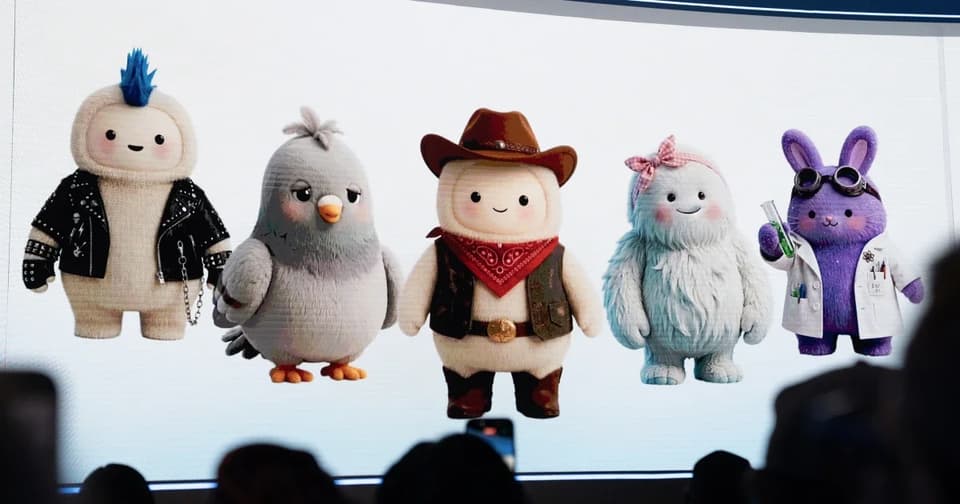
Meta launched Muse, a customizable AI agent designed to handle daily tasks, at its Connect conference on September 23. The tool, which features a default mascot named Jolly, quickly topped the Apple App Store charts. While Meta emphasizes security through dedicated virtual machines, critics and users express concern over data access, and Meta’s chief AI officer has launched an aggressive, meme-driven social media campaign to promote the product.
Key points
- Meta unveiled Muse, an AI agent capable of executing tasks like shopping and email management, at Meta Connect in Menlo Park on September 23.
- The agent features a customizable avatar, with the default character named Jolly, and a handheld device called Muse Charm, described as a blend of a Labubu and a Tamagotchi.
- Muse reached the top of the Apple App Store charts shortly after its launch, with Meta claiming it has more daily active users in the US and Canada than ChatGPT.
- Meta introduced 'Muse Secure VM' to house user data, with plans for a 'Muse Confidential VM' that would prevent even Meta from accessing information.
- Alexandr Wang, Meta’s chief AI officer, has posted over 300 times on X since the launch, using memes and aggressive marketing to promote Muse and criticize rivals.
Background
This launch follows a broader trend in tech where companies use cute mascots to humanize AI, similar to Duolingo’s owl or Microsoft’s Clippy. Recent concerns about AI data usage, such as Google’s acquisition of Spirit Airlines’ internal data and Apple’s potential lag in AI integration, heighten scrutiny on how personal data is handled by new AI agents.
How outlets are covering it
NBC News highlights the security concerns surrounding Muse’s access to personal data, noting user skepticism about Meta’s privacy safeguards. The Verge criticizes the 'sinister' nature of using cuteness to lower user defenses, with a reporter admitting to sharing more personal health data due to the mascot’s appeal. Business Insider focuses on Alexandr Wang’s aggressive social media strategy, describing his 'tweet cannon' approach as a deliberate move to bypass corporate PR and dominate the AI agent market. Mashable compares Jolly to other successful mascots, suggesting that while cuteness can drive engagement, long-term trust depends on the product’s utility.
Why it matters
Muse represents a significant shift in how AI agents are marketed and integrated into daily life, moving from niche tech tools to mainstream consumer products. The controversy over data privacy and the aggressive marketing strategy highlight the growing tension between AI convenience and user security, setting a precedent for how future AI products will be introduced and perceived.
What to watch
Meta plans to release Muse Confidential VM to enhance privacy, while Alexandr Wang continues his social media campaign to drive adoption. The success of Muse will depend on whether users trust the platform’s security measures and find the agent useful beyond its initial novelty, potentially influencing the trajectory of AI agent development in the industry.
- It’s cute. It’s cuddly. And it wants all your data. nbcnews.com
- Meet the Muse mascot, Jolly. Who doesn't love a little guy? Mashable
- It’s sinister that Meta’s Muse AI mascot is so cute The Verge
- Alexandr Wang's relentless 'tweet cannon' is Meta's not-so-secret weapon in the AI promo war Business Insider
- People Are Turning To AI Agents Muse And Instinct To Save Them Thousands Of Dollars Forbes
Want the full story? Read the original reporting
Read on nbcnews.com