
Microsoft confirms global outage resolved after network upgrade bug disrupts 70 countries
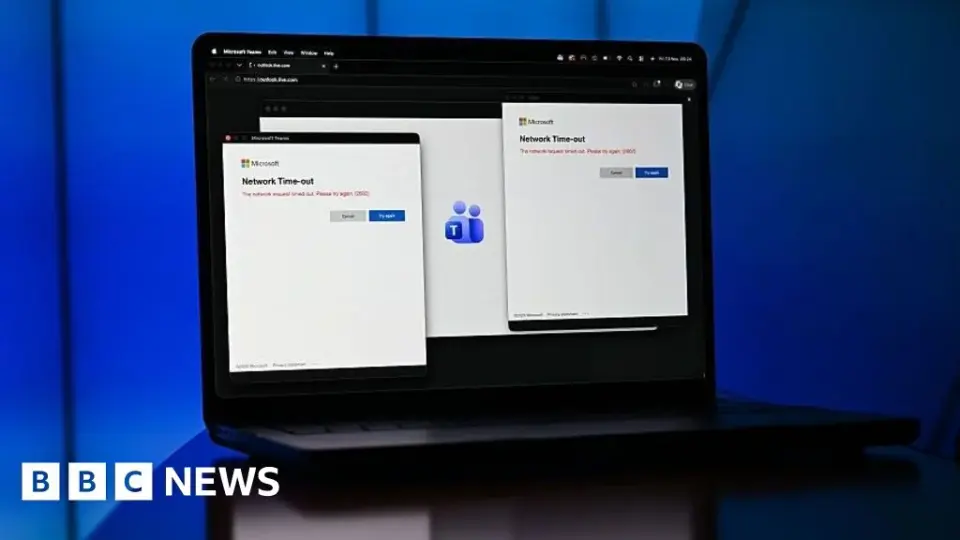
Microsoft has fully restored its global services following a day-long outage that affected over 430 million users across more than 70 countries. The disruption, which began on November 12, impacted Outlook, Teams, and Copilot, causing significant delays in government, judicial, and corporate operations. The company attributed the failure to a bug introduced during a network capacity upgrade, explicitly ruling out cyberattacks or AI agent interference. While services have recovered, business customers may be entitled to service credits under their Service Level Agreements, whereas individual users have no guaranteed compensation.
Key points
- Microsoft confirmed full restoration of services early Saturday morning, ending a disruption that began on Thursday afternoon.
- The outage affected over 430 million users in more than 70 countries, impacting Outlook, Teams, Copilot, and file sharing tools.
- The cause was identified as a bug from a network capacity upgrade, not a cyberattack or AI agent, according to Microsoft.
- Business customers can request service credits if uptime fell below 99.9%, but individual users have no contractual guarantee for compensation.
- The incident highlighted global reliance on single-vendor cloud infrastructure, disrupting courts, hospitals, and legislative bodies.
Background
This incident follows a series of earlier reports from our archive detailing the onset of the Microsoft 365 outage on November 12, 2026. Previous coverage noted that the failure was initially linked to servers failing automated health checks, creating a cascading overload. Microsoft had been rolling back configuration changes to restore stability, but recovery efforts were unstable through Friday. The current report confirms that these efforts have succeeded, marking the end of the multi-day disruption.
How outlets are covering it
BBC and Fox Business both emphasize the scale of the disruption, noting impacts on government agencies, courts, and major corporations like Indian airlines. While BBC highlights the human impact on individuals like a South African winemaker and a UK home buyer, Fox Business focuses on the technical explanation, confirming the bug was from a network capacity upgrade. WIRED offers a distinct perspective on the financial aftermath, detailing how business customers can claim service credits under Service Level Agreements, a topic not covered by the other outlets. All sources agree that the outage was not caused by a cyberattack, but WIRED uniquely points out that individual users have no contractual right to compensation, unlike business clients.
Why it matters
The outage underscores the critical vulnerability of global infrastructure reliant on a few major tech providers. The disruption to essential services, including courts and hospitals, demonstrates the real-world consequences of cloud dependency. The potential for service credits for business users may set a precedent for accountability in large-scale tech failures, while the lack of recourse for individual users highlights the disparity in consumer protection within cloud service agreements.
What to watch
Microsoft will release a full post-incident report after completing its internal review. Business customers should file claims for service credits by December 31, 2026, if their uptime fell below the 99.9% threshold. Experts recommend that organizations develop contingency plans to operate without major cloud tools to mitigate future risks from similar single-point-of-failure events.
- Microsoft says services fully restored after for day-long global outage BBC
- Microsoft apologizes after major Outlook outage worldwide, blames technical issue Fox Business
- Outlook Went Down? Microsoft May Owe You Money WIRED
- Microsoft says consumer products services recovered; still monitoring enterprise services Reuters
- Microsoft 365 Outage Continues: Tech Giant Has No Timeline For Recovery, Says It’s ‘Deeply Sorry’ Forbes
Want the full story? Read the original reporting
Read on BBC