
Microsoft inverts workflow: Office apps become plugins inside Copilot agents
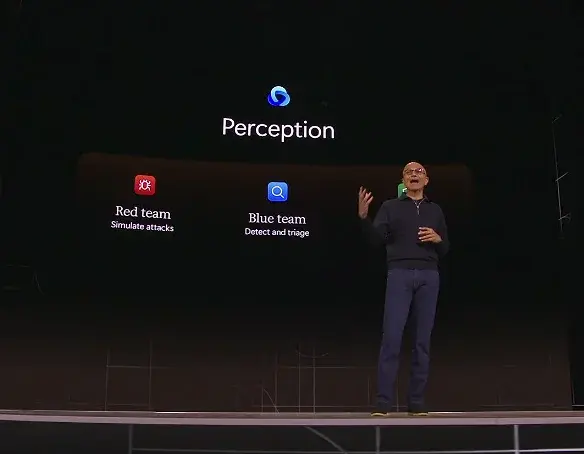
Microsoft has made Word, Excel, and PowerPoint generally available inside Copilot, shifting the paradigm from apps with assistants to agents with app plugins. The company also launched Copilot Autopilot, a persistent autonomous agent, and Microsoft IQ, a context layer for enterprise data. New specialized AI models, including MAI Code 2, aim to offer frontier-level performance at significantly lower costs than competitors. Microsoft emphasized governance controls, acknowledging that AI models cannot be fully trusted and must be bounded by human oversight.
Key points
- Word, Excel, and PowerPoint are now generally available as components within Copilot, allowing users to create documents directly via agents while retaining editability in traditional apps.
- Copilot Autopilot is a cloud-based autonomous agent that can be delegated responsibilities across services like email and calendars, using usage-based billing via Copilot Credits.
- Microsoft IQ, specifically Work IQ, serves as an intelligence platform that provides agents with context from company communications, relationships, and ongoing projects.
- New specialized models, such as MAI Code 2, claim to match or exceed competitor performance at a fraction of the cost, with MAI Code 2 offering 98% of GPT-6.1 Sol performance at 40% of the price.
- Microsoft introduced Agent 365 for governance, logging all agent activities for human review and allowing administrators to restrict permissions or block agents entirely.
- CEO Satya Nadella acknowledged a recent global outage affecting Exchange Online and Teams, stating the company has work to do to restore trust in its digital infrastructure.
Background
This shift follows Microsoft’s September announcement of a Copilot redesign and comes amid increased competition from Anthropic, which recently launched AI-driven office tools to challenge Microsoft’s dominance in knowledge work. The move also occurs as enterprises grapple with rising AI token costs and questions about the return on investment for AI implementations.
How outlets are covering it
Ars Technica emphasizes the structural inversion of software usage, highlighting the shift from apps to agents and the new governance framework. Yahoo Finance focuses on the economic angle, noting Microsoft’s push for cheaper, specialized models to address rising token spend. Axios provides specific performance benchmarks for the new models, noting that Microsoft’s cost advantages may rely on promotional discounts and selected benchmarks, while also highlighting the potential shift of coding workloads away from OpenAI.
Why it matters
This redefinition of productivity software could fundamentally change how enterprises interact with AI, moving from single-task assistance to autonomous, multi-step workflows. The emphasis on governance and cost efficiency addresses growing concerns about AI reliability and ROI, potentially influencing how companies adopt and regulate autonomous agents in the workplace.
What to watch
Microsoft will continue rolling out Copilot Workspaces, enabling collaborative environments where personal agents interact with shared context. The company is also developing a frontier general-purpose large language model to compete across broader tasks, though no timeline has been provided. Enterprises will need to evaluate the effectiveness of Microsoft’s governance safeguards against potential data exposure or rogue agent actions.
- Microsoft calls Copilot "the new OS for work" at Ignite keynote Ars Technica
- Microsoft's AI pitch at Ignite: Cheaper models as business 'token spend is going through the roof' Yahoo Finance
- Microsoft unveils AI models for coding, cybersecurity as it takes on Anthropic, OpenAI Reuters
- MAI Code 2 and MAI Code 2 Flash in GitHub Copilot The GitHub Blog
- Microsoft aims to challenge OpenAI, Anthropic with cheaper, specialized AI models Axios
Want the full story? Read the original reporting
Read on Ars Technica