
Musk Predicts Tesla Will Control Global Passenger Miles, Citing Regulatory Barriers as Main Hurdle
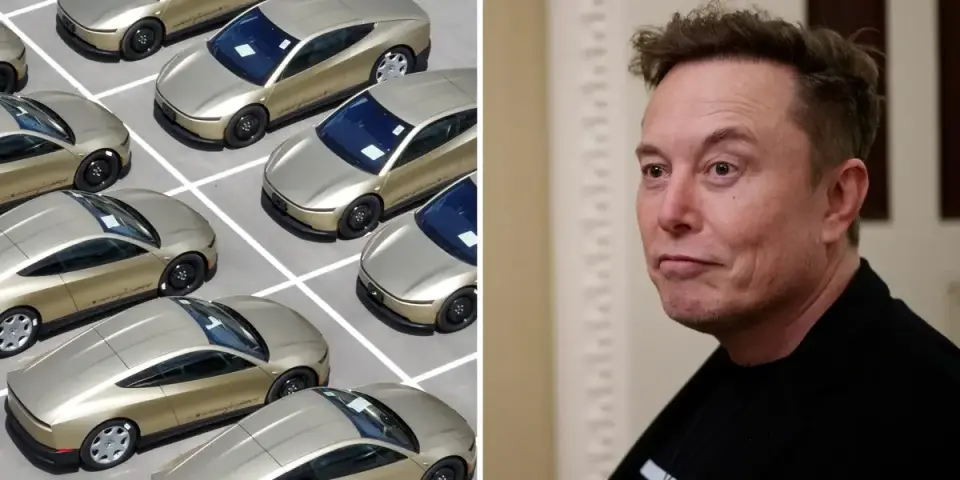
Elon Musk stated that Tesla will eventually account for the majority of passenger miles in any country where it is permitted to operate freely, identifying government restrictions rather than technical limitations as the primary obstacle. This bold prediction follows the expansion of Tesla's unsupervised Robotaxi service to multiple U.S. cities and the introduction of the steering-wheel-less Cybercab. While Tesla reports a strong safety record and rapid growth in unsupervised miles, the company faces regulatory scrutiny, including an NHTSA audit, and must overcome significant scale gaps compared to established ride-hailing competitors.
Key points
- Musk stated Tesla will dominate passenger miles in countries where it operates freely, blaming foreign governments for blocking autonomous tech to protect domestic industries.
- Tesla's unsupervised Robotaxi service has expanded to Austin, Dallas, Houston, Miami, Orlando, and Tampa, with nearly 2 million unsupervised miles driven by the end of Q3 2026.
- The Cybercab, a two-seat vehicle without steering wheels or pedals, entered the Austin fleet in September 2026, with public rides planned for Dallas in November 2026.
- Tesla's Robotaxi Safety Report claims zero injuries or airbag deployments, though the NHTSA has issued an audit inquiry regarding the Cybercab's self-certification.
- Tesla's market cap stands at $1.53 trillion, but its robotaxi fleet's 2 million miles lag significantly behind Uber's billions of quarterly trips, highlighting a massive scale gap.
Background
This announcement follows a period of mixed developments for Tesla's autonomy efforts. In September 2026, the Cybercab faced scrutiny over hidden manual controls during a federal safety audit. Additionally, a fatal crash involving a Tesla using Full Self-Driving mode occurred in October 2026, underscoring ongoing safety concerns. Musk's earlier predictions in January 2026 suggested that manual driving would drop below 5% of total miles, a claim that faced criticism for missing 2025 timelines.
How outlets are covering it
Business Insider emphasizes Musk's prediction as a bold shift from previous autonomy forecasts, noting that he now identifies regulatory intervention rather than technical failure as the primary barrier. Pluang highlights the financial reality, pointing out that Tesla's robotaxi fleet has driven only 2 million unsupervised miles, a fraction of Uber's billions of trips, and notes investor sentiment is mixed with 76% of orders to sell. BASENOR focuses on the operational details, such as the Cybercab's expansion to new cities and the potential for FSD 15 to allow private owners to join the robotaxi network, which could rapidly scale the fleet. The outlets differ in their emphasis: Business Insider and Pluang focus on the gap between ambition and current scale, while BASENOR highlights the operational progress and safety record supporting Musk's claims.
Why it matters
Musk's prediction signals a shift in Tesla's strategy from competing on vehicle sales to dominating the transportation market through autonomous services. The success of this strategy depends on overcoming regulatory hurdles and scaling its fleet to match the volume of established ride-hailing companies. The outcome will influence Tesla's valuation and the future of autonomous transportation in the U.S. and globally.
What to watch
Investors and regulators will watch Tesla's expansion into new cities, including Dallas, Las Vegas, Jacksonville, Phoenix, and San Antonio, in November 2026. The NHTSA audit of the Cybercab's self-certification will be a critical factor in determining whether Tesla can operate freely. Additionally, the rollout of FSD 15 to private owners in Q2 2027 could significantly expand Tesla's fleet size.
- Tesla just laid out its transportation mission: World domination Business Insider
- Tesla Stock Drops as Weak Profits Outweigh Musk’s Bold Robo-Taxi Claims Barron's
- Tesla aims to dominate global passenger miles w... Pluang
- Musk's Robotaxi Dominance Claim: 5 Details That Matter BASENOR
- Elon Musk Promised "a Million Robotaxis" by 2020. None Materialized, and a Dedicated Robotaxi Fleet Isn't Expected Until at Least 2027. Here's What That Track Record Means for Tesla's Valuation. AOL.com
Want the full story? Read the original reporting
Read on Business Insider